

aussiechris
Members
-
Joined
-
Last visited
-
The two major crank seals are built into the main bearings. The left side has an additional seal between the main bearing and the magneto. You'll be removing the engine and splitting the cases. This video from Jim Snell shows how...
-
I would recommend trying to source some OEM main bearings with in-built seals. Back in 2015, I had to rebuild my 2011 300 (due to cracked cases). I was advised to replace the mains with the new Xiu Engineering "low friction" bearings which were a good bit more expensive than OEM. Big mistake - within three months the bike was billowing smoke because the crank seals had failed. I had to rebuild the engine again but this time with new OEM bearings. I've not had a seal problem since. But to answer your question, the OEM bearings are fairly tight - hard to rotate with oily fingers while holding just the bearing. But the crank should rotate fine. The Xiu bearings felt much the same from memory. Yours sound way too tight. You run the risk of them spinning in the cases. It the left one moves at all, the oil holes won't line up. Unfortunately, sourcing OEM Gas Gas mains might prove difficult these days.
-
I feel your pain. They can be pricy from trials shops. I believe the same CR6EH-9 plug is used in small Honda and Yamaha outboard motors so a boat shop is another option. We can buy that plug for around AU$11 at the local car parts stores. Even cheaper online (except for the postage).
-
Yup - for the first 0.5 of a second. Then "normal" non-wasted after that.
-
Honda_freak can answer you better but I believe the red line on both his captures is cylinder pressure. In the most recent pic, the blue line is the fuel injector voltage. In his earlier image, the blue line was the ignition coil secondary voltage. He is showing the relationship between those voltages and the crank position based on cylinder compression pressure. It's not easy to directly correlate time on the x-axis with degrees of crank rotation because during kick starting, the RPM is varying. But it gives a good idea of what stroke it's on and roughly where in the stroke these events occur.
-
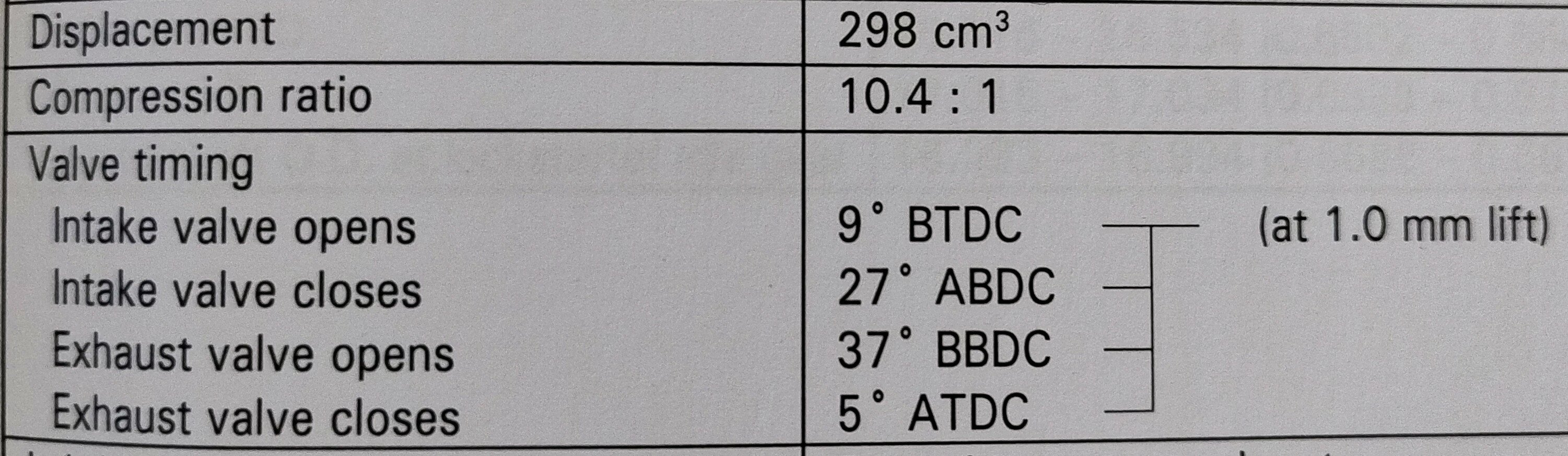
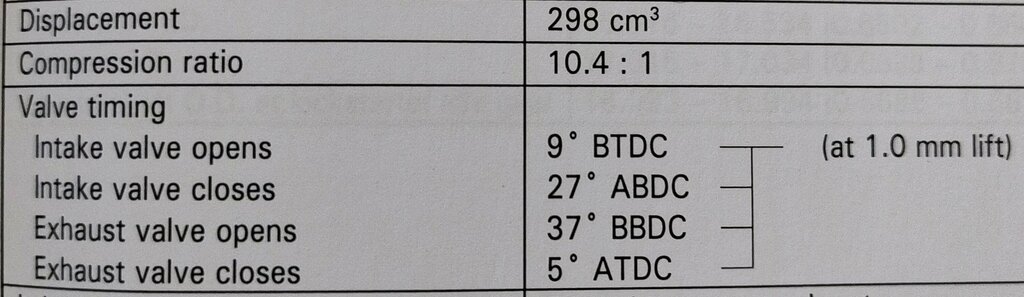
It doesn't have much bearing on what we've been discussing but it does show that these engines have a very short overlap (just 7° in your case). But thanks for posting it. I'm guessing the cam profiles changed slightly over the years/models. These are the figures from my 2022 301RR... 14° of overlap in this case.
-
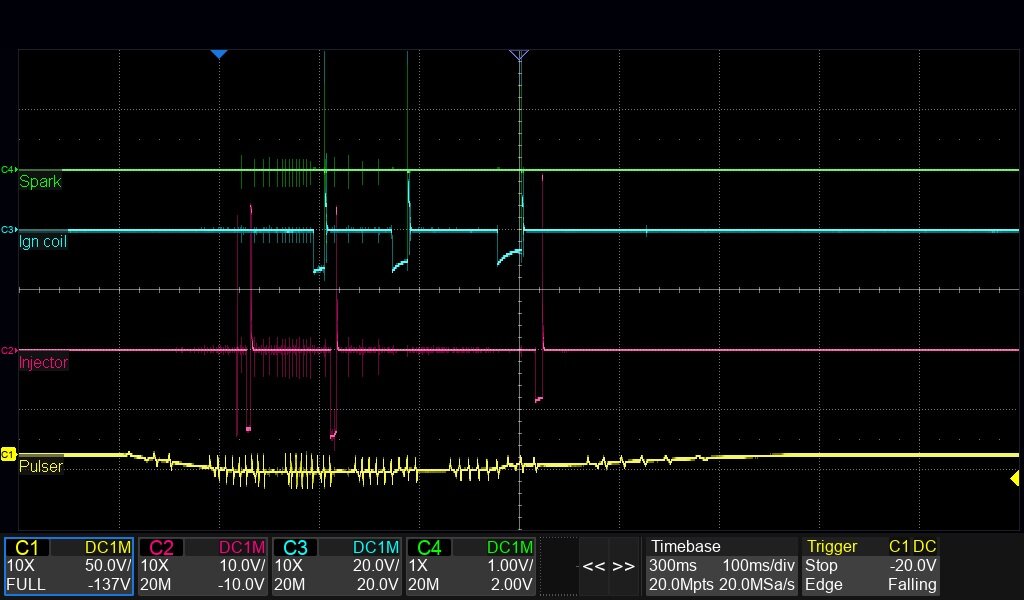
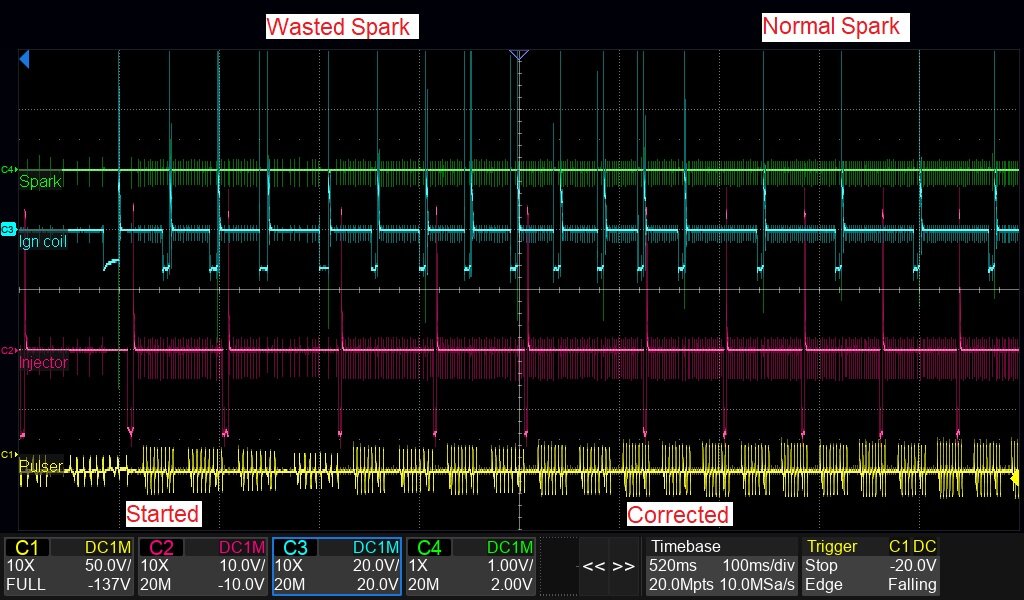
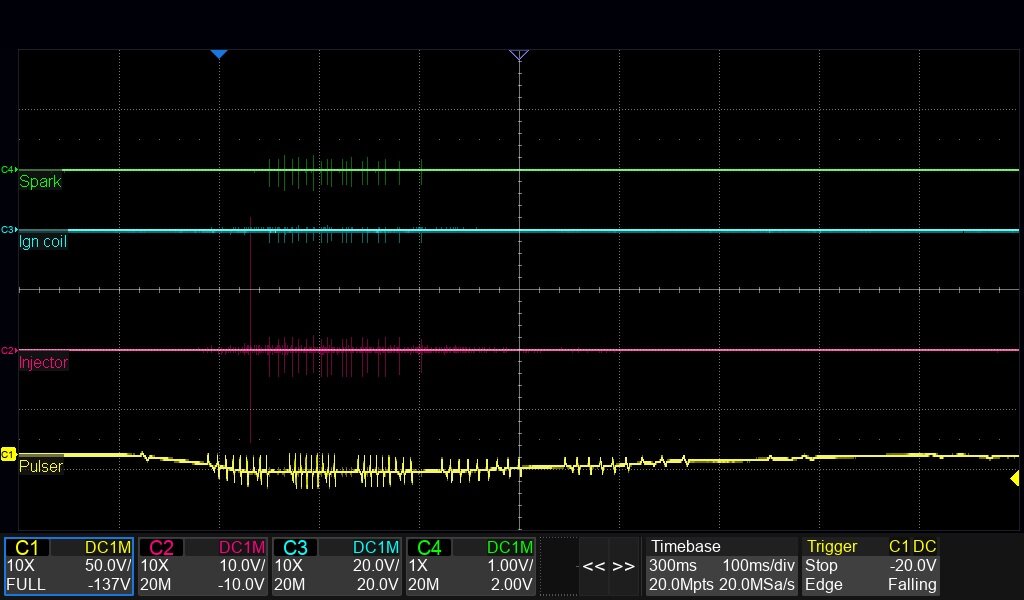
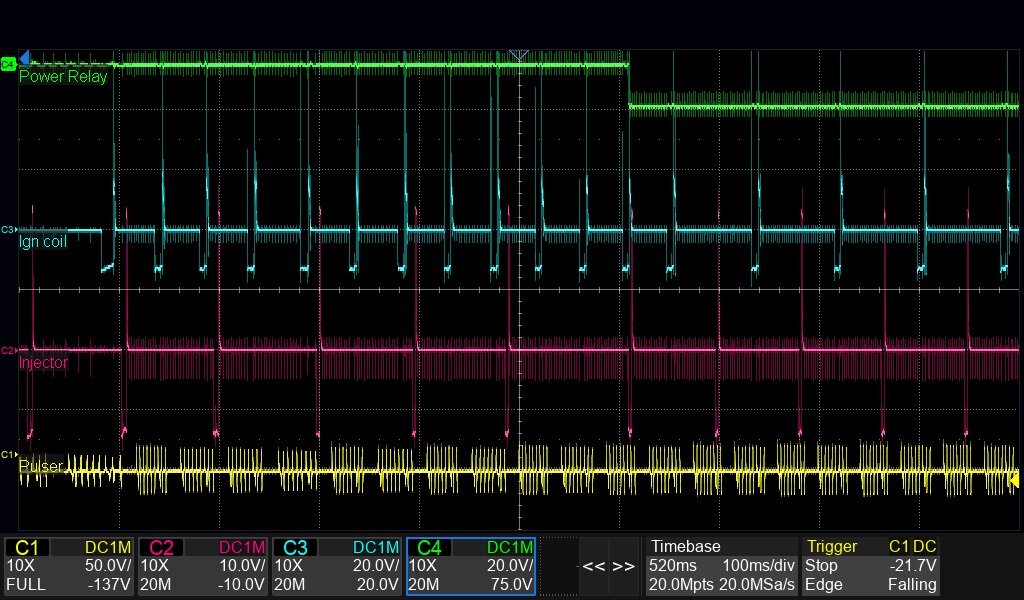
Ok, some interesting findings for those watching… For info, in the following oscilloscope traces, the bottom (yellow) trace shows the pulse trigger coil. A burst of 9 short pulses occurs once every revolution of the crankshaft. Note, all traces are referenced to +12v power. That’s because the ignition coil and fuel injector are switched by the ECU applying a ground. I have confirmed that full +12v power is available within one revolution of the crank. Each trace covers a one second period but some are offset by differing amounts to get a better view. 1. My first test was to remove the spark plug and kick the engine over. This trace closely matches the one above posted by Honda Freak. The ignition pulses (in blue) are virtually identical to his with the first two sparks about 83mS apart (720rpm) and the next about 120mS (500rpm) later, in my example. This confirms Honda Freak’s finding that the engine sparks once per revolution of the crank - wasted spark ignition. And yes, you only get three sparks total and only one or two of them will be on the correct stroke (and that’s with the plug removed). Also note, the fuel injector initially fires two shots (once per crank revolution) and then once every 2nd rotation after that. 2. Kick start and run. This is where it gets interesting. On the left, you can see the initial fuel injector pulse followed by the first spark. The engine starts on that first spark as evidenced by the increase in magnitude and frequency of the trigger pulses. The spark plug continues to fire every crank revolution. The injector is firing every 2nd revolution. However, it appears from the first spark (when I believe the engine fired) that fuel is injected just 10mS after the spark which would be just after TDC on the power stroke when the intake valve is closed. But then a strange thing happens… About 8 revolutions after starting (about halfway across the above trace), the fuel injector timing skips a complete revolution and then, after next spark, the ignition timing changes to non-wasted spark or “normal” four stroke running. Fuel injection is now occurring on the intake stroke (halfway between spark events). I ran this test numerous times with the same result. Somehow, it always started on that first spark event, never the second. The injection timing had to correct itself every time and ECU dropped the unwanted spark events on the next cycle. I’m guessing that if the engine started on the 2nd spark (due to crank position), the fuel injection would not need to correct itself and the ECU would just drop the unwanted sparks. 3. I tested a start, shutdown, followed by a rapid re-start. The above sequence was repeated each time. The ECU does not appear to remember where it’s timing was previously. 4. Wide Open Throttle cranking. On my bike at least, holding the throttle open kills both the spark and fuel injection. This trace has the same conditions as the first one except the throttle is held wide open. Even half throttle will kill it. I can’t explain why doing this helps with a bad start but maybe it just clears out excess fuel. It doesn’t appear to reset anything - the ECU has already lost power. 5. ECU "Power Relay" (engine running signal). This signal is used to turn on the power relay to supply 12v power to the headlight. I can confirm that signal is pulled low (turning on the relay) at the same time as the fuel injector pulse is corrected. This occurs about 500mS after starting. Green trace below… Anyway, I hope you’ve enjoyed my ramblings. Honda Freak and I were both right - the 4RT starts out with wasted spark ignition and then reverts to normal 4 stroke ignition about half a second (10 to 12 crank revolutions) later. And I tend to agree with sportsawyer that it is all timed off the MAP sensor pulses.
-
I find it amazing too. I believe the impetus for Honda to create batteryless fuel injection was the millions of small motor scooters in countries like Vietnam and Thailand. There was a need to reduce air pollution and that would require fuel injection to replace carburettors. Whilst these scooters had batteries fitted when new, the owners are often too poor to afford a replacement battery down the track. Hence the need for batteryless fuel injection. From there, it made it's way into trials bikes. Honda did an impressive job. Both of my 4RTs have been excellent starters. They can sit for a couple of months yet still start first kick (no more than two).
-
Good evening Honda Freak. I looked up that WPS500X pressure transducer. Very nice bit of kit but not cheap. I am a bit surprised that you did your test at Wide Open Throttle. I understand why, but I was under the impression that at WOT, the bike wouldn't fire because the ignition and fuel were shut off. Maybe it just cuts off the fuel injector and adds the extra spark as you said. I will include that in my testing. I was unable to find a free copy of those SAE papers but I have read some of it before. But thank you for the information. Anyway, I am creating a schedule of oscilloscope tests to perform once the weather cools off... 1. Cold kick cranking. Spark plug removed. Timebase to capture the first few rotations (20mS/div). This is to hopefully duplicate your capture. 2. Cold crank and start. Timebase to capture 10 to 20 seconds (2S/div). Then zoom in to inspect the first few revolutions compared to the last few. Locate any transition from wasted spark to normal running. 3. Run, shutdown, and immediately restart. Inspect first few cycles to see if it is wasted spark or not. 4. Wide Open Throttle cranking. Inspect for ignition and/or fuel injection cut-off. 5. If there is a transition from wasted spark to normal running, monitor the ECU "Power Relay" (engine running signal) to see if that aligns with the change. That is the Yellow/Green wire that turns on the headlight relay about half a second after starting. I know many people are asking "why" but like you, I'm just curious. And it wouldn't hurt to have some baseline data if the bike ever plays up.
-
Hi honda_freak and greetings from downunder. Thank you for taking an interest, and for your excellent measurements. Your findings are certainly contrary to what I found. Two possibilities come to mind... 1. Maybe the early models did indeed use wasted spark ignition. But then what about the fuel injection? or 2. Maybe all of them start with wasted spark but then change to only sparking on compression after the engine is running (and it somehow figures what stroke it's on). That sounds pretty bizarre too but you've inspired me to find out. Furthermore, does it inject fuel each revolution as well. I still have all my test leads and the setup is stored in my scope. What I propose is to run a much expanded timebase (say covering 20 to 30 seconds) and then kick starting the engine and triggering the scope on the very first spark. My scope should have enough memory depth to be able to examine the first few cycles looking for a trace like yours and then search for a time were it changes to non-wasted spark. It will be an interesting exercise but I probably won't get around to it for a month or two because gets to 40°C in my shed right now. I'll definitely do more testing and report back. As a side issue, I've occasionally had the situation where the bike won't start from a hot start no matter how many times I kick it. Following advice from this forum, I open the throttle full and give one kick (to supposedly reset the ECU) and sure enough the bike starts on the very next kick. I never really believed the reset ECU story but now I'm wondering... Could the main capacitor be keeping the ECU running long enough to maintain a non-wasted spark condition but have ended up on the wrong stroke because of poor kicking or a spit back. A reset might get it back into wasted spark condition so it can start again. It would be interesting to get to the bottom of that. If testing were to show the bike runs wasted spark initially from cold before changing over, it would be interesting to turn off the bike and immediately restart it and run the same test over to see what those first few cycles look like. I don't know - it could be a load of rubbish but we'll see. Thank you again for your input. Chris. ps. I'm keen to know about your cylinder pressure measurement/transducer.
-
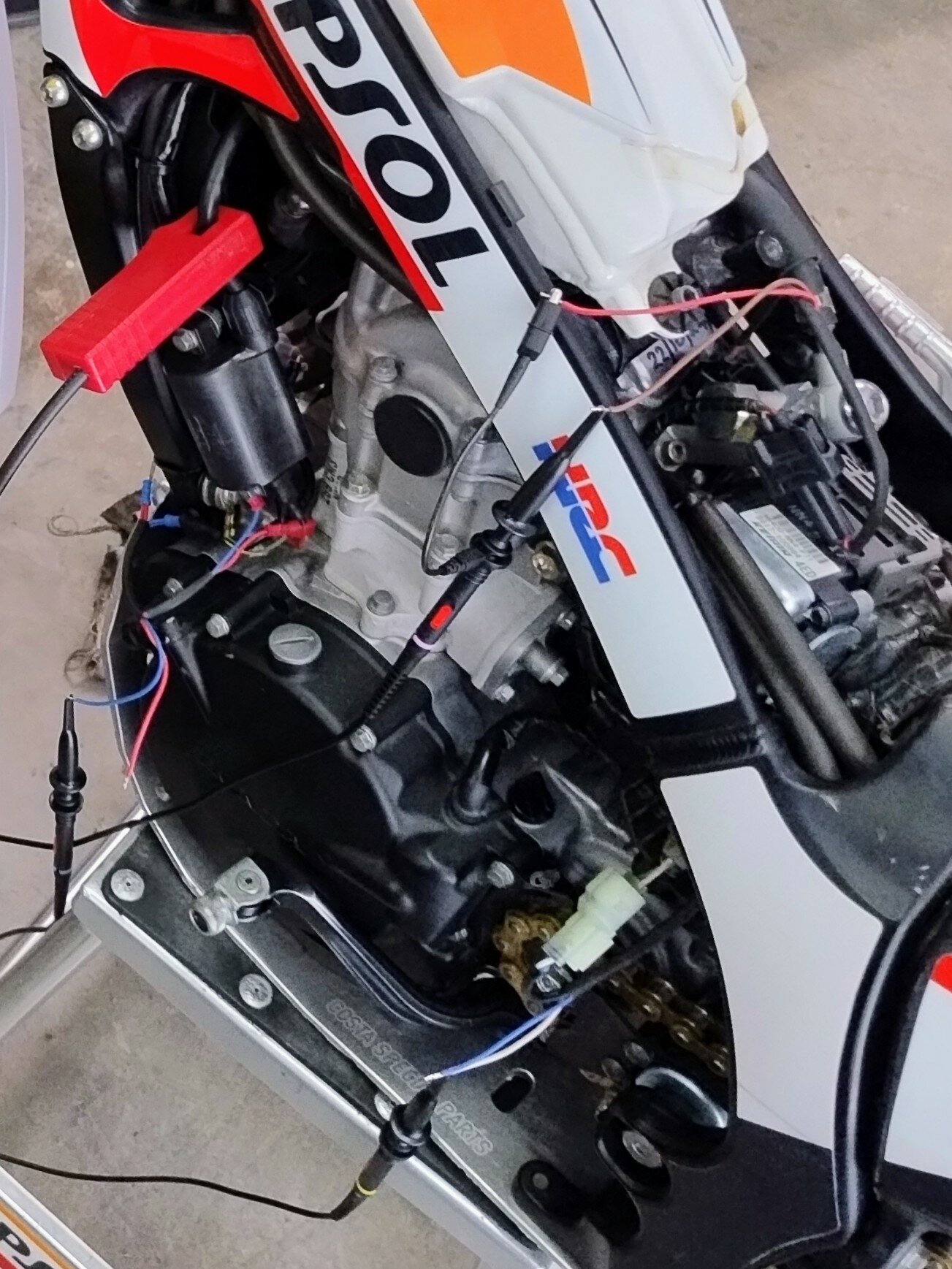
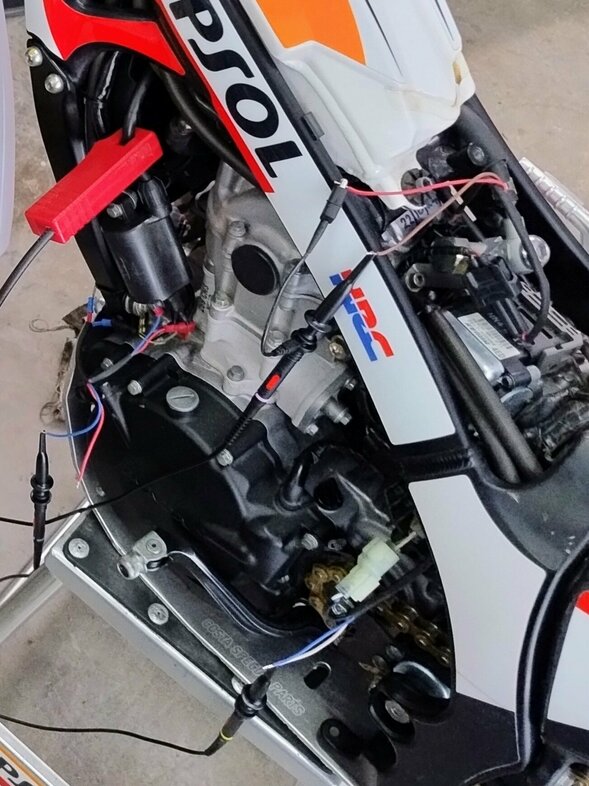
Hi Konrad. A proper high voltage probe would have been nice but I just used the clip-on inductive pick up from an old tach/dwell meter - remember those? Also used on timing lights. The red thing below... I just attached a BNC connector to make an easy connection to the scope. I thought it might be better than winding wire around the plug lead. The duration of the spark is extremely short. Unfortunately, at the relatively slow timebase needed to show the other signals, the spark impulse is just one pixel wide. It's hard to see but I just wanted to verify the spark occurs when the ground is removed from the coil - same as a traditional "Kettering" points ignition (and unlike CDI used on other bikes).
-
Not really. Those stator windings feed three phase AC to the rectifier/regulator to provide 12v DC to power everything. Those are connected via the three yellow wires on the 3 pin plug. There are multiple magnets in the flywheel passing those coils. Ch1 on the scope is connected to the Pulser or pick-up coil shown top right of your photo (with the two mounting holes). It sits external to the flywheel and detects holes and slots machined into the outside of the flywheel. That is connected to the white and green wires in the 2 pin connector. Most bikes have only one slot in the flywheel for timing but the 4RT has a row of nine then a gap. Edit: The Pulser wires are actually white/yellow and green/yellow.
-
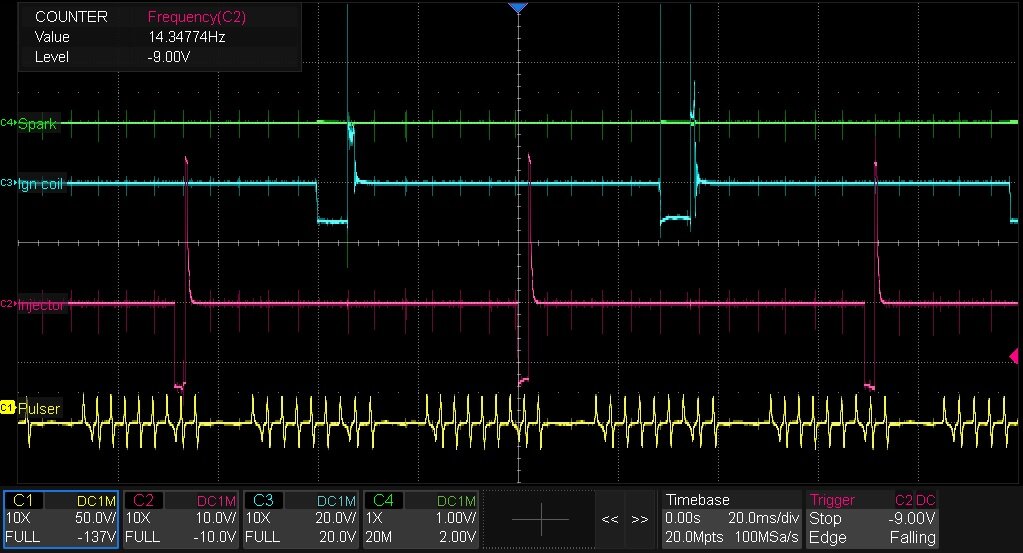
Just a quick update to my original post... I've purchased a more modern 4 channel oscilloscope to replace my old 2 channel unit. This allows me to simultaneously display the relationship between crank sensor, fuel injection, and ignition. The traces are labelled on the left... Ch 1 (Yellow) is the crank sensor or "Pulser" coil. Ch 2 (Pink) is the fuel injector signal. Ch 3 (Blue) is the ignition coil signal. Ch 4 (Green) is the spark plug inductive pickup. The Pulser coil detects a row of holes in the flywheel. There appears to be a slot followed by 5 holes followed by another slot, then 2 more holes. These bursts occur every revolution of the crankshaft. In this shot, the engine is idling at 1720rpm. The fuel injector fires on the negative going pulse and stays open for the duration of the negative pulse (there is +12v on one side of the injector and the ECU pulls the other side to ground). The pulse width determines the amount of fuel injected. This pulse occurs every 2nd revolution of the crank at the start of the intake stroke. The ignition coil also has +12v on one side and the ECU pulls the other side to ground to create the magnetic field in the coil. The spark occurs when that ground is removed by the ECU and the field collapses. So the duration of the negative pulse is effectively the dwell angle (in old lingo). The spark trace is hard to see because it lines up with the trailing edge of the coil input. In any case, the spark occurs every second revolution in between the fuel injection pulses - no wasted spark.
-
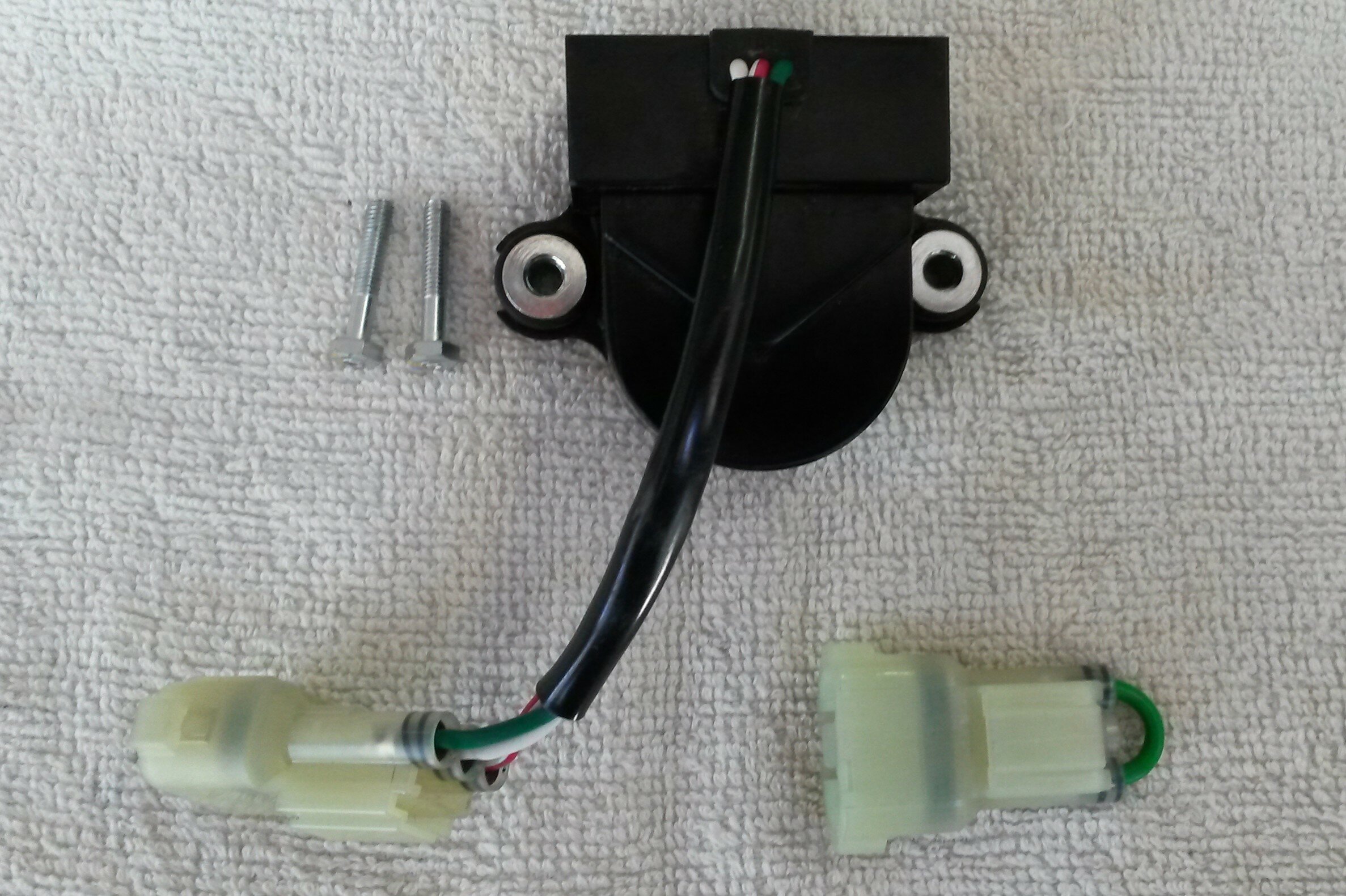
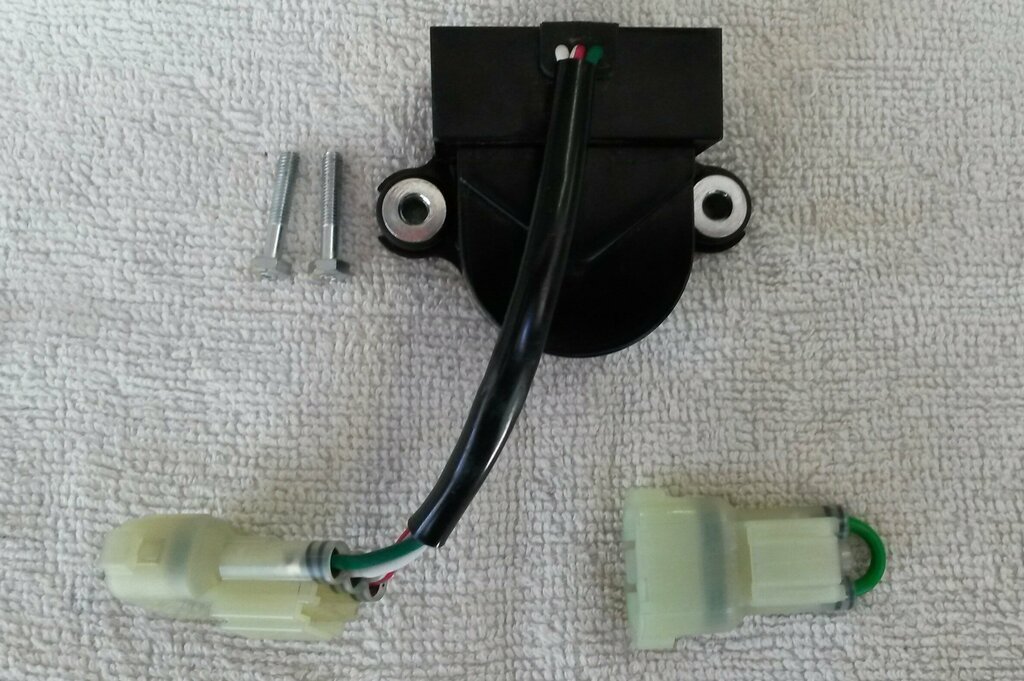
As others have said, some of those things don't need fixing. However, if you feel the need to remove the Bank Angle Sensor (BAS) then this might help... The BAS is connected via a 3 pin connector inside that blank vinyl boot above the front sprocket. To bypass the BAS and allow the bike to run, you need to jump the two outer wires (the green and the red/white) in that connector. Montesa use very nice sealed connectors from Sumitomo. To do this bypass correctly, you should buy the correct Sumitomo HM090 male connector. and wire it as shown below right (plug the centre hole). Anything else will risk water ingress into the wiring. One place you can get the connector is Cycle Terminal in the USA. Look for "Male half only Natural Male HM090-3 $3.25 each" on http://www.cycleterminal.com/hm-sealed-series-090.html page.
-
Yes, I was aware there are some fuel pump issues. I'm guessing it's the same problem affecting millions of bikes and cars worldwide fitted with Denso or Assen pumps. Somehow the material used for the impeller absorbs fuel causing it to swell. Road vehicles in many countries are subject to recall and a free replacement (my Honda road bike is one) as it's a safety issue. I've seen no such recall on the Montesa so I'll just keep riding until it fails I guess. But thanks for the heads-up.