When James Toseland quit Motogp I always wondered why he didn't just try a left handed throttle and brake system, it might have taken a huge amount of brain training but at the very least he could've tried instead of moaning.
His right hand would've done very little then.
This is a very random post, sorry.
The very fact that the op has mentioned a left handed throttle has set me off.
Is there such a thing ?
Yes, albeit home made. I tried the guys bike and it was WEIRD....... to say the least.
How about guys putting lots of grease on a bolt and then trying torque it. Torque specs are based on dry metal to metal contact unless called out for a specific anti seize or lubricant. If so the torque value has to be reduced from the dry value.
This has alway been an issue. Motorcycle piston clearance vs American V8.
Typical Honda water cooled piston clearance is .0004 to .0015" new, service limit .002"
Have a cyclinder bored by a machine shop not use to those numbers it come back at .003 or .004". Already well past the service limit or more than twice the spec.
Typical air cooled Honda runs. .0004 to .0017" with service limit of .004" Example 1986-1995 XR250 R .0006 to .002" service limit .004"
Wonder why some engines have piston slap cold ...........start with .005 or more for clearance.:eek1
I suspect freddy is pretty close. For example Porsche specs their 90mm (3.5433") piston to bore clearance at approx 0.003". This is on a precision engine that can survive on a racetrack off the showroom floor, it is also an air cooled cast aluminum cylinder with a coating and a forged aluminum piston both of high quality alloy content. Running a cast iron cylinder with an aluminum piston will definately need more clearance and it also depends on whether or not it's air or watercooled as the aircooled run a little hotter and tend to warmup faster. I remember my old stroker Ford Windsor, with street mufflers on you could hear the piston slap for a few moments til the pistons expanded.
I always had to run our YZ490 dirt track engines (same basic engine as the air cooled wr500) at about .006" piston to wall clearance when using forged pistons like Wiseco. We found the air cooled barrels distort so much when you run them hard, that anything less would cause the piston to tighten up on long straights. The bores just don't stay very round when they get hot so it takes extra clearance to keep everything working together. Big air-cooled engines aren't well behaved like the new water cooled stuff. It sounds like marbles in a coffee can when it's loose and cold, but it always worked well for us.
It sure is a lot easier to go fast with the newer stuff .
High quality full synthetic automatic transmission fluid formulated to provide ultimate wear protection and performance except where Dexron® VI type fluids are specified.
APPLICATION
Recommended for buses, coaches and commercial vehicles operating under heavy loads or extreme conditions wherever General Motors type fluids are recommended.
FEATURES & BENEFITS
Excellent resistance to oxidation thus assisting in prolonging the life of the lubricant
Extended oil drain potential resulting in lower operating costs,
Enhanced protection against deposits to extend transmission life,
Temperature reduction in severe conditions improves transmission and oil service life, and assists in reducing fuel consumption and emissions,
Optimised frictional characteristics to provide smoother gear changes and better protection against wear,
Outstanding cold flow properties materially assisting in reducing wear at start-up,
Proven performance in drag racing (e.g., Lenco drag racing transmission in Pro Stock),
Low foam – stable gear shift performance when transmission is hot,
Compatible with mineral/conventional automatic transmission fluids,
Lower volatility – negligible oil loss at extreme temperatures,
Better control of deposits – cleaner transmission – longer transmission life.
SPECIFICATIONS
MB-Approval: 236.81
MAN 339 Type V2, Z3
Renk
Voith 55.6335.33, 55.6336.33
VW 501.60
ZF-TE ML 04D, 11B, 14C. 16M
Description
Castrol Transmax Z is a high quality full synthetic transmission fluid. It is particularly recommended for use in automatic and semi automatic transmissions used in buses and coaches. It may also be used in manual transmissions. As such it is recommended for fleets employing a mixture of Voith, Renk, ZF, Allison and MB transmissions alongside the Leyland Pneumocyclic and Hydracyclic units. Extended oil drain [120.000 km] in ZF Ecomat, MB AT and Voith AT
Application
Castrol Transmax Z has proved most suitable in severe service applications where high temperatures have reduced transmission life. It has been shown to reduce automatic transmission fluids temperatures by up to 20 ̊C in severe duty applications.
Typical applications include:
Heavy duty automatic transmissions with integral retarders Transmissions of vehicles used for towing
Transmission retarders
Racing applications
Long drain applications
Ford A4 LD transmissions in taxis and transit vans.
Particularly recommended for use in automatic and semi-automatic transmissions used in buses and coaches.
Recommended for power steering systems and manual transmission systems where DEXRON III or II fluids are specified.
Very successfully used in drag racing applications in Australia, in Powerglide to Lenco transmissions, for Super Street to Top Alcohol competitors.
Extended drain intervals in heavy duty automatic transmissions City and Suburban service 100,000km or 2 years On-Highway 300,000km or 2 years
For long drain oil applications, Castrol Labcheck or other oil and wear metal monitoring is required to ensure optimum performance and durability.
Advantages
Excellent resistance to oxidation prolonging the life of the lubricant, offers extended drain potential and lowers operating costs.
Enhanced protection against deposits extends transmission life.
Temperature reduction in severe service improves transmission and oil service life and helps reduce fuel consumption and emissions
Optimised frictional characteristics providing smoother gear changes and protects against wear Outstanding cold flow properties giving high protection to transmission especially at start-up
ZF TE-ML 04D, 11B, 14C, 16M, 20C
Recommended by Nissan where Matic Fluid D is required
Removal
Bare Metal Surfaces: Remove with Castrol solvent cleaners or water based degreasers.
Hand Cleaning: Use any of the Castrol range of hand cleaners; e.g. CareClean Plus.
Other Surfaces: Contact your local Technical Advice Line on 1300 557 998.
Storage
All packages should be stored under cover. Where outside storage is unavoidable drums should be laid horizontally to avoid the possible ingress of water and damage to drum markings. Products should not be stored above 60°C, exposed to hot sun or freezing conditions.
As automatic transmissions become more complex, there’s a need for more technologically advanced fluids to ensure vehicle reliability. Getting the right oil for your car is key to ensuring your transmission operates as designed and you get a smooth driving experience every day.

Castrol, with over 100 years of experience in developing transmission fluids, and being the choice of many leading car and transmissions manufacturers for factory-fill products, offers a range of automatic transmission fluids for your car’s requirements. Providing you the peace of mind that you are selecting the right oil for your vehicle.
TRANSMAX™ FULL SYNTHETIC MULTI-VEHICLE
Castrol® Transmax™ Full Synthetic Multi-vehicle is a technologically advanced, low viscosity formulation specially designed to deliver maximum fuel efficiency for modern automatic transmissions. It is blended with premium base stocks and is fully approved by both Ford and GM for use in vehicles requiring their latest ATF specifications. Exceeds requirements of JASO-1A and recommended for a wide range of import vehicles.
Castrol® Transmax™ High Mileage is ideal for most transmissions with over 75,000 miles. Additional seal conditioners help stop leaks. Extra cleaning agents reduce varnish and deposit formation. Protects against clutch wear and restores smooth shifting.
Castrol® Transmax™ MERCON®V includes exceptional thermal protection and promotes smooth shifting. Certified for use in Ford vehicles that require Mercon or Mercon V.
Castrol® Transmax™ Type F provides excellent lubrication to gears and bushings, allowing for smooth transmission operation. Certified for use in all Ford vehicles that require Type F ATF.
Castrol® Transmax™ DEXRON®is a premium synthetic blend certified for use in all GM vehicles. Outstanding deposit resistance and enhanced friction durability improve shifting performance.
I'm sure they do, but they likely carry all kinds of other oil. But they mentioned it was 'recommended'. By whom I have no idea. Based on the numbers, I'm more inclined to run M1 simply because the viscosity numbers are closer to the Castrol recommended in the manual, and the fact that any additive package in the M1 is going to be more similar to the Castrol, being that they're both ATF.
I actually asked the same question of LS of why Maxima 0-10W ? I would agree the Mobil 1 ATF is a good substitute.
multiple wet clutches with friction material similar to that used on multiplate trials clutches and numerous epicilic gear sets doing much more work than a straight cut trials dog shift box with minimal hp
Yes I have. ATF oil does not has similar charicteristics in the way of shear, foaming, stiction. Amongst other things an automatic transmission uses hydraulic pressure through its passages. Two completely different applications.
What are you using? The manual on the vertigo site specs a Castrol synthetic ATF (the closest thing I can get in the US is Mobil 1 Synthetic ATF). The US importer seems to recommend a Maxima 0w10 (no idea why). A close US dealer runs regular ATF.
Maxima 0w 10 is virtually identical to Castrol synthetic ATF. Regular ATF (Rather than the most recent synthetic types) will not provide the same level of protection.
How did you come up with a hypothesis that a synthetic fluid engineered for a hydrualic application (automatic transmission) is the same as a synthetic fluid engineered for a gearbox with clutch application?
Food for thought....... Orifice of jet constant. Adding more oil to the pre mix. There is a point where adding so much oil the mix will go lean (due to the more oil displacing the gas molecules to get through a given orifice). Although the oil mix ratio has went rich the burn mix has went lean. Go figure this paradox... ask your self what is more flammable a full gas can or an empty gas can? Trials oil gas mixing ratios of the majority of riders are no where near the controversial tipping point of too much oil making the mixture go lean. We are taking about below 20:1 ratios.
Oil in the gas has several jobs to do, depending upon engine design, oil the main bearings, lube the con rod, lube the piston to wall, help stop blow by. If there is a CO sensor in the Vertigo exhaust then maybe it is sensitive to carbon build up hence cutting back the oil ratio to help the CO sensor stability longevity???
"For anyone who is interested pistons are pistons they are not made specifically for an aircooled engine or a watercooled engine as in there are no differences in thermal expansion rates between the two"
You mean all these water-cooled bikes are a waste of time? Why did the engine design engineers go to all that bother? Are you telling me that an air cooled engine does not lose power once it gets really warm? Are you saying that the consistency of an air cooled bikes power output was never held to the same laws of physics? While the expansion rates of a particular type of aluminum that the piston is made of may be the same (an air cooled piston vs. a water cooled piston, aluminum is aluminum, ) the environment that that piston performs in i.e. a water cooled cylinder vs. an air cooled cylinder is two different environments. In an air cooled engine due to the poor heat dissipation i.e. fins, the piston and cylinder expansion was greater and exposed the bike to a power out put drop, pinging and a seizing of the engine, hence why there was a greater gap. A water cooled bike can hold the temperatures in a more controlled environment. Basically the two piston materials may expand and contract at the same rate in theory it is the environment that is the concern fins vs. a water cooled jacket. Can I please have the name of this well know engine builder plater so as I can avoid them.....
Trying to use a water called engine piston in a air called engine is risky thing to do. Why? The clearance on a air cooled piston to cylinder is much larger to allow expansion of the pistons during running. The whole idea of a water called engine is that the pistons and cylinder stay cooler and affording smaller clearances of piston to cylinder. A piston of a water cooled engine would be tighter and could expand very easily seizing up the engine.







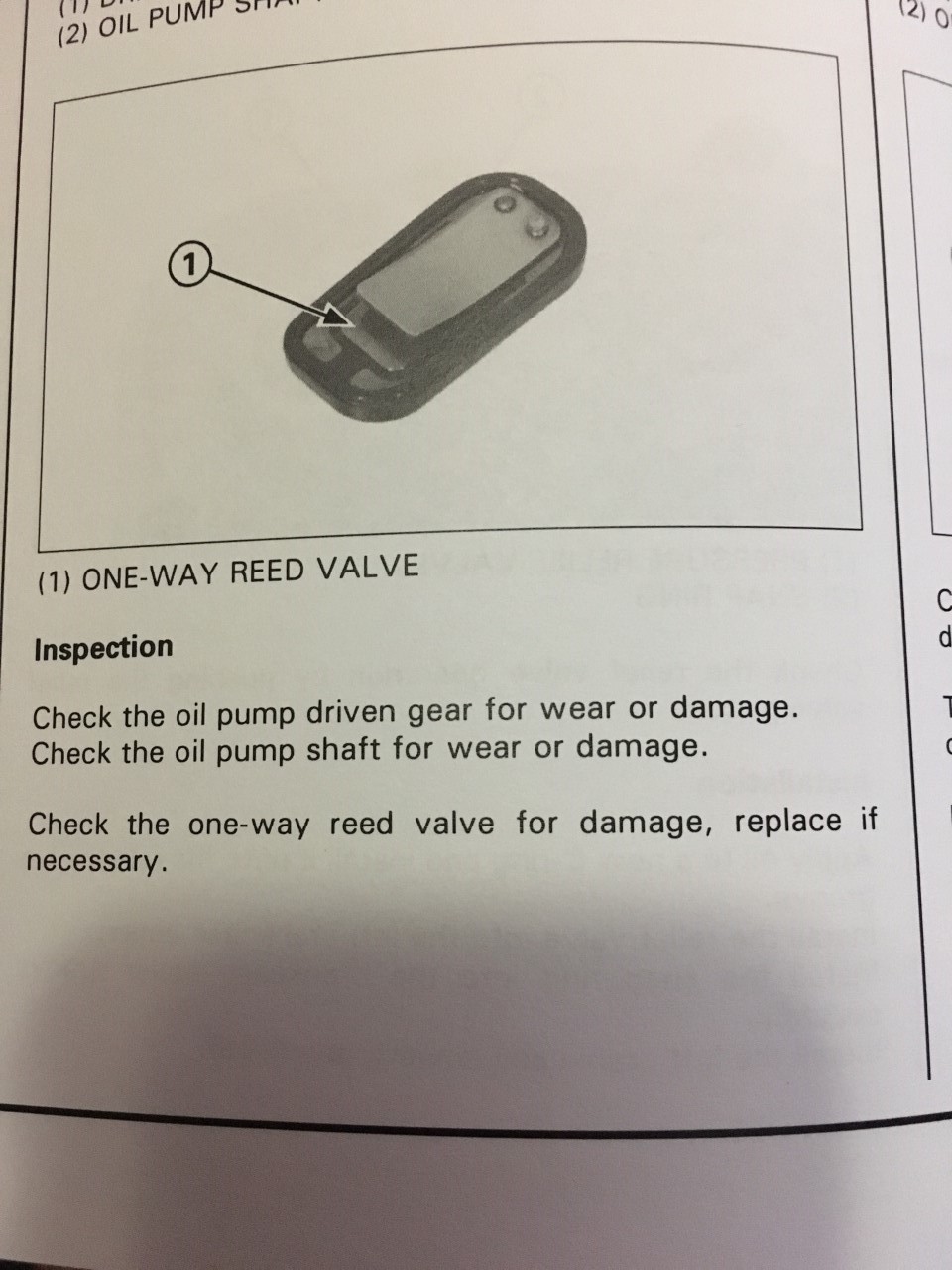
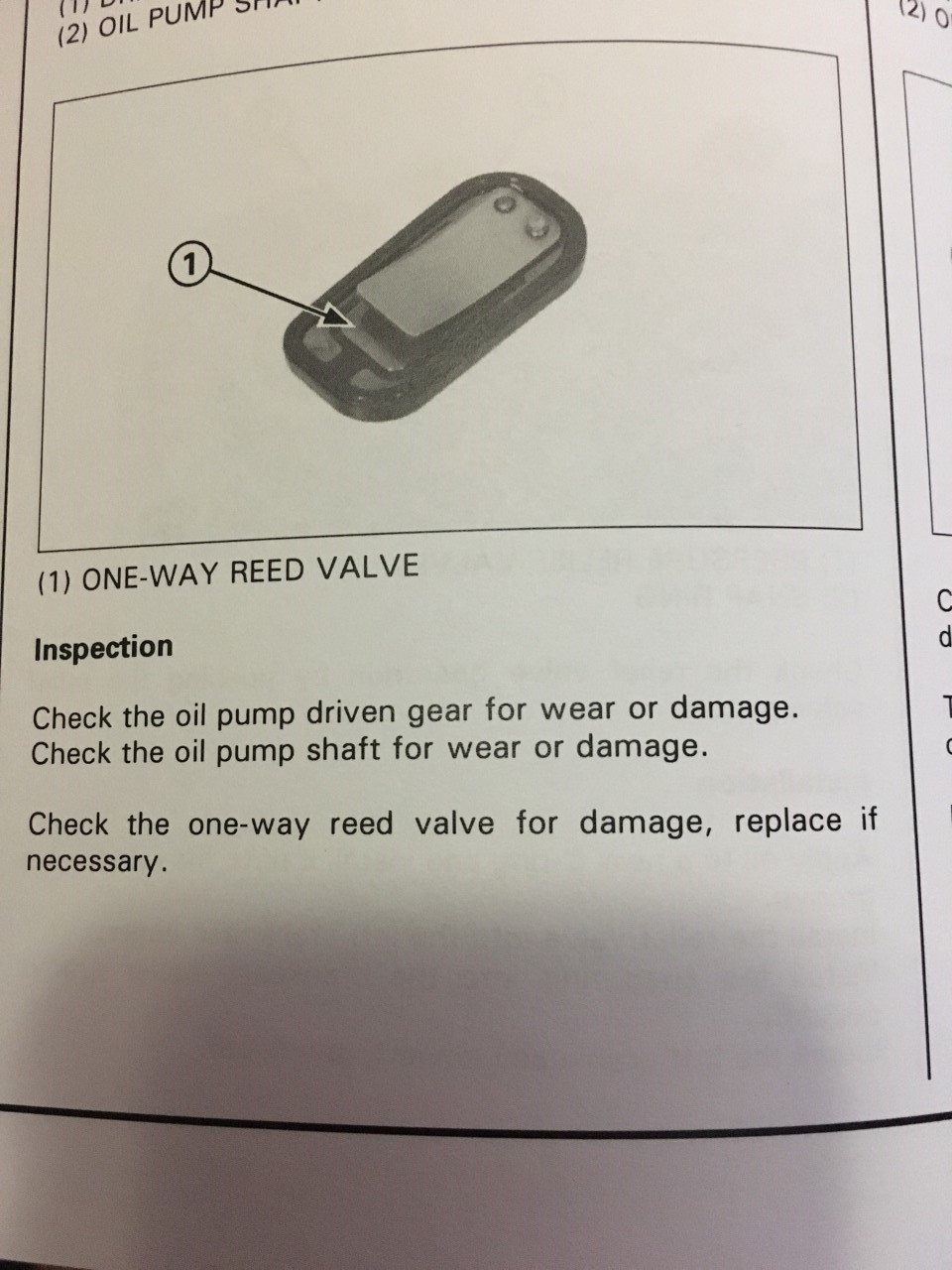


 ask your self what is more flammable a full gas can or an empty gas can? Trials oil gas mixing ratios of the majority of riders are no where near the controversial tipping point of too much oil making the mixture go lean. We are taking about below 20:1 ratios.


Always Wondered?
in General Trials Talk
Posted
Yes, albeit home made. I tried the guys bike and it was WEIRD....... to say the least.