

dan williams
Site Supporter
-
Joined
-
Last visited
Everything posted by dan williams
-
It’s got a few dings and is probably closer to the frame than new but it won’t affect the engine enough to be noticable. Probably be a bit more of a pain to take off but that’s one of Beta’s pecadillios. I can tell you one thing for sure. Don’t stick your leg or any other meat part under it in a crash. Still filling in the hole on my leg from August. On the bright side, once you burn away the nerve endings it doesn’t hurt.?
-
I've never heard of anyone changing their float valve size as an engine tuning procedure. Typically the float valve is sized to be large enough or larger. It looks like the parts manual for your bike does call out the 200 float valve and someone may have upped it to handle a fuel starvation issue. On the larger Betas with the Keihin the valve size is actually too small but it only manifests during long high speed runs when at full throttle the bike will starve for fuel after about a minute. The Keihin valve seat is just drilled into the body so there's no way to replace it like the Mikunis and Dellortos. The float valve is a conical valve with a similar seat shape. It only needs to be open a tiny amount for full flow so a nick or fleck of grit on the seat can hold it open. You probably fixed the flooding problem more by cleaning than changing valve size. As you have figured out already what you have that causes the run-on is a lean condition which is usually caused by a blocked pilot jet, too small a pilot jet or an air leak. You can check for an air leak by spraying starting fluid around the intake manifold while the bike is running. There should be no change in the engine. This is a procedure that can be dangerous so only short bursts in targeted areas. Have a fire extinguisher handy and do it outside where it is well ventilated. Jets and passages are best cleaned with compressed air. Again in a well ventilated area since you may be spraying residual fuel. Be careful of pressure as you can damage seals in the carb with too much. Some will advocate running a wire through a jet to clean it. Don't. If you change the diameter of the jet by either abrading the hole larger of leaving residual material in the orifice you lose any reference point for jetting. That you change the idle air/fuel mixture screw position and hear no change would point to either a way off pilot jet or blockage in that circuit. Since you didn't change the jetting I think you are in for a disassemble and clean of the carb. The DellOrto uses a fuel circuit for the idle adjust so it's possible though unlikely that is blocked. The only other thing I can think of because I've seen it on Keihins is a situation where the choke circuit doesn't properly shut leaking air into the pilot circuit. In any case a clean carb is a happy carb so it's always reassuring to know you've gone through the carb and it's in top form. Good luck tracing it down.
-
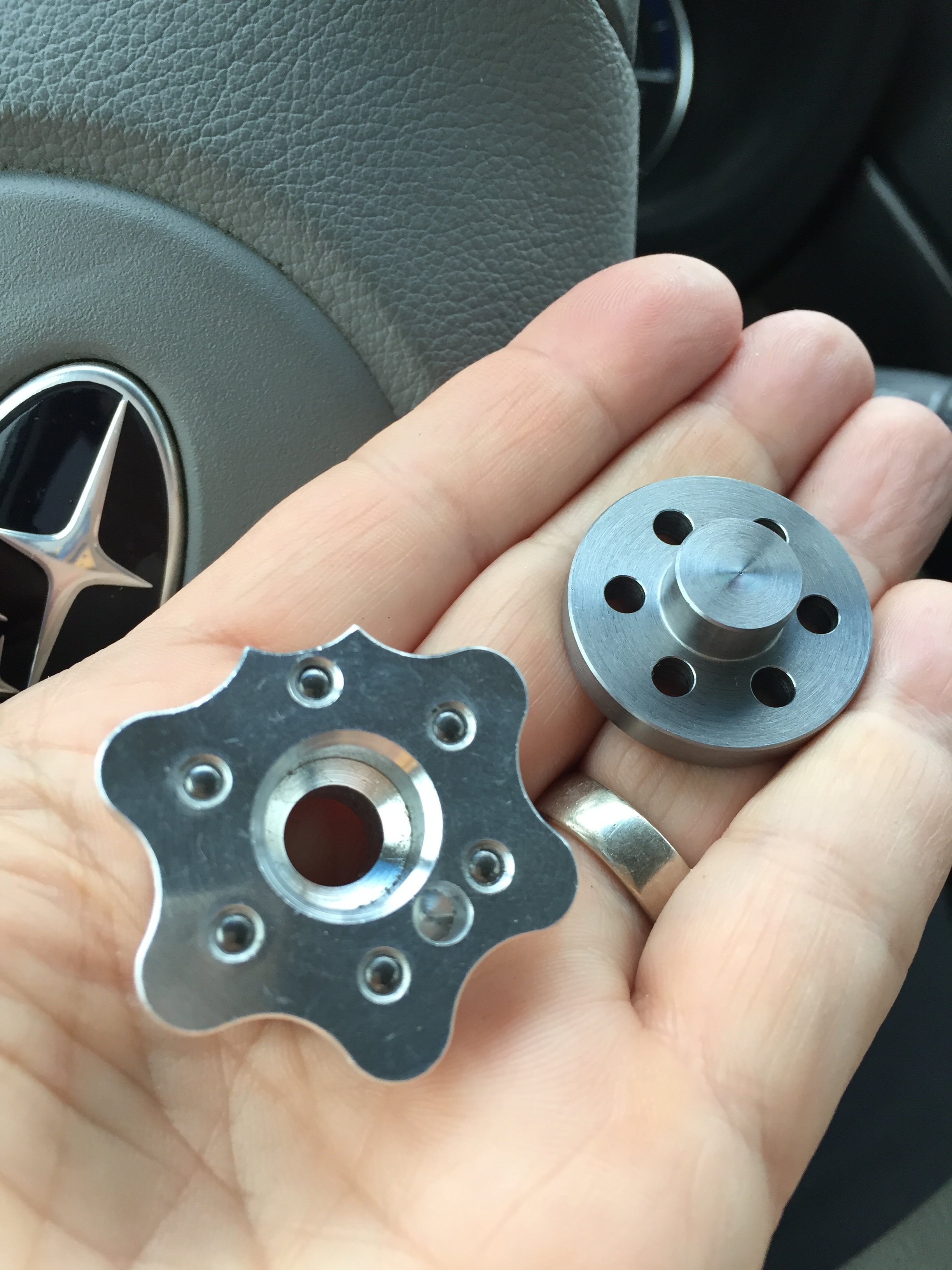
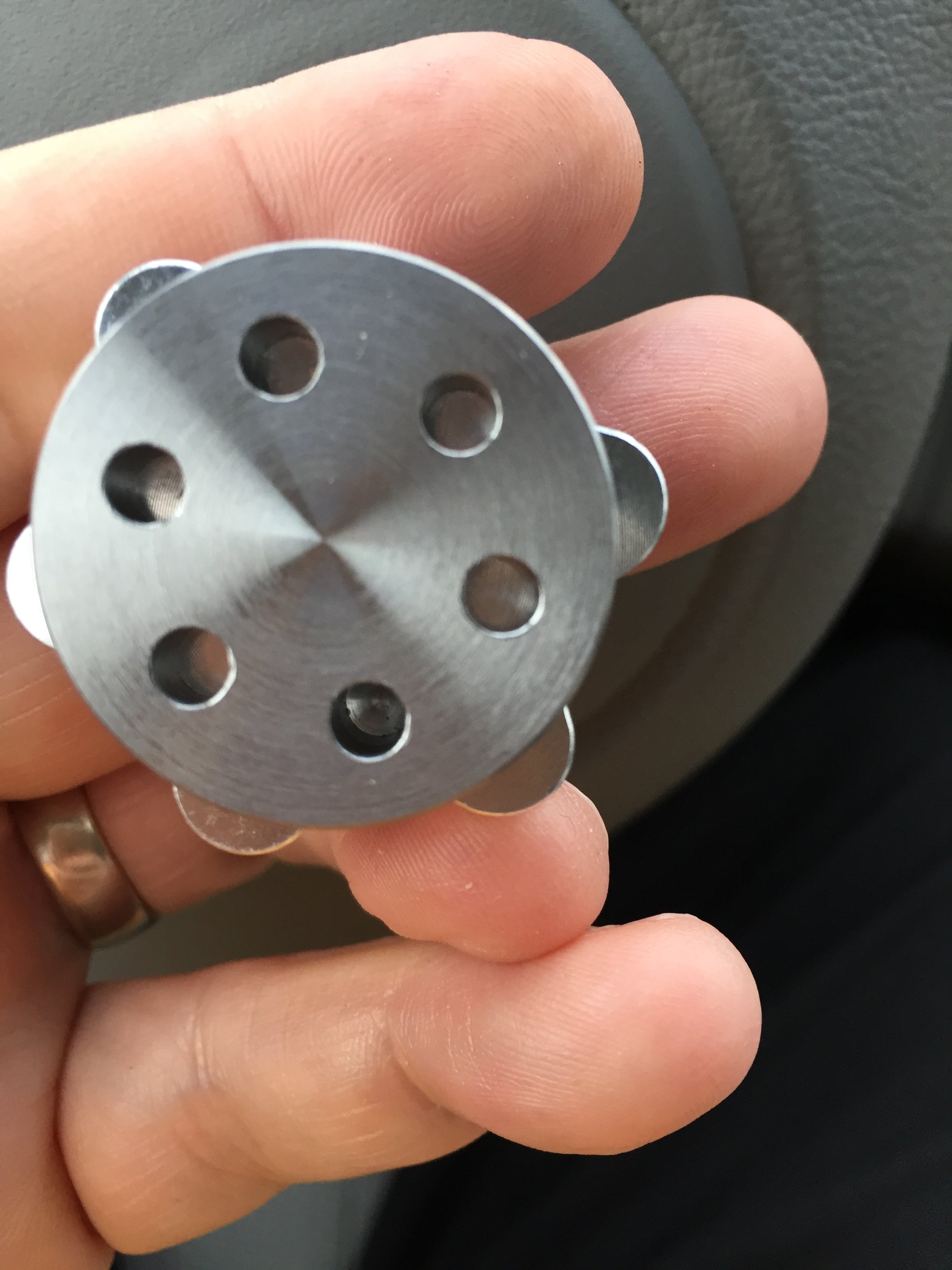
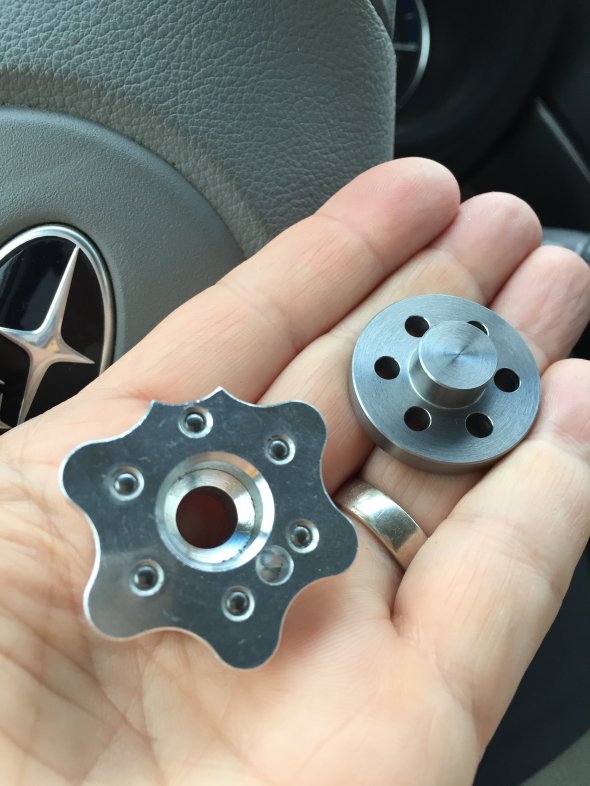
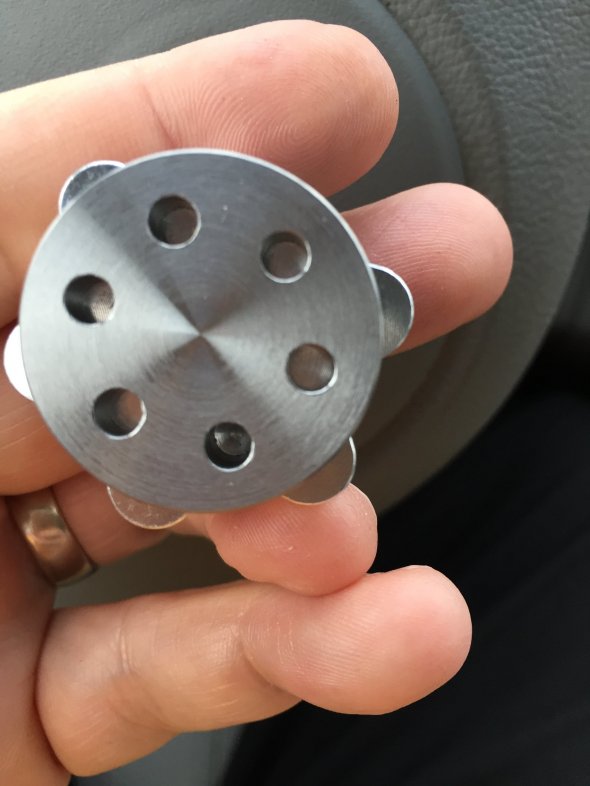
The jig is in and fits like it was made for this. Which it was. Let the fettling begin!
-
The master has spoken. I’ve found it best to do as he suggests.
-
It’s not the overflow on the bottom of the float bowl that’s usually the problem. It’s the vent tubes on the side of the carb.
-
My jig for making alignment holes to place the neutral between any two gears is in. I think I’ll try setting neutral between fourth and fifth to start with.
-
Nip a hole in each of the plastic vent tubes halfway up the carb body. Done. The stock tubes are so long they end below the float bowl so if fuel gets splashed up into the tube it acts like a siphon which is why the thing will keep flowing. If you nip a hole up above the float bowl the fuel will flow back into the float bowl.
-
Ah now that's funny because the reason I was told they went to non-stop was exactly that. So they took away one of the most interesting parts of the sport (trick riding) and now it's not even interesting to riders. Huh, who'd a thunk it.
-
I guess I’m a bit weird but I liked the upside-down forks. Especially with the fork brace.
-
Yeah kind of a crap shoot. If you can find one that's been sitting on the shelf for years you can sometimes get it cheap but usually rarity causes the seller to want top dollar.
-
I’m not picking on Jim he is a legend but he can be, as they say in hockey, a bit chippy. Then again me too? Yeah Beta parts especially plastics are usually a shock for the uninitiated. Especially the older bikes. Welcome to the family.
-
Just to go into the theory a bit what happens with low compression is the speed of the flame front in the combustion chamber is slower so a significant part of the fuel mixture doesn’t burn before the exhaust port opens. Unburnt fuel is unused power since it never gives its latent energy as heat so never contributes to the pressure above the piston on the down stroke. You can compensate somewhat by advancing the ignition timing but that only helps a little as the shape of the head is optimized for an expected burn duration.
-
I couldn’t find specs for a 2000 but the compression ratio for an ‘04 is 11.4:1. I remember it was quite high on the older Betas. The main reason they run lousy on regular fuel. At sea level pressure of 14.7 PSI even without any boost from scavenging effects of case reeds and exhaust you’re still looking at ~150 PSI relative to atmospheric. Jim knows a lot but he does tend to give the, “Go away boy, ya bother me.” answer when he’s in a cranky mood.
-
Any Beta I’ve tested was up over 140. If you really are curious the typical way to check is take the rings off and put them in the cylinder and measure the end gap with a feeler gauge. Trials bikes parts are expensive in general. The cost of owning specialist machinery. I still think 125PSI is low compression for a Beta but I’ve been wrong before so...
-
It looks like Trials and Tribulations has them in the UK. I’ve ordered some stuff from the UK and it’s been a little pricier but not too bad.
-
Just rings I think. If you don't hear a slap you're usually good on a trials bike. They just don't stress pistons like other bikes. You can get rings from just about any Beta dealer or the beta importer at betausa.com Your parts diagram https://www.betausa.com/sites/default/files/pdf/2012Support/Parts Diagrams/Mototrial/Full Size/2000 Rev 125-270 2 stroke.pdf Looks like your rings are part# 28.52200
-
I believe I was seeing about 145 PSI but it does vary. I usually get about four years out of a Beta before I notice it's a little soft off the bottom and harder to get started. They still run fine once going so it's a little deceptive until the new rings are in and then you realize how much power was lost. As noted crank seals and reed valves can also cause a loss of cranking pressure which will affect starting. As for kicking it isn't a big deal to me as I had a 400 Maico as a kid and anything after seemed easy, even 40 years later. It is fun letting someone who isn't used to a trials bike try to start my 300 as they often can't get the starter to move. I did have one guy test ride a bike to see if he wanted to buy it. Supposedly knew how to ride. He stood on the pegs, wound up his leg and jumped full force... ON THE SHIFTER! The assembled group of riders just watched horror struck as I yelled, "WHAT ARE YOU DOING?" He calmly replied, "Trying to start it, DUH." He didn't buy the bike.
-
Worn rings will lower cold compression to the point they are a pain to start. If the stator is good and the carb is clean you probably have low compression. It is an 18 year old bike and I doubt the previous owner was going to freshen up the motor before selling.
-
Keihins are notorious for getting a bubble of water in the pilot circuit. Pump gas can be very inconsistant. I used to run Sunoco Ultra 93 until a few bad batches put me on my tail a few times. Nothing but racing fuel ever since and not a single fuel problem in many years. A friend with a TRS had a problem with an intermittant misfire we traced to the CDI wire harness being trapped between the pipe and the coil bracket. The pipe had melted the trigger wire insulation and was just barely shorting out the ignition. Good luck finding the problem.
-
Yeah, "swarf" is a fancy way of saying the same thing. ?
-
The question of why I'm concentrating on the cam/indexing arm has two simple answers. 1. I'm not into splitting cases if I don't have to. 2. There should be no rotational force on the shift drum from the gearbox. The only indexing and restoring force for the shift drum should come from the cam/indexing arm. Assuming the grooves in the shift drum are cut correctly the only scenario I can see where the gear train can apply torque to the shift drum would be extremely worn dog teeth on the sliding splined gears or shaft flexure. I'm aware that the shift drum being made out of aluminum is subject to wear from the pins on the steel shifter forks but that is unlikely on a new bike. So that leaves the cam and we can just look at the thing and see that the force required to go from 1st to neutral or 2nd to neutral is considerably less than that required to go between any other gears. I believe the new cam is an attempt to compensate for the use of a 16 mm bearing for the indexing arm but it doesn't address the fundamental shorter wall to neutral though it does allow the indexer bearing to seat in the base of the well better. If it wasn't for the buildup of swarf on the cam I'd say the ultimate solution would be rare earth magnets in the base of the cam wells that would hold the cam in position but release once the bearing is just off the magnet so shifting would still be easy. You could probably get away with one magnet at the top of the "hill" between 1st and 2nd to index neutral instead of a dedicated notch. That way you'd have full restoring force in 1st and 2nd and it would be very unlikely that an incidental tap of the lever would exactly catch the cam in the correct position to catch neutral.
-
If no one reinvented the wheel we’d be on wooden wheels not tubeless radial two-ply trials specific tires. As for barking up the wrong tree. It’s my tree to bark up. If my assumptions are incorrect it hurts you not at all. If they are correct you may benefit. Now if you’ll excuse me I have other stuff to design where they show their appreciation by paying me.
-
Nah I think that’s overthinking it. Most transmission designs are like carburetor designs. Taken from street bikes where you are only in first or second when you are stopping or starting. The time you usually need access to neutral. The majority of time you are rolling around in a higher gear. Trials bikes are a different animal since the critical operating regime is typically the first three gears. As for popping out of gear there’s plenty of anecdotal evidence that my experiance is not unique. So if yours doesn’t have this problem good for you.
-
Gets progressivly harder to start. Sometimes will start easily until it gets warmed up then won’t restart. Then start OK a few days later but cut out once warm. Just generally bad running even when it starts and loss of power under load. The problem was usually the trigger coil would go out so the cdi gets a weak trigger signal which is only sometimes enough to fire the cdi. If you’re not seeing a nice fat spark then clean all the connections and try again but the odds are against you. At least it is fixable since there are s few places that rewind the stators.
-
Agreed. They don’t go all at once. I suspect previous owner may have known.