

bikerpet
Members
-
Joined
-
Last visited
Everything posted by bikerpet
-
Two helpful tips I've learnt: Kick it right from where it stopped. Don't ease the kick start around until it hits compression, just get straight at it. And/or roll the bike backwards in gear until it stops. Pull the clutch & a good swift kick. Only move the kick lever enough to engage the ratchet, no more. Then aim for the fastest stomp you can. Trials flywheels are big & heavy, especially Beta. So you want to make sure you have as much swing as possible to get that thing moving before it gets onto compression. Then the flywheel does a lot of the work for you. I'm 63 & have no trouble at all starting a TRS 300RR or a 300 Beta if I follow this. It's frowned upon, but if I'm tired I'll carefully start it on the side stand. Get on & up, then gradually tip the bike off the stand & then kick. This way you don't stress the sidestand too much.
-
I like my Airoh up to about mid 30°C. Then I use the full face MTB, which is vastly cooler. Except we have to use certified moto helmet at events. It's all compromise, choose your poison. Busted teeth & face with an open trials lid. Potential penetrating injury with an MTB. Heat stroke with a full face dirt bike lid. Take your pick.
-
Another magnetic lanyard part. Includes the bead. https://www.thingiverse.com/thing:2788445
-
Maybe they need to consider e-jotagas for a resurrection. With the offset shock it seems they'd have better options for mass distribution than a conventional shock. That's where my interest originally arose.
-
Can you tell me the sizes of the hex (nuts)? That's what I'm missing. Thanks
-
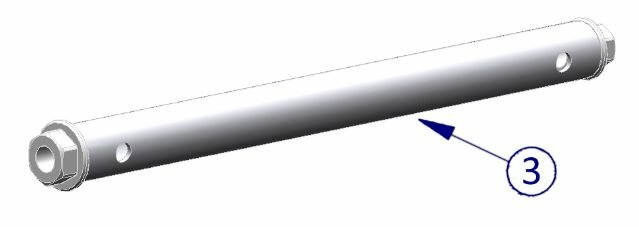
I'm planning on replacing the sliding bushes in my forks some time in the not too far distant future and am hoping someone can enlighten me about the Cartridge Assembly Tool 080008000 used to hold the left leg end stroke regulator. What is the working end? It looks like it is just a socket key, but what size? Presumably it should be easily replicated with a suitable allen key on an extension.
-
FWIW I've had an earlier version of that vest for years. Don't use it often now as I don't seem to crash as much 🙂, but it's excellent. Mine is basically the 7855 with short sleeves. It's certainly warmer than not wearing it (nice in winter) but I can wear it reasonably comfortably even in summer. I prefer the older version as it had small shoulder guards that give me a little more protection against shoulder and maybe clavical injuries. I looked at every MTB vest I could find and the TLD was clearly the best option I could find at the time for our use. It doesn't prevent all painful minor injuries - poky bits can go between the gaps between the pads, voice of experience! But it makes a big difference in many otherwise painful crashes. It makes me much more confident when riding ugly pointy rocky sections. Think about what you'll wear it with. It can be pretty tough to get off if you wear it under your jersey, it sticks to sweaty skin and the stiff pads make it impossible to 'roll' off like regular jerseys. Can be a real struggle without a helper sometimes. Fairly easy to tear the inter-pad material if you pull too hard getting it off. I always wear it over a light jersey. I find light MTB jerseys best as they tend not to be as thick/warm, which is a definite consideration once you add the vest. When it's over a jersey it's no problem to take off at all. I always wanted to find a really thin mesh type singlet to use under it, but never did.
-
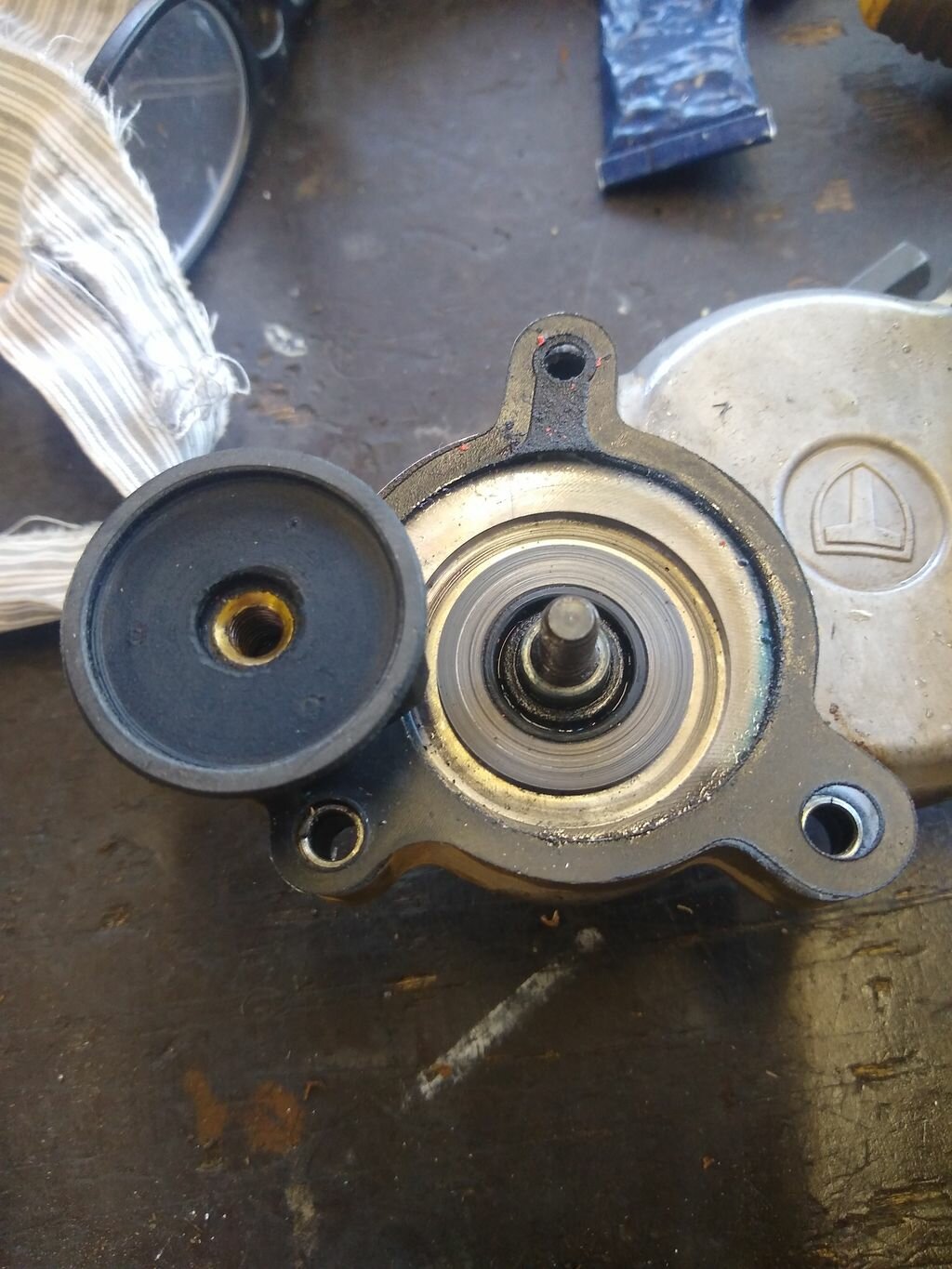
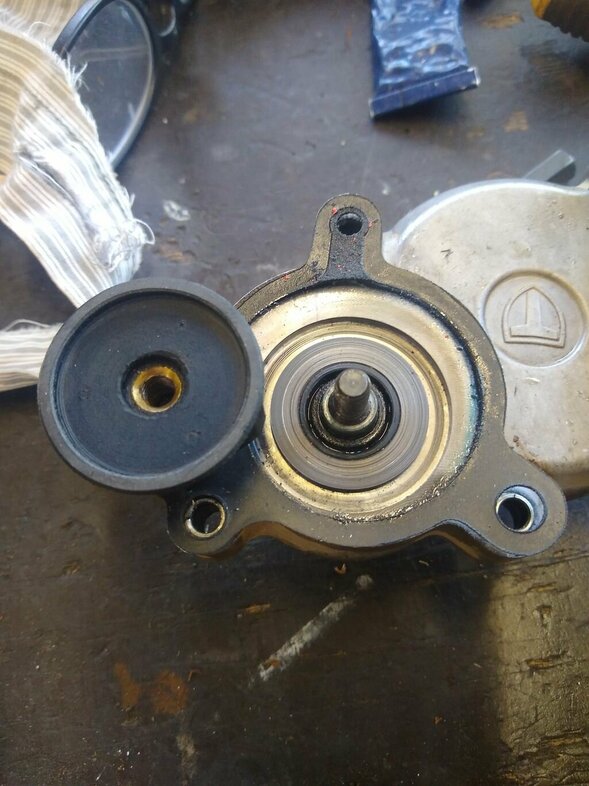
I'm having to replace the RH Crank main seal (bike was consuming gearbox oil) so while I'm in there I thought about replacing the water pump seals as preventative maintenance. In the end I decided 'if it's not broken, don't fix it'. I'll probably regret that, the bike's got 280 hours without any pump problems but I'm probably pushing a friendship at this stage. I did take the impeller off to take a look and found that it has been rubbing on the housing. It's caused a small amount of galling on the back of the impeller, some flakes of plastic in under there and obvious rubbing wear on the housing. My solution was to put the impeller in the lathe and take about 0.5mm out of the back recess. I checked periodically with bearing blue until I just had full clearance. There was slight rubbing at the perimeter flange too but I solved that by rubbing the impeller on some wet & dry on a flat surface. Previously I could hear the rubbing when I turned the impeller up to my ear. Now that's all gone. Pic after machining. Hopefully this will avoid debris in the coolant, possible damage to the outside seal and potential failure of the impeller. As an aside, just in case anyone comes looking: The Primary Gear Bolt is RH thread with Loctite 243 on it. It took a really solid go at it with heat and a pneumatic impact wrench to get it off. I snapped one hex driver (not a top quality driver). The seal, bush and O Ring all need replacing at the same time. Pretty easy to remove the seal - pull the bush out with a couple of magnets then lever out the seal.
-
Follow up on this. New CDI, no more trouble. I've stripped the potting out of the old one with the intention of trying to find the failed component. I suspect it could be something cheap and easy to fix like a capacitor. But of course once the bike is running nicely the motivation to spend time locating a solved problem is very low!
-
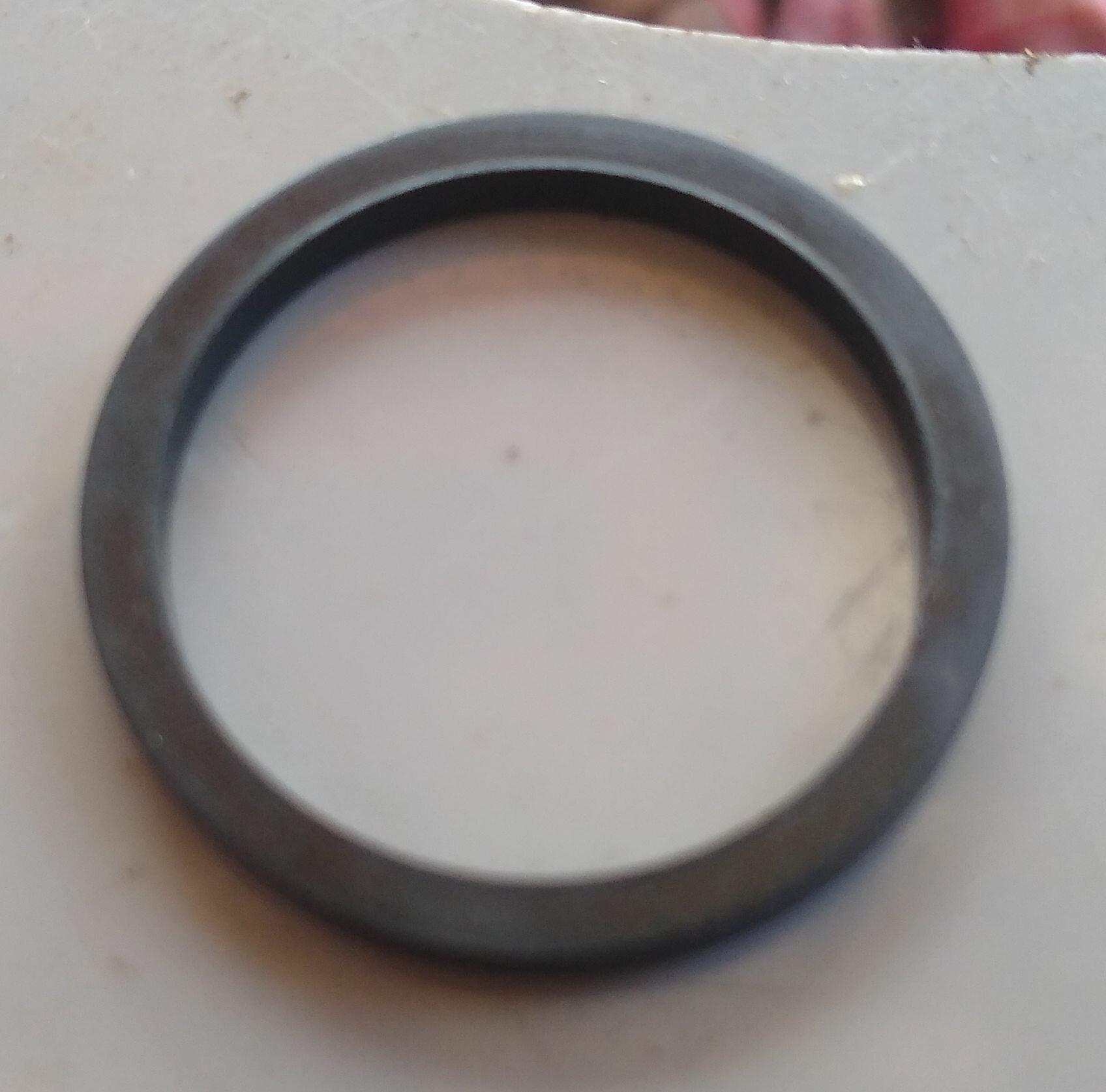
Just a follow up. I put a 1.5mm rubber washer cut from insertion rubber sheet between the top triple clamp and the nut. My thinking was the rubber would stop the nut from rotating. It seems to have worked extremely well. I've not had any more trouble at all. Haven't had to touch it in the past 80 hours of riding. A cheap easy fix. I suspect slipping an O Ring in there would do the job too.
-
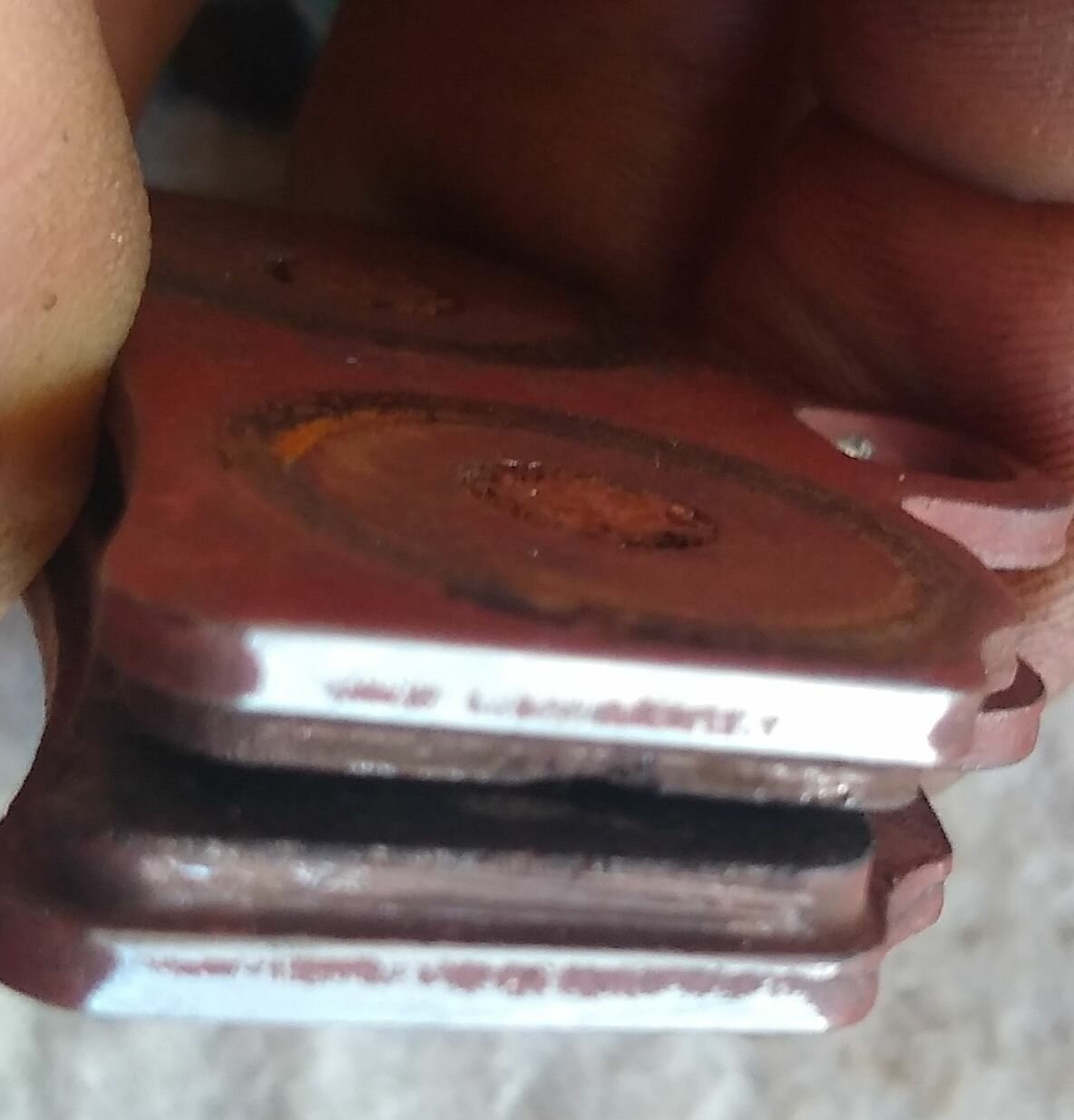
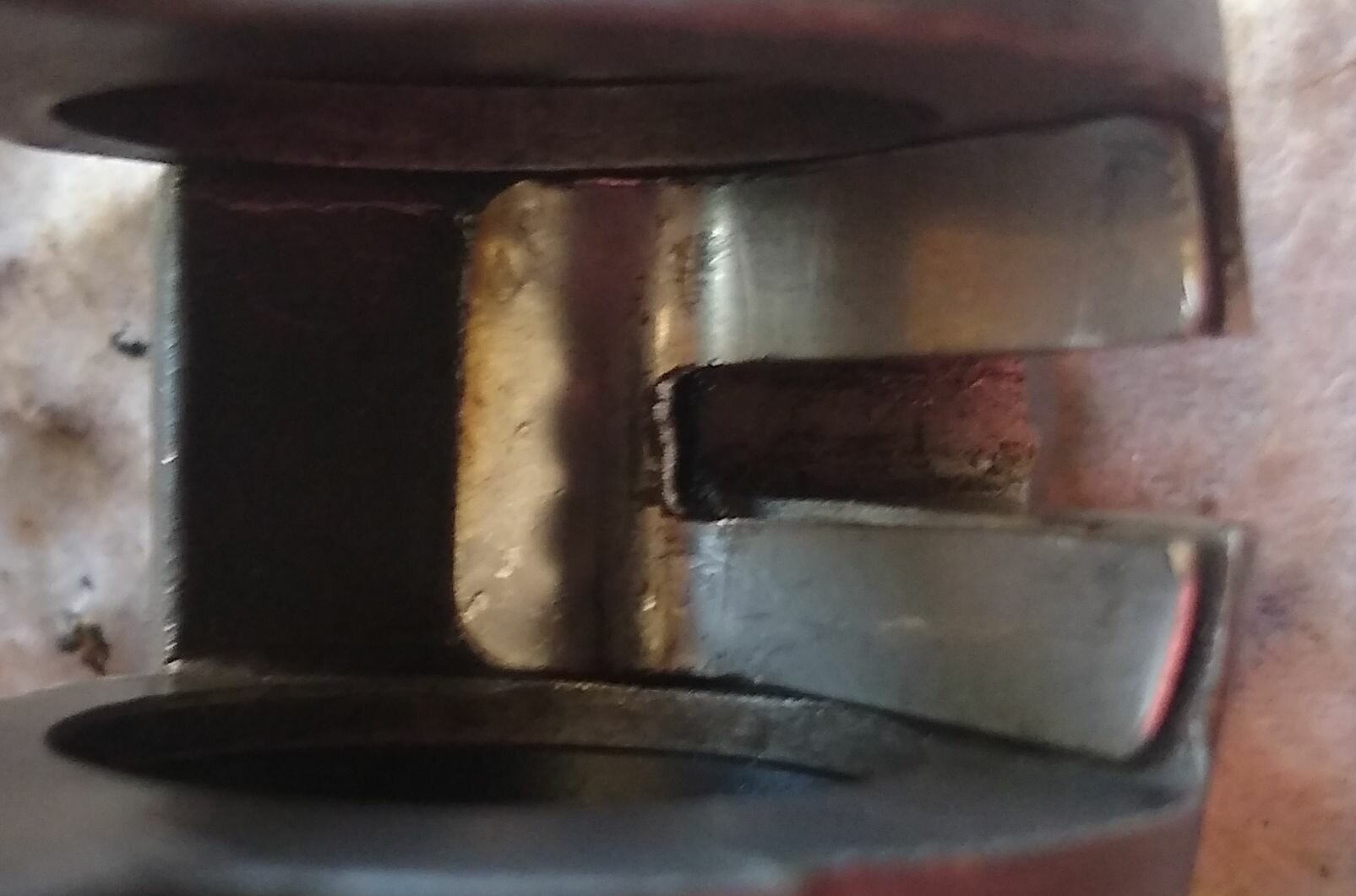
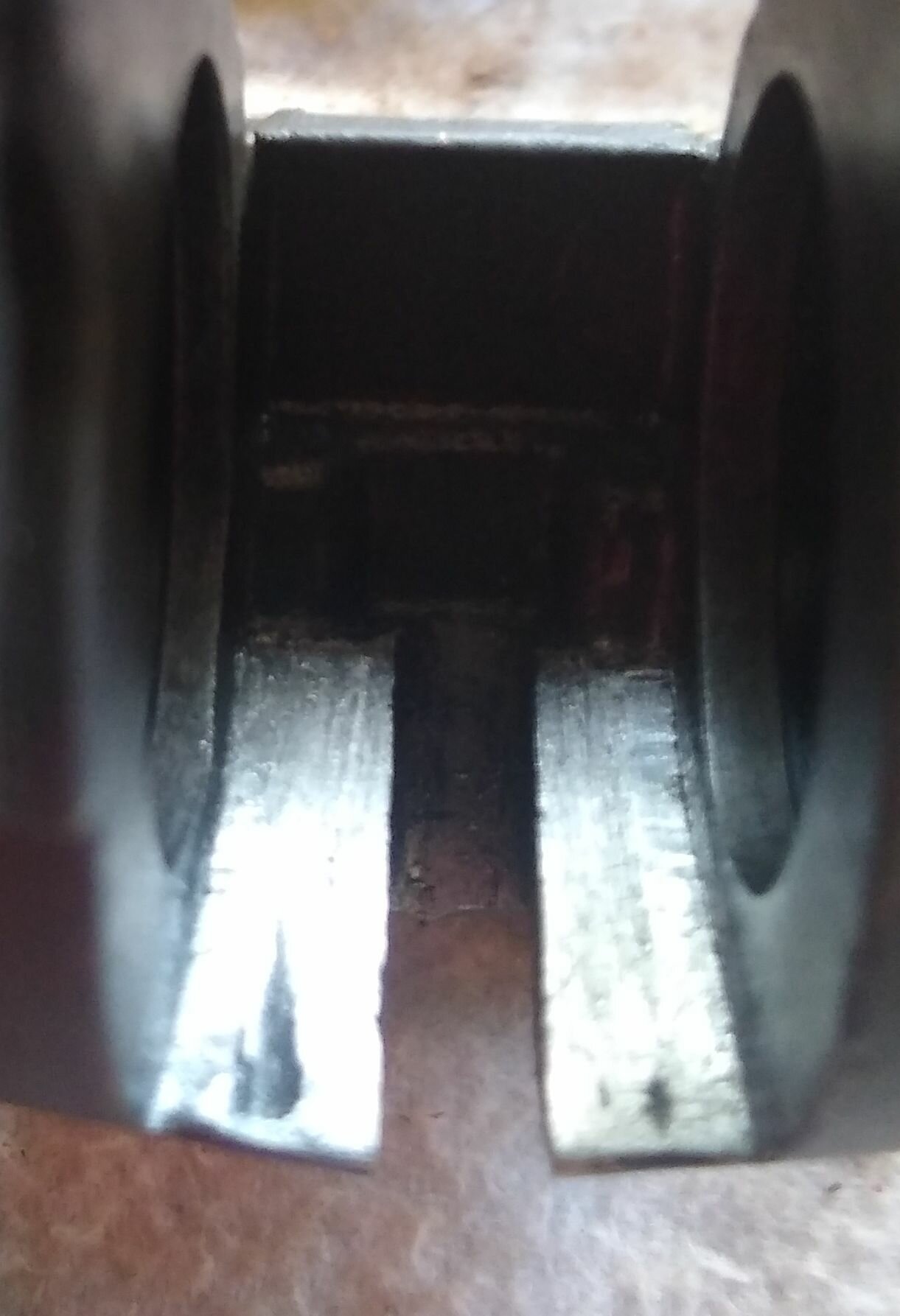
Yes. The OEM caliper wore grooves that affected function in just a couple of hundred hours. That can and should be improved. No. Take a moment to look at the picture again and you should see the shim I made is in the front of the caliper where the pads bear on the caliper body. Where I photographed the cleaned up wear grooves as described in the post two above my 'solution' post. (below) I like JB weld, but I'm not at all convinced that it's sufficiently hard, strong and abrasion resistant enough in thin sections to outperform aluminium. Maybe it is, but I'm not sufficiently confident to spend time on it. I think some thin 1/2 hard stainless sheet would be far superior.
-
If you're referring to the clip in the photo, that's the anti-wear shim I tried to create. Thinner SS required though. The anti-rattle spring sits over the top of the pads. But I've ditched that anyway.
-
That can certainly be a problem, but I'm careful to keep the required free play, and if in doubt I take the top off to check for that little pulse of return fluid. I did wonder if maybe I had too much fluid in the reservoir so the expanding fluid had nowhere to go, but I backed off the m/c cap screws while it was still hot and holding brakes and it didn't make any difference. Fingers crossed.
-
I think I have it licked without any work on the m/c. As the video in the post I just made shows, the m/c doesn't have anything much to do with piston retraction so this problem is unlikely to be caused by anything happening at the handlebars. The brakes always went on a treat, no complaints at all - it was just the release that was a problem.
-
Thanks for all the advice, including a key PM from @konrad I was under the misapprehension that the retraction of the master cylinder piston before the feed hole opened was the main cause of retraction. I believe I've previously heard it's actually the seals, but it apparently went straight out the other ear. The front of the caliper did have grooves from the pads bearing on it. I'd given them a bit of a file to reduce them but @hugo_furst's prompting encouraged me to clean them right up. I'd looked for that due to the way a slight rollback helped to release the drag somewhat. So today I took the caliper apart again. This time I inspected the seals carefully and could see slight ridges where they have been extruding past the groove on the outer side. The grooves appeared quite clean but I gave them extra attention and replaced the seals flipped from their original position so the ridges are now on the interior side. The seals felt quite supple. I filed and scraped the pad bearing surfaces flat and square. I also filed the edges of the pads to remove the stamping roughness and put a small radius on the edges, hopefully this will reduce the scraping on the caliper surface and reduce future grooving. I tried making a stainless wear plate but there is very, very little clearance around the pistons so I would need to do some more excavation of the caliper body to fit any stainless I have here in there - 1mm was too thick. Perhaps 0.5mm sheet might fit, but it needs to be carefully shaped to sit clear of the piston. Another day perhaps. Now reassembled and very thoroughly bled. They feel better than they have for a long time. Complete release with no noticeable drag at all. Hooray. I'll try to remember to report back after they've got some hours on them to say if it's a lasting or temporary fix. Thanks everyone. EDIT. I forgot to add - Konrad sent me a link to this video showing quite clearly that it's the seals not the master cylinder that actuates the piston retraction. I should also say - probably the 'correct' solution for this is a new seal kit. But I'm your typical tight trials rider so I'd rather spend hours faffing about than spend $100 on a kit! Besides, I learnt something new.
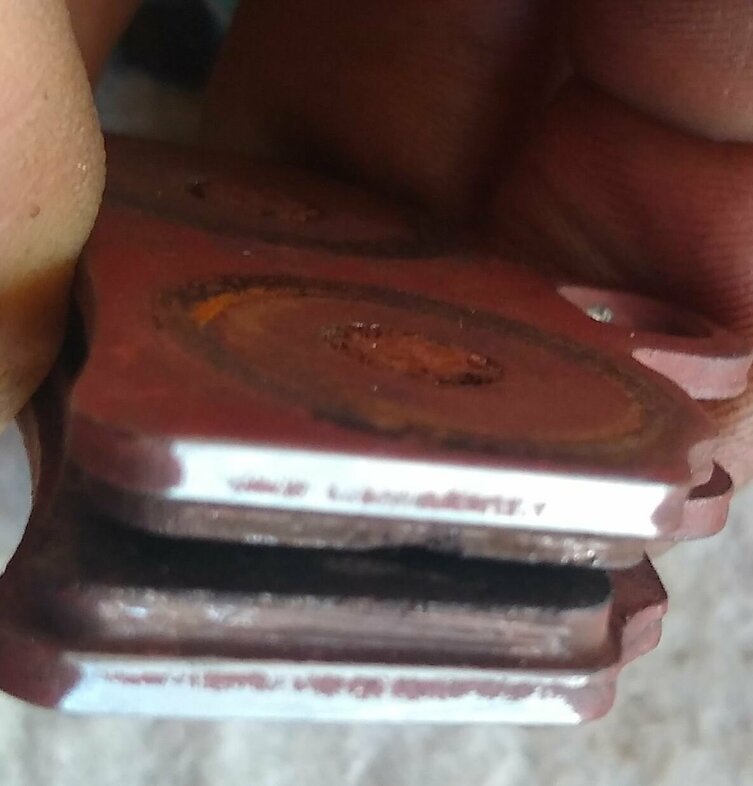
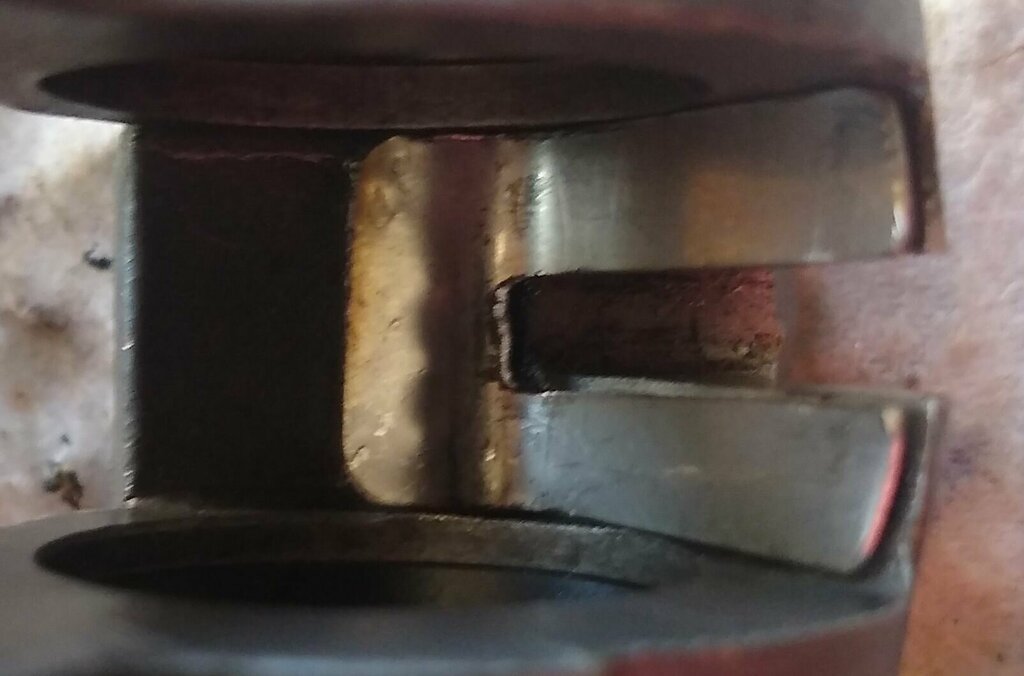
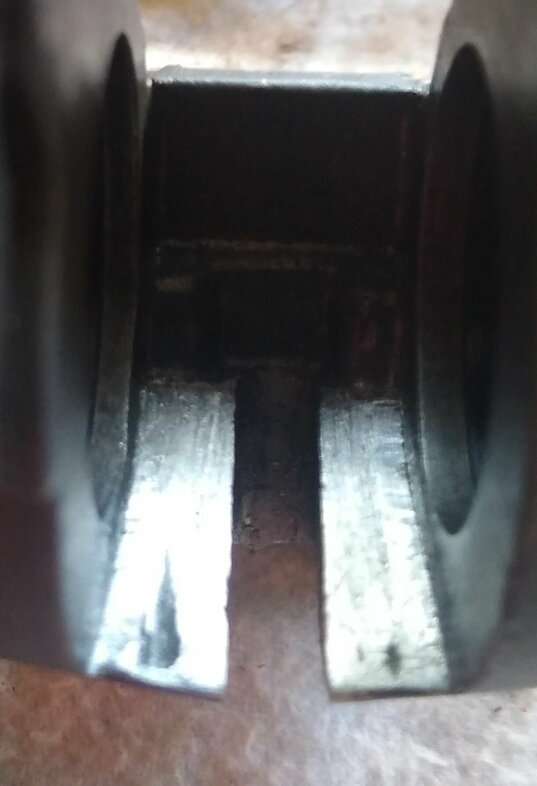
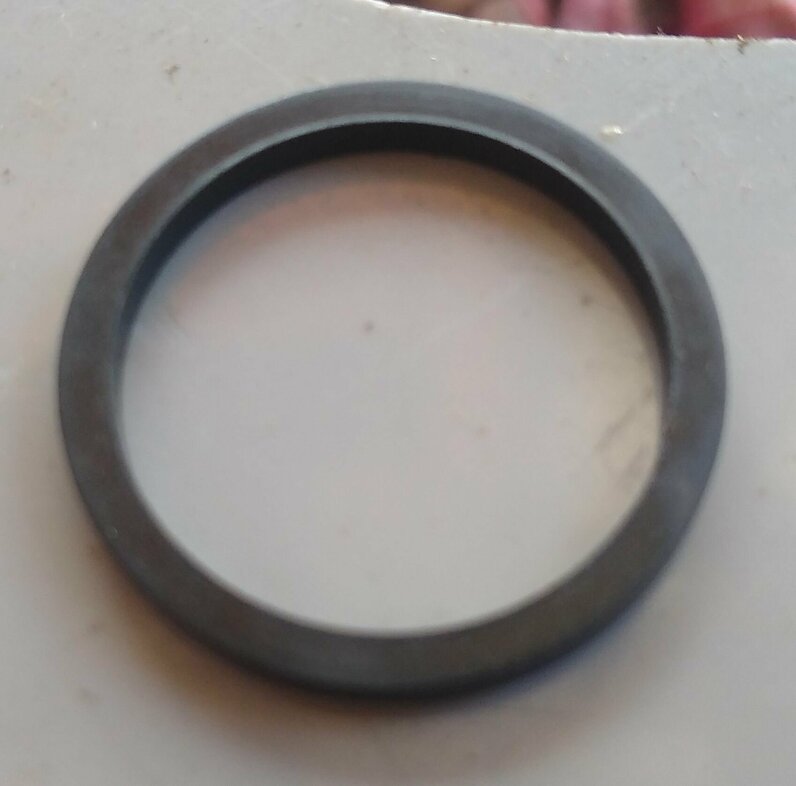
-
Good suggestion, I'll take a careful look. Although I can't recall seeing anything remotely looking like damage. You never know if you don't look though. Thinking about it, it seems very unlikely - when I was bleeding with the syringe I could get a very generous flow up the hose with quite little pressure. Hmmm. I obviously don't know what I'm doing because I haven't solved it!
-
The front caliper on my '21 TRS has an annoying tendency to drag constantly and I can't seem to fix it. Couple of days ago on a long steep descent it overheated so badly I completely lost front brake. It wasn't from over use of the brake, it's a hill I've been riding a couple of times a week for quite a few years on a variety of bikes. I am very careful how I use the brakes and it's not a problem. But this time the brake was dragging really quite hard - it would start to skid a little on flat, loose dirt with no brake applied. I took it very carefully down trying not to use front brake at all, but it still completely overheated to the point of the disc just beginning to blue at one point! Sometimes it releases a little better if I roll the bike backwards a bit. I'm not sure it hasn't always had a bit of drag from new, but it certainly didn't bother me until recently. Bike has about 250 hours, I ride on some moderately hilly terrain. I've checked the fluid return hole is well and truly open when the lever is at rest. Replaced pads. I've removed the pistons and cleaned bores and pistons. Re-filled and bled. Still got more drag than I think it should - serviceable but not ideal. I'm not totally convinced that perhaps my bleed is leaving a tiny pocket of air that's preventing the pads completely sucking back off the disc, but I'd be a bit surprised. I finished the last bleed with the caliper off the bike with a syringe on the nipple and giving the caliper good taps as I rotated it into different positions trying to encourage every last bubble to the bleed nipple. It's sitting overnight with a strap on the lever at present. Has anyone got any insights?
-
Rules for sports are completely arbitrary however you look at them. Why do we not put our feet down? Because we all agree that might be a fun little game to play. Why do golfers hit balls into little holes in the ground? Because they think that's a fun challenge. So really what's the big deal if one group of players decide they agree to stop and go backwards for a bit? The best rider will still win if they compete according to the current (arbitrary) rules - that's the nature of competition. It's also complete fantasy land to think that any form of non-stop or non-reverse is going to be able to be effectively judged. If they hop the front wheel, then the back, then the front, have they stopped? If they are headed generally right and they hop the front wheel left, then the rear left have they gone backwards? If you can hop a wheel away from an obstacle or barrier it's trivial to sequence the hops so you effectively give yourself room without a wheel ever turning backwards. You'd have to be dreaming to think any observer is ever going to assess that accurately, consistently and fairly throughout two days of riding! Get real. However ... the issue about the top of the sport not fostering a good pathway is real. I've got no trials experience outside my very limited local club riding world, but it's not hard to see that the current TrialGP and support class setup isn't proving to be a big winner for the sport overall. Fiddling with the rules here & there wont make a jot of difference to that. It must cost a fair whack to ride a full season in any of the international classes - travel, entry, inability to work, bikes, minder, ... So who's going to spend all that money? Most likely Mum's and Dad's who are supporting their kids in their passion. Then those kids get bigger and the Bank of Mum & Dad starts to dry up. Now they need to make some sort of living and still find time to train and compete. That living is extremely unlikely to come from the sport itself! So what happens? They ride for a couple of seasons and then say, "Man, this is way too hard! I'm sick of struggling to pay for the next meal or to fill the van to get to the next event. I quit." So the already small field shrinks until finally there are half a dozen riders who command the lion's share of whatever money is available within the sport and can actually afford to dedicate their lives to a riding "career". In reality there's probably well less than a handful really making a worthwhile living out of it. Just guessing. These riders who have the ability to spend years focused on developing their skills get good - really good. So the up & coming have no hope of really competing with them. The doorway to the dollars really only opens up when one of the true elite riders retires or falls off the pedestal. That career is what? 10 - 15 years for most of them at the top? That's pretty good in sporting terms, so the relatively rubbish income (compared to tennis, golf, running, cycling ... any number of other sports) isn't a complete disaster. That's never going to work! The heyday of trials was when the top riders were really not much different from the run-of-the-mill riders. From what I understand most of them held down "real" jobs, travelled around on the smell of an oily rag and squeezed practice in between. Gradually the sport "professionalised" and concurrently went into decline. I could be wrong on that timing, I'm no student of trials history. If I'm more or less correct, there's the trigger for the disconnect between the elite and the grass-roots, not changes in rules. Follow the money! You might argue that most sports have gone a similar way and most of them remain successful. I'd suggest that trials just doesn't have the same mass appeal as "most sports". Speed is an easy sell to a lot of the population. Kicking, throwing or hitting balls is eminently accessible to a huge % of the population. Trials is fundamentally a harder 'sell'. Where's the fun in riding really slowly? What do you mean I'll basically be rubbish for a good 5+ years? It's not like any number of sports where you can acquire the basic skill then hone it. How many years does it take most people to learn to get any real vertical lift off a horizontal surface? Or even to learn to hop front & rear, let alone hop ON the rear! I could go out and race around an MX track, albeit crazy slowly, and probably demonstrate all the fundamental skills of the pros - wheelie out from the start, get some air, perhaps even step the back of the bike a little bit sideways. No way known I can demonstrate a majority of the skills of the riders at TrialGP in any shape or form! Dicking about with the details of the rules is irrelevant if you actually want to grow numbers, and I don't think that's on FIM's agenda at all frankly. They may give it lip service, but that's not what directly pays the bills. Follow the money. The single biggest change to the rules that would make a difference would be to cap sponsorship to something fairly insignifcant. The full-time, fully supported pro's would evaporate, the skill level would come back down slightly and appear more achievable (even if it's not really) and you'd have a whole lot more people who felt they could have a decent crack at international level comps based on skill not money. Perhaps even people who aren't Spanish! I laugh at the way the term 'Pro' is bandied about for riders who are really as amateur as it comes. Not saying they are poor riders, just that in the true sense of the word they are not pro's because they aren't paid just to ride. That's a Pro in my mind. I don't see any "professional" engineers who work a second job so they can do engineering in exchange for a new PC every year! So go for it I say. Let the tip of the elites play whatever game they agree to. All good. They'll still be spectacular to watch and be just as far removed from anything I'm going to be doing on my bike.
-
@jonnyc21 I've never felt like the plastic safety clips would be either secure enough or comfortable. But assumptions are completely unreliable. I've plenty of neck lanyards with them so perhaps I'll give one a try. The other option I've used on other applications is to just butt melt the ends of the cord/webbing together. It's a little inconsistent but it does make a fairly secure weak point. Perhaps with an appropriate simple tool it would be easy to get a fairly consistent join? Hmmm, might be today's project.
-
I remember thinking along those lines ages ago, but I guess I just got used to the light webbing lanyard (a Beta OEM lanyard) I have and forgot about it. That's exactly why the neck name tag lanyards have that little plastic breakaway clip. I don't think I'd want to rely on one of those, but something similar. Industrial fall arrest shock absorber devices use rows of lengthwise sewing that tear away, absorbing force as they break. That could be appropriate - Z fold the ends of the webbing over (so the stitching isn't in straight shear - that would be too strong unless you had very few stitches which would be susceptible to wear) then a couple of lines of stitching. On high load the stitching will tear down it's length before separating. Join at the back of the wrist. I might give it a go with some old neck lanyard webbing. I can see a cottage industry making non-stretch, breakaway trials lanyards. Thinking tiny-house cottage, perhaps tent size cottage even. 😀
-
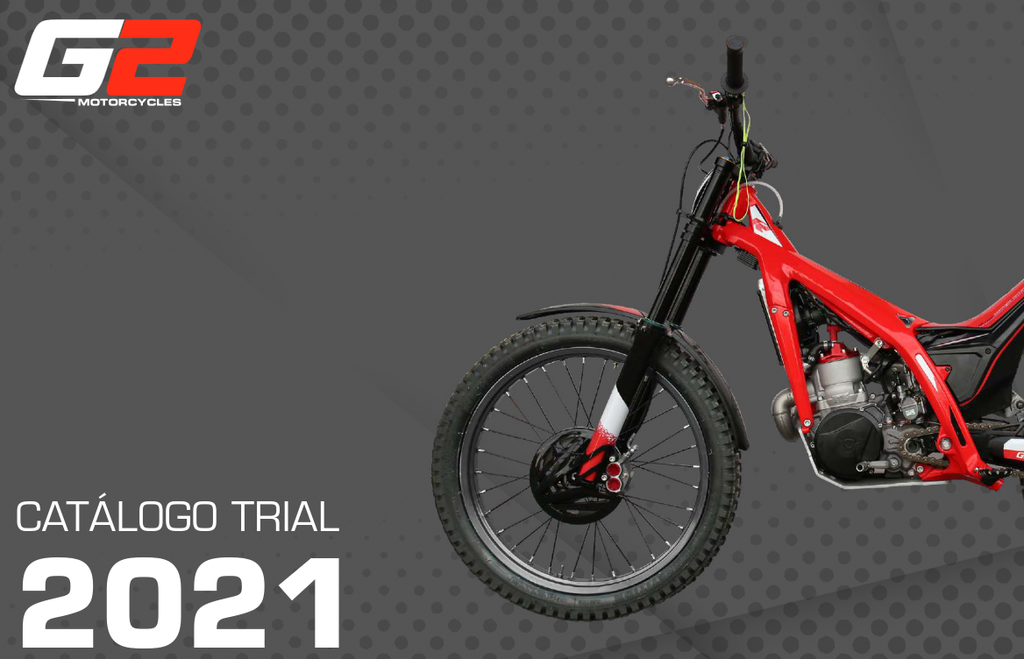
Jotagas seemed to disappear a few years ago, and their previous website seems to have disappeared. But I stumbled upon G2 Grup the other day and lo and behold So do Unicorns exist? Is anyone selling these bikes again or is this just wishful thinking from a bygone era?
-
Who'd have thunk the humble kill switch would get so much discussion. 😁 Lanyards - anything non-stretchy. Webbing off a conference lanyard works nicely. Or fancy coloured boot laces. Or paracord available in a zillion colours. Used them all and nothing to pick between them in my opinion. Elastic is junk - I don't really understand why the pros use it still. Must be a reason, they don't do anything for no reason at that level. My guess is so it's maybe easier to get their score card/transponder out at end of section - might save a time penalty one day? But if your hands off the clutch the bikes probably not running anyway in that situation. A mystery. Mounting - agree with the cable tie mount instead of the steel sticky-outy clamp (but I haven't taken my own advice on current bike). I make sure the top of mine points forwards so it gets pushed on rather than off when struck, also makes it hang on a little tighter when jumping off, which is not a problem with non-stretch lanyard, and avoids the odd engine death when jumping off but not ejecting. Top pointed forwards also completely avoids the really disappointing engine death when you do a successful leap up through the bars on a bigger obstacle ... and knock the button off with your hip. Grrr. Pros have their clutches much further outboard than me for super quick clutch response, which would be a disaster for me. So mounting like them doesn't really work so well without a big long lanyard, I like mine shorter so they're less likely to snag. Magnets - judiciously take a cigarette lighter to the plastic lip that holds the magnet in and mush it over a little more. Solves the falling out in seconds flat. Polarity - As above quick heat with a cigarette lighter (damn, there's no one at events wearing a flat cap and a ciggy hanging out there mouth anymore, so lighters are at premium), flick the magnet out (or pull it out with another magnet) and turn it over. Heat seal back in. Spare magnet - any old magnet of appropriate size stored on a handy bolt head. Under the top triple clamp on my TRS. Cylinder base bolts are often convenient and out of the way. Enough to get me back home. Dan I'm not sure what you're saying is quite right. Many reed switches are change over and they don't care about polarity either. Just use the mode you want, NC or NO. Lineaway has a thing about magnet lanyards - seems to hate them with a passion for reasons that escape me. Those non-magnet lanyards would truly **** me and I can hardly remember when a lanyard caused me more grief than a bit of inconvenience opening a gate cross handed. Horses for courses.
-
Tenaci are still around I believe, but as you say few get sold. Why would you buy that when a secondhand European bike is probably around the same money? The Leopard might do better because there are far fewer options available in electric at that sort of price. I've kind of got my doubts though. They're Chinese Nm & mph, not western. 🙂 But I wholeheartedly agree with you, it's not going to be within cooee of that sort of performance.
-
Blocking Facebook links is an entirely laudable behaviour in my jaundiced view 🙂 Here's a link to the original YT video your FB link linked to. Plettenberg GG TXE The Pletty conversion used a water cooled motor, hence the pump. Begs the question - if the new bulge is an encoder then where's the pump, or is the motor aircooled? And if it's air cooled what does that mean? Have they reduced power output to prevent overheating? Have they changed motors? Did they find they just didn't need water cooling? Have they improved heatsinking out to the rest of the motor/gearbox housing? I look at that new end bulge and wonder if it isn't simply a support bearing for the motor shaft? It seems quite strange to me to hang an encoder off the outboard end of the motor shaft, especially when that outboard end is almost certainly running in an oil bath for the clutch. Not sure where you got the impression the original Pletty had an observer algorithm, presumably there was some mention of it at the time. But it seems odd when there's no mention of sensorless operation of those motors in Pletty's manual, but it does say halls are standard and other encoding options available. Anyway it's all rather moot given we don't know if they're still using Pletty motors. Looking forward to more info or videos coming out from GG. It seems the new e-GG has a smaller battery than the early one. Maybe just looks that way with it lying down rather than standing up. This is where a Jotagas could be far nicer conversion - that side mounted shock would allow a battery to run right back into the airbox area, moving mass back and down. But I suspect the Jgas suspension just isn't as good with it's simple direct connection.
-
I was just trying to get the OEM insulation back in the pipe. I gave up and removed a little bit so I could get it all back together. I've had Silent Sport packing recommended so I've ordered some out of Germany. I expect it'll be a while before it arrives. Still interested in anyone's best techniques for repacking.