

aussiechris
Members
-
Joined
-
Last visited
Everything posted by aussiechris
-
According to the 2011 parts book for the standard (non-raga) models the part numbers for the 125 is different to the bigger bikes. Left crankcase MT280310001RA for the 125 vs MT110002811 for the 250,280,300. Right crankcase MT280310000RA for the 125 vs MT100002811for the bigger bikes. However, the later parts books suggest they are the same. I didn't see where you hail from but Paul (above) is our Aussie dealer and he would be able to help with part numbers. I don't envy you trying to get parts right now so you might have to shop around. And yes, if possible get the 2012 or later cases because you can replace the gear shift shaft without splitting the cases. Chris (been down this road before )
-
Glad you got it sorted. Yes, it's bizarre that they stick with the loose roller bearings. But in theory, the full compliment bearing should last longer than the caged version. I remember owning a Montesa 172 Cota which had loose needle rollers in the small end of the con-rod. Pulling the piston on those bikes was common due to carbon build up. You soon learn to have rag stuffed in the crankcase when trying to re-install the piston pin through those loose rollers. You also learn a lot of patience. BTW, Nice countryside where you are. Chris.
-
I would dearly like to find a set of triple clamps that would give more steering lock. Coming from a Gas Gas or Beta, I find this is the biggest problem with the Montesa. It just doesn't turn tight. Yes, I know I should learn to hop and do tricks more but I'm too old for that, and it's not much good in a no-stop trial. Chris.
-
The above replies are spot on for replacing the bearings. As for options, I haven't heard of anyone using bushes instead of bearings but there a a couple of options for you to consider. This is from a post I submitted ages ago but is still current... Virtually all of the kits sold by dealers include bearings with separate seals. In my opinion these are rubbish. And yes, I know that's what comes from the factory. The original bearings are HN1516 which is a full compliment needle roller with a 15mm ID, 21mm OD, and it's 16mm wide. The supplied seals are the same dimensions but 2mm wide. That makes for an overall width of 2+16+2= 20mm. There are a number of reasons why they fail early. Firstly, the needle rollers have little tits on each end to locate them in the housing as there is no cage. For some reason, in our application, those little tits break off and get in amongst the bearings causing failure. But the main reason is water ingress. Those 2mm seals have a steel shell and that doesn't seal too well in the dog bone as it is so thin. Furthermore, sometimes the seals just plain fall out of the dog bone. The reason is quite simple. The overall width of the bearing and seals is 20mm, but if you measure the dog bones you'll find they are only about 18.8mm wide. This means (assuming the bearing is perfectly centered) that the 2mm seals have just 1.4mm to seat in. And since the seals have a bit of a radius on the inside, there's bugger all holding them in place. The bearing you want is a HK1520-2RS (contact a local bearing supplier with that number). That bearing is a caged roller with in-built nitrile seals. It is 20mm wide but even though it is slightly wider than the dog bone, it is all one piece. I've been running these bearings for about 10 years now in various bikes. You can expect 5 to 10 years life out of them compared to less than a year from the standard ones. Price is about the same. Even though the original bearings have more rollers that doesn't help if they're full of rust and mud. This only applies to the four dog bone bearings. There's another two in the underside of the swing arm with two 3mm wide seals. You can't use the HK1520-2RS in there as the total width will be too wide (40mm vs 38mm total). But those bearings a well protected and don't give as much trouble. Also, you may have to get the inner rings (bushes, sleeves) off your dealer as the bearing shops seem reluctant to hold them. Gas Gas part numbers are BT27712014 (20x15x8mm) 2 required and BT27712005 (20x15x10) 2 required. Hope that helps, Chris. ps. the 5 to 10 year life suggested above is for Australia where it is very dry and includes regular re-greasing.
-
That is strange that it showed as no spark. Perhaps the ECU decided the Throttle Position Sensor was out of range. Even so, it is supposed to still run just with poor throttle response. Handy to have one more check (idle speed adjustment) in the fault finding arsenal along with the rectifier possibility from honda_freak. Glad you got it running again.
-
According to my 2015 owners manual, if the engine does not start you should check the “engine does not start” items below (using the special PGM-FI checker box)... Cause - Symptom Faulty ECU - Engine does not start Open or short or faulty Manifold Absolute Pressure sensor – Poor idle Open or short or faulty Engine Coolant Temperature sensor – Hard starting when cold, fan does not stop Open or short or faulty Throttle Position Sensor – Poor engine response Open or short Inlet Air Temperature sensor – Engine operates normally Open or short or faulty fuel injector – Engine does not start (would still have spark) Open or short or faulty bank angle sensor – Engine starts but stops after a few seconds. It goes on to say that if the above checks out ok, then replace the condenser with a new one. If the engine now starts then the old condenser was faulty. Just for testing purposes, you could go to an electronics store and buy a 10,000 microfarad capacitor (at least 35 volt rating) and connect that in place of the original one. Ensure you connect the negative terminal to the earth side (green wire) and the positive to the power side (red wire). I don’t believe having the alternator disconnected will cause the ECU to lose memory (the maps and program are all in Flash memory). Since you say the plug is getting wet with fuel, this would suggest the ECU and fuel injector is working. Looking at the other “no start/no spark” items, I think you’re left with the ignition coil (and associated wiring) or the condenser. You’ve tested the coil on another bike so it’s either the coil wiring (did you try the other guys coil on your bike?) or the condenser. I hope you find it soon. Chris.
-
Yes, the selection of base gaskets is so you can set the piston to cylinder head clearance (squish). You can use one or more gaskets to get it right. If you do a search on setting squish clearance you'll get all the info you need. Basically assemble the cylinder with one gasket (no need for piston rings at this time) and bolt it down. Shape a piece of soft solder (about 1.5 to 2mm diameter) so it sits across the top of the piston with the piston just below top dead centre. Install the head (no need for o-rings at this time) and tighten the head bolts. Then crank the engine past top dead centre. Remove the head and the solder and measure the thickness at the ends of the solder where it is squashed flat. Not sure what it should be on the older bikes but I run about 0.9 to 1.0mm on my Pro. Simply calculate and adjust the thickness of base gasket(s) until you get it close. As for pistons and rings, the old ones where made by Mahle (and were excellent) but they stopped doing bike pistons. S3 are now doing them but the rings are not interchangeable. So shop around to see if any shops have old stock of the original rings. Chris.
-
Yes, I would torque the fork clamp pinch bolts. The spec I have is 8 ft/lbs for the top bolts and 10 ft/lbs for the lower ones. That is for my pro but should be the same if yours has 6mm threaded bolts. And you would also have loosened and re-tightened the fork brace (mudguard bracket). 6 to 7 ft/lbs for those. Chris.
-
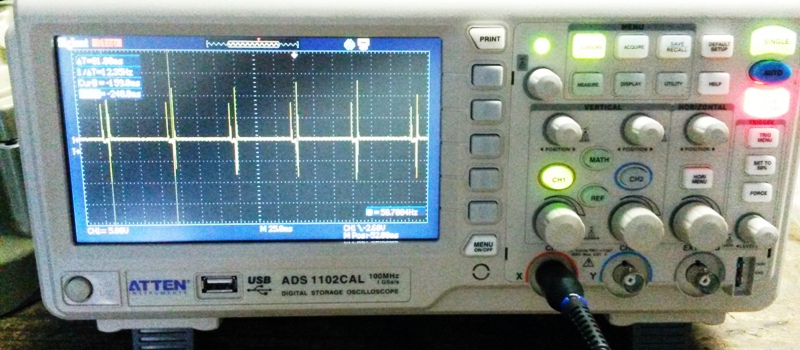
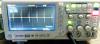
Sounds like you've done a pretty thorough job checking every thing including the eliminating the back angle sensor and ignition coil. Using a test lamp to check voltage going to the coil may not prove anything (you'd have to try your lamp on a working bike). The attached image shows how short those pulses are (that's measuring the coil terminals on my 4RT idling). Assuming no wiring faults I think it's starting to point to a crook ECU/throttle body or faulty condenser. Any chance you could borrow such items to substitute? Chris.
-
When you say "linked out the kill switch" do you mean you by-passed it with a wire link. That wouldn't be right. The kill switch shorts to ground when you stop the bike so it should normally be open circuit. So to test - just disconnect the kill switch. Make sure the kill wire to the ECU is not shorting somewhere on the frame. Otherwise I'd be checking the coil next. Chris.
-
Hi Sweetgas, I'd be surprised if that information was not stored. However, even with all the cables and the PGM-FI warning unit assembly, the system is not as user friendly as the Ossa. Most of the later ECU's on the 4RT are not re-mappable. The PGM-FI warning unit simply blinks error codes and you look them up in the manual to see what the (possible) fault is. It is not like the Ossa K-Scan software where you can see all the various parameters and (the best bit) use the diagnostic page to turn things on and off such as the fan, fuel pump, fuel injector, spark plug, etc. However, after saying all that, I think the 4RT starts and runs much better with the standard mapping than the Ossa ever does. Chris.
-
Hi Cabby, Yes that top hat looks ok. My suggestion is to put that back on and check the adjustment of the little eccentric post that the springs sit on. Check out the Jim Snell videos in particular this one https://www.youtube.com/watch?v=A80n7zq80n8 and go to time 6:28 to see this actual adjustment. That sets the center return point of the mechanism between each shift. If it's not right then the little cams in the shift drum won't drop into place for the next up-shift. Also, you need to have the chain on the bike and spin the rear wheel while shifting (and either slip the clutch on or put some resistance on the clutch shaft). This is because the dogs on the gears don't usually line up until things start turning at different speeds. Last time I had mine apart I was convinced it wouldn't shift the higher gears but once it was all together and I took it for a ride, it was shifting just fine. Testing on the bench is always difficult. Chris.
-
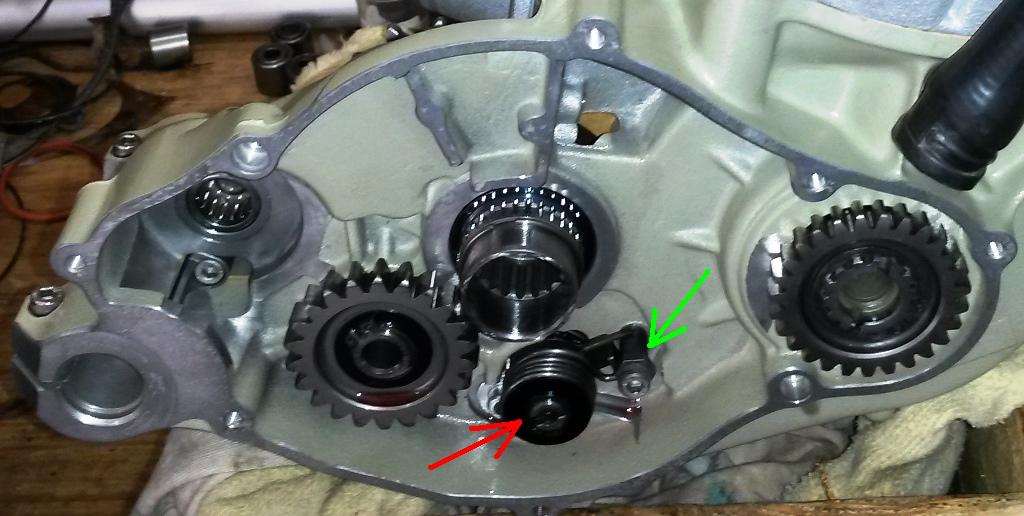
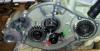
No Cabby, the top hat is on the right (there is a line joining the green bits to the red bits in that diagram). Once you remove the clutch, you will see the top hat (red arrow below) which is held on with a circlip. After re-assembly, you have to adjust the eccentric bolt indicated with the green arrow below. You might want to consult the Jim Snell "GasGas Pro Engine repair videos" videos at http://www.trialspartsusa.com/youtube.htmlto see how that is done.
-
Hi Cabby, Removing the clutch is dead easy. There is a small Allen bolt (socket head cap screw) in the centre. I think it needs about a 4mm Allen key wrench. Just undo that bolt and pull the whole clutch toward you. Don't over-tighten that bolt when reassembling. It's hollow (to vent the gearbox through the hollow shaft) and should be just slightly more than finger tight. Chris.
-
Hi Rocks and welcome, With gearbox oil, I just keep an eye on the colour. Mine starts out a light red colour and I change it when I notice it becoming a dark red in the window and that is about every two to three months riding once a week. Air filter, like you I clean it when it's dirty enough that I can't see the little pores in the foam and I always clean it just before a competition. And I clean the plug at the same time (still on the same iridium plug for almost four years). I also change coolant, brake and clutch fluids, and fork oil once a year. Clean and lube the throttle tube every few rides. You probably should dismantle and re-grease the rear suspension linkage unless you know it's been done recently. Do a search of this forum for details. Your chain and sprockets need replacing when you can see a noticeable "hook" in the sprocket teeth (usually on the front one first). Chris Brisbane Australia.
-
According to the 2015 Montesa manual, the Tech forks area as follows Specified fluid (left and right): Tech OJ-01 (SAE 5) Oil capacity (left and right): 400ml Standard oil level (left and right): 50mm from top of tube (Edit: 75mm for the Gas Gas with aluminium Tech forks) The oil capacity shown is after a complete dismantling of the components. You would remove substantially less than that when doing a simple change. The important thing is to set the level correctly. If this is for a 2015 Montesa then you should have got a proper owners/service manual with the bike and it covers both the Tech and Showa forks. If it is for a Gas Gas then this advice may not be accurate as there are a number of different versions of the Tech forks out there. Chris Brisbane Australia.
-
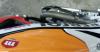
Thanks Guys, for taking the trouble to show your Mitani pipe. Don't feel too bad - mine is a lot worse. I can TIG weld ok, so I need to visit the local welding shop to see if I can buy a single stick of titanium TIG wire and I'll fix it. But right now I don't feel like taking the pipe off again. Such a pity S3 couldn't be bothered to check their products a bit more closely. The pipe itself fits great.
-
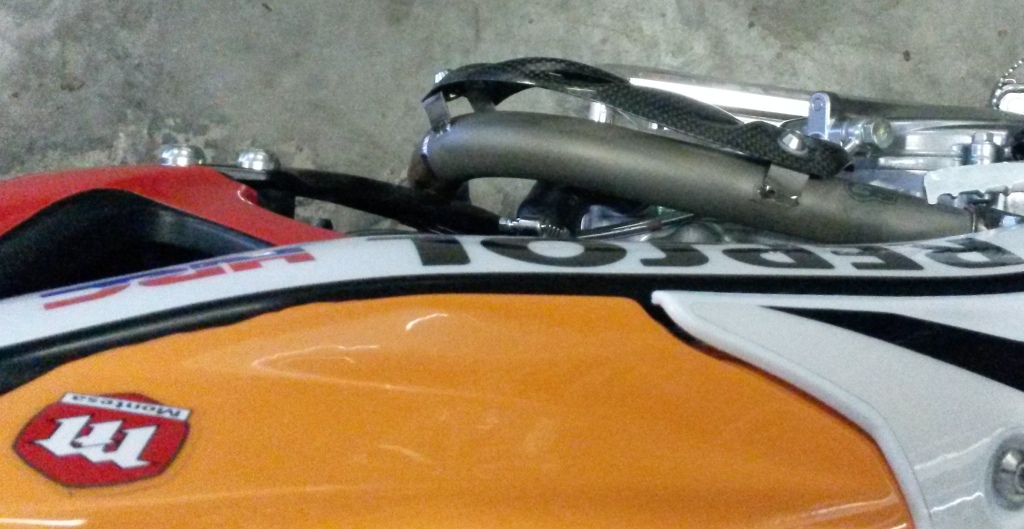
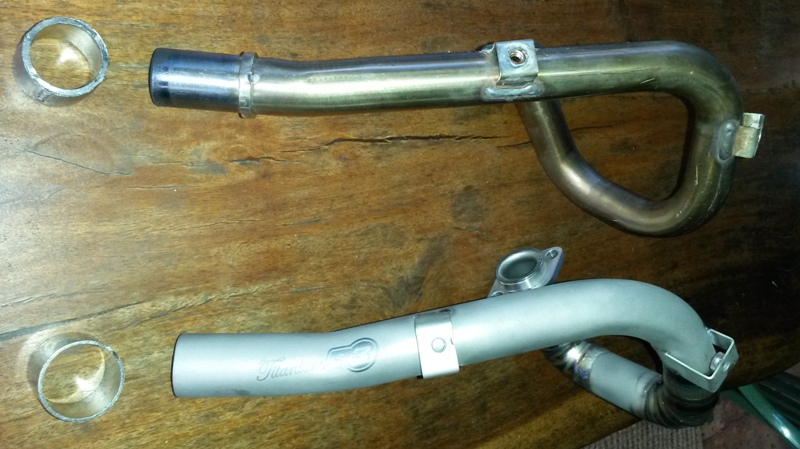
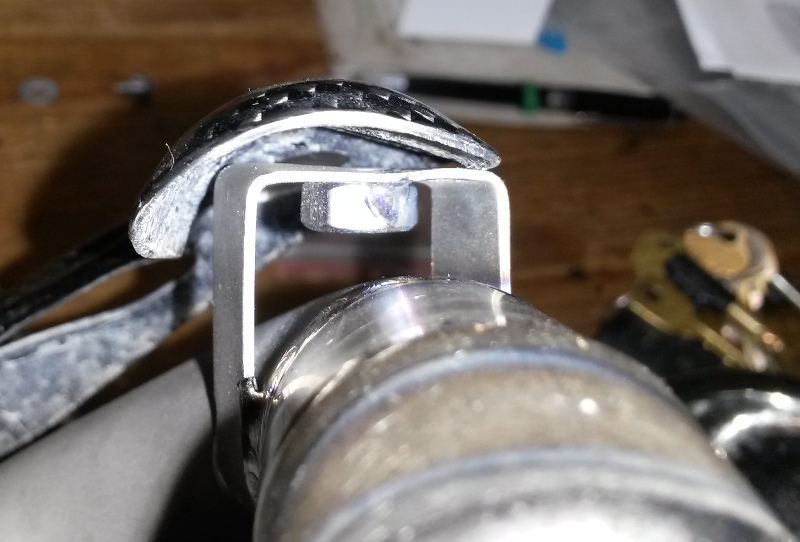
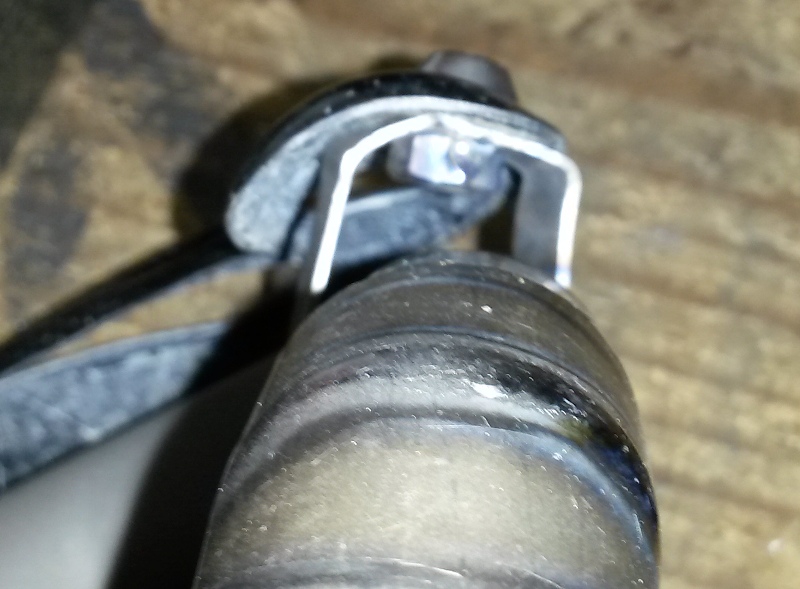
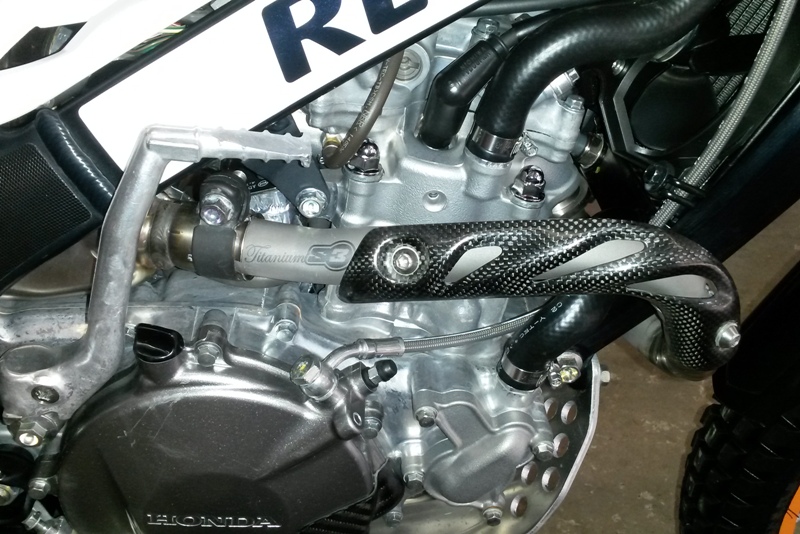
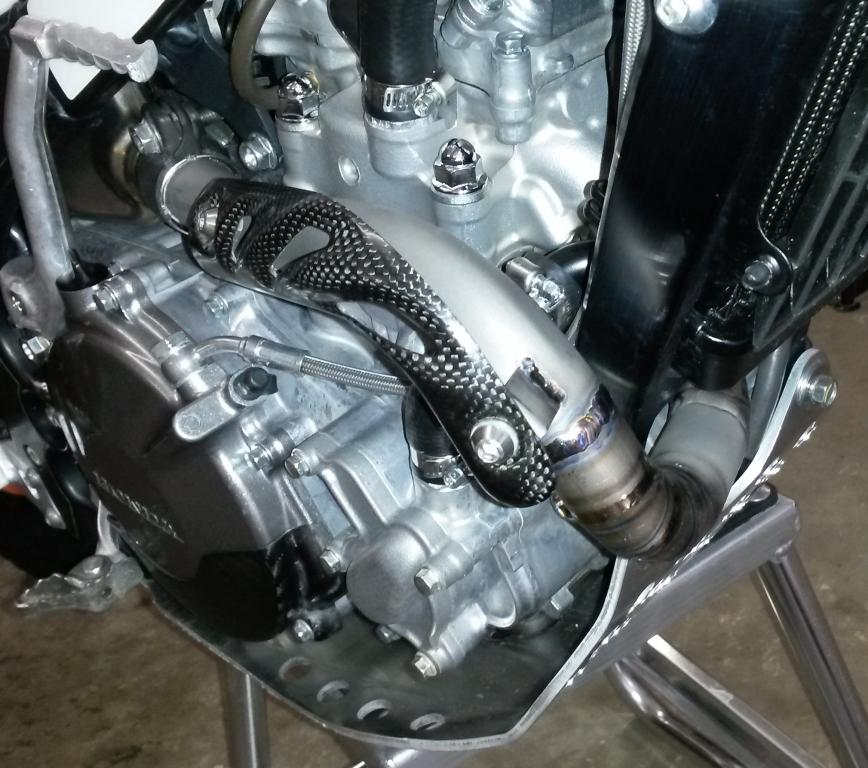
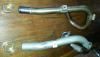
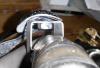
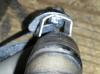
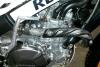
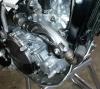
Just by way of an update... I bought the S3 pipe. Overall I'm pretty happy with it. It fits perfectly and is very compact and tight into the bike. And it weighs 158 grams less than the original pipe and seal. The big problem for me is the mountings for the heat shield. The hole spacing is perfect but the mounts are too big and too far off the pipe. As you can see in the photos, the mounts are rectangular instead of square and the rounded shape of the heat shield won't sit down on them. I had to bend the front one to get it to fit but that exacerbated the second problem in that the mounts are too high (to far off the pipe) meaning the heat shield hangs out to the right more than it should. That's a pity because the pipe itself is so compact. S3 could have saved precious titanium and weight by making the mounts the same as stock. Performance wise, the bike does feel smoother (and slightly quieter for some reason). But no more power. At 28mm OD, the S3 pipe is 3mm bigger than stock and looks right on the bike (other than the heat shield problem).
-
For anyone considering moving from a late model Beta 2T (or 4T), the weight is not your main issue. I find the amount of steering lock (or lack thereof) to be my biggest problem with the 4RT. The turning circle is considerably worse than a Beta and even my Gasser. Yes, I know I should learn to hop better but I'm an old dog and it would be so much easier just the steer the bike around. Other than that, I love riding the Montesa. And, I agree, it certainly feels more rewarding at the end of a trial, and it's just plain fun everywhere else. Chris.
-
Thanks Andrew, That's exactly the info I was after. I think I'll go ahead and buy one. I'm actually buying from my Gas Gas dealer! Again, thanks. Chris.
-
Hi folks, My local dealer (just 900km away) has a good price on the S3 titanium header pipe for the 4RT. But there appears to be little information available so I have a few questions for anyone who has actually fitted one. 1. Does anyone know what diameter they are? The original pipe measures 25.4mm OD. 2. Does the original heat shield fit this pipe? 3. Assuming the pipe is a larger diameter, how does it fit into the existing muffler? The original fibre sealing ring would be too small so how does one seal this joint? 4. The original pipe has a slight bend before entering the muffler, the S3 pipe appears to be straight. Do they fit properly? Do they hang further out? 5. Are they any good - performance, sound? Many thanks, Chris Brisbane Australia.
-
There seems to be two threads running on the Cota RR and I've posted my thoughts on the other one. However, according to the factory press release the RR stands for "Race Ready". The Repsol model is still being referred to as the "Race Replica". Chris.
-
I would not call this bike the "flagship model". To me it is an in-between model similar to what Gas Gas did with the "Racing". That bike sat halfway between the standard pro and the Raga Replica. It had some but not all of the Raga trick bits and was priced accordingly. The Cota RR appears to be the same thinking - it's got some of the Repsol stuff (rear shock, carbon bits, bars, front brake caliper) but got the cheaper Tech forks as opposed to the excellent Showa units. The 288cc engine is a nice touch but I'm guessing that will end up on the other bikes too. Also, if the RR ("Race Ready" according to the factory press) was to be the flagship model, I would have expected Toni Bou to be riding a red and black bike this weekend in France to coincide with the big launch but he was still on the Repsol orange bike. Price wise, it should sit between the existing models. If they try to charge twice the price, I think it will be a bit slow to sell. Chris.
-
Yes, they are pop rivets. The parts book says the size is 14x4 8x21 whatever that means. Probably a 4mm rivet with a 14mm length or grip length and an 8mm diameter head. You'll just have to drill them out and try some. I had a feeling that the new rubber chain guide may even come with those rivets but don't hold me to that. Chris.
-
Yes, a little heat (such as a heat gun or propane torch) may work but watch the o-ring/dust seal and don't heat the aluminium stem as it will expand more than the steel bearing. Yes, heat expands. However, I was questioning the idea from Crazybond regarding putting weld on the old bearing. Unless you are really lucky and/or really fast the bearing will shrink even tighter on to the stem. When you run a bead of weld the filler metal is molten (over 1500°C), as is part of the parent metal. This "as cast" metal is now the new original size. It immediately cools and shrinks (even before you complete the bead). That's why it works so well for removing the cones in the steering head but not so for the bearing on the stem. But do whatever works for you. Chris.