

mr neutron
Members
-
Joined
-
Last visited
Everything posted by mr neutron
-
What year of TY is it? Asking to find out if it has a magneto ignition like my old 1974 model has. I don't know if newer models have cdi/breakerless ignitions or not. Did it just suddenly stop on you, or just won't start after sitting for awhile? Having said that, it's never a bad idea to check and clean all the ground contacts (to earth). If it has a points ignition, take the ignition side cover off and have a look under there. Sometimes condensation can be the problem there. Be sure wiring looks good, points are opening and closing, and etc. Lemur's suggestion to check the plug cap is a good one. You can do a lot of electrical checks with a cheap DVOM (Digital Volt/Ohm Meter) on that cap, the coil, and wiring and such. (Added after re-reading your post, Andy-Walt): I think Lemur is on to something. If you can get spark without a plug cap, a new spark plug cap may be in your future. Personally, for my bikes, I've never worried about having a resistor style cap or even resistor spark plugs in my bikes with a CDI ignition. And spark plug caps are cheap to buy and try........ Jimmie
-
Man, what a difference this new (correct tube-type) rear tire makes. I can't conclusively say how it works in the wet, and I've only been able to ride on my small property which is mostly dry with grass. I have cones set up for figure 8 practice, and 2 trees on a hill for cambered figure 8 practice. It's a bit easier for these drills, and much easier to come to a stop and balance. Dead engine balance practice on the floor of my barn is much easier. I still have a few more "issues" to fix with the bike before I can take it to a local Trial, or even a play/practice ride. The old Dunlop I replaced was the "Trials Universal" model. I think Dunlop makes better trials tires than that model, but don't know if they still make tube-type? Anyway, it was SO STIFF, even with 5 lbs. of pressure, it didn't seem to flex much at all. Getting it off the rim seemed much harder than getting the IRC on. With the same 5 lbs. of pressure in the IRC, the IRC's sidewalls flex and spread out a good bit more. Jimmie
-
Ahhh, I see why the probs with the photos now. Thanks for the explanation on that! RonH, I do still have the seat pan. It has many cracks that you can't see, and I've already began the repairs for that. My plans are to attempt to find a useable seat and use the seat base. Sorry about that. But you've got me interested now...... Do you have one that you are working on? If so, any pics of that? By the way, my IRC TR-011 tire came today, but I've already sent it back on the assumption that the wrong one was sent to me by mistake. IRC makes 2 types of the same model or trials tire; a TR-011TT (Tube Type), and a TR-011TL, which is for modern bikes with tubless rims. The tire that came today had the word "TUBLESS" embossed on the side of the tire, and a sticker on the tread that said "TUBLESS". I can understand someone's mistake on this deal. But if IRC has tire lettering with "TUBLESS" on each side of a tire that's meant to run an inner tube, that seems kinda dumb to me..... 🙄 Wouldn't think they'd do that???? I've not seen a Tube Type IRC TR-011 yet so I don't know...... Jimmie
-
I think I've posted too large of files in the post and photos above, perhaps? Something is keeping me from posting the newer photos I took yesterday. I get some sort of file limit size message. Anyway, I'm grateful for the opinions and help here on the matter of what tube to run. Thanks! Jimmie
-
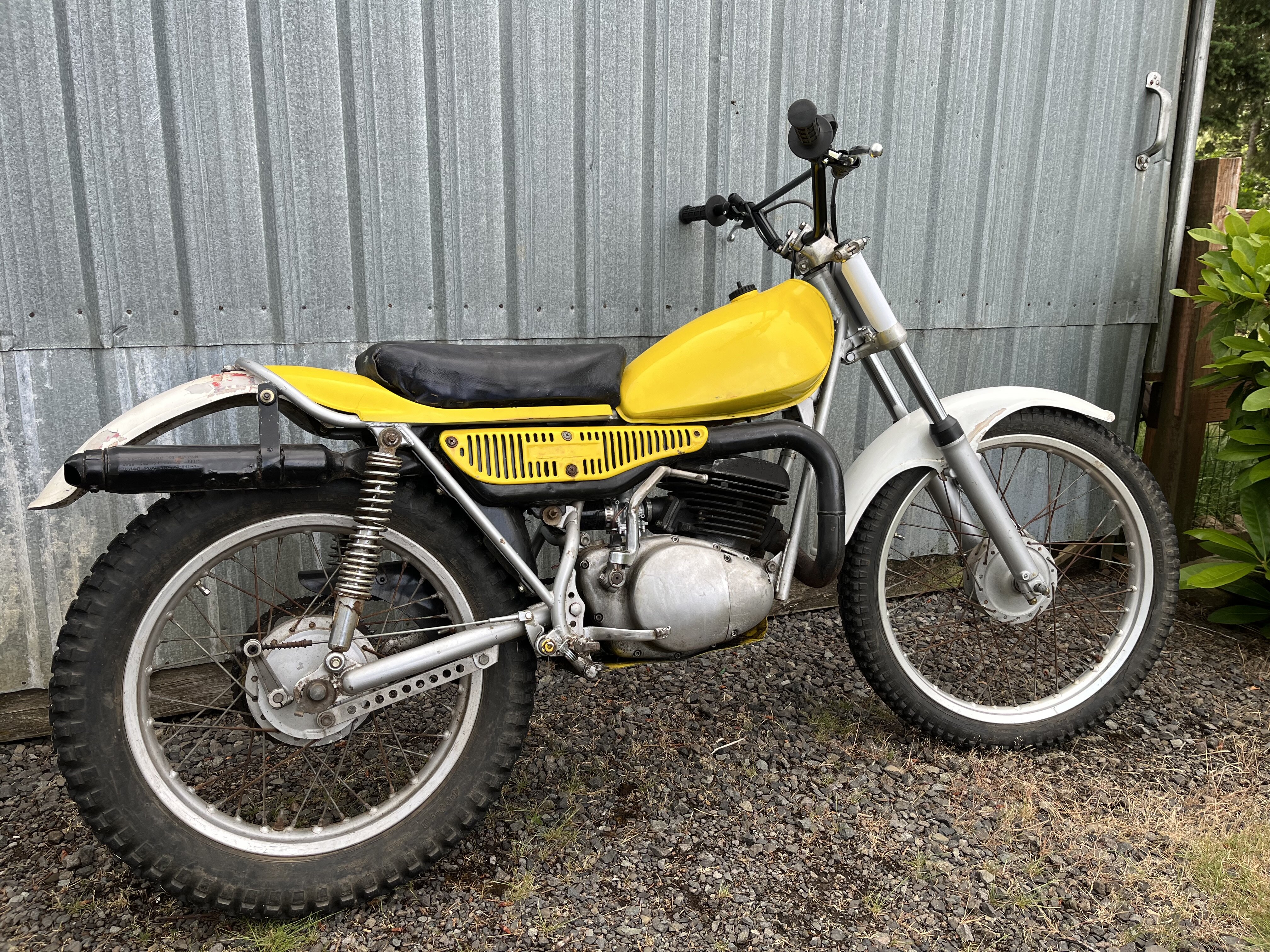
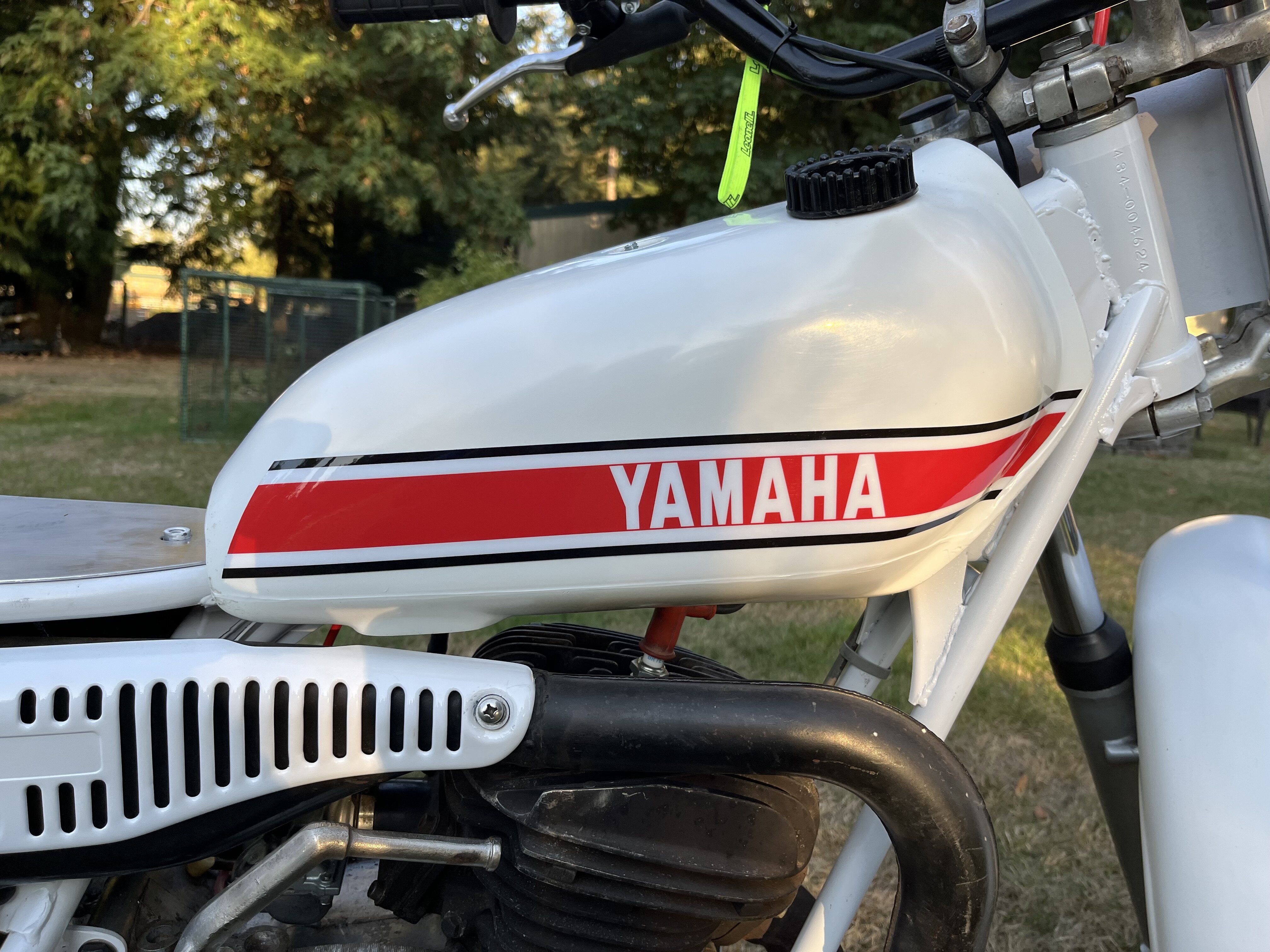
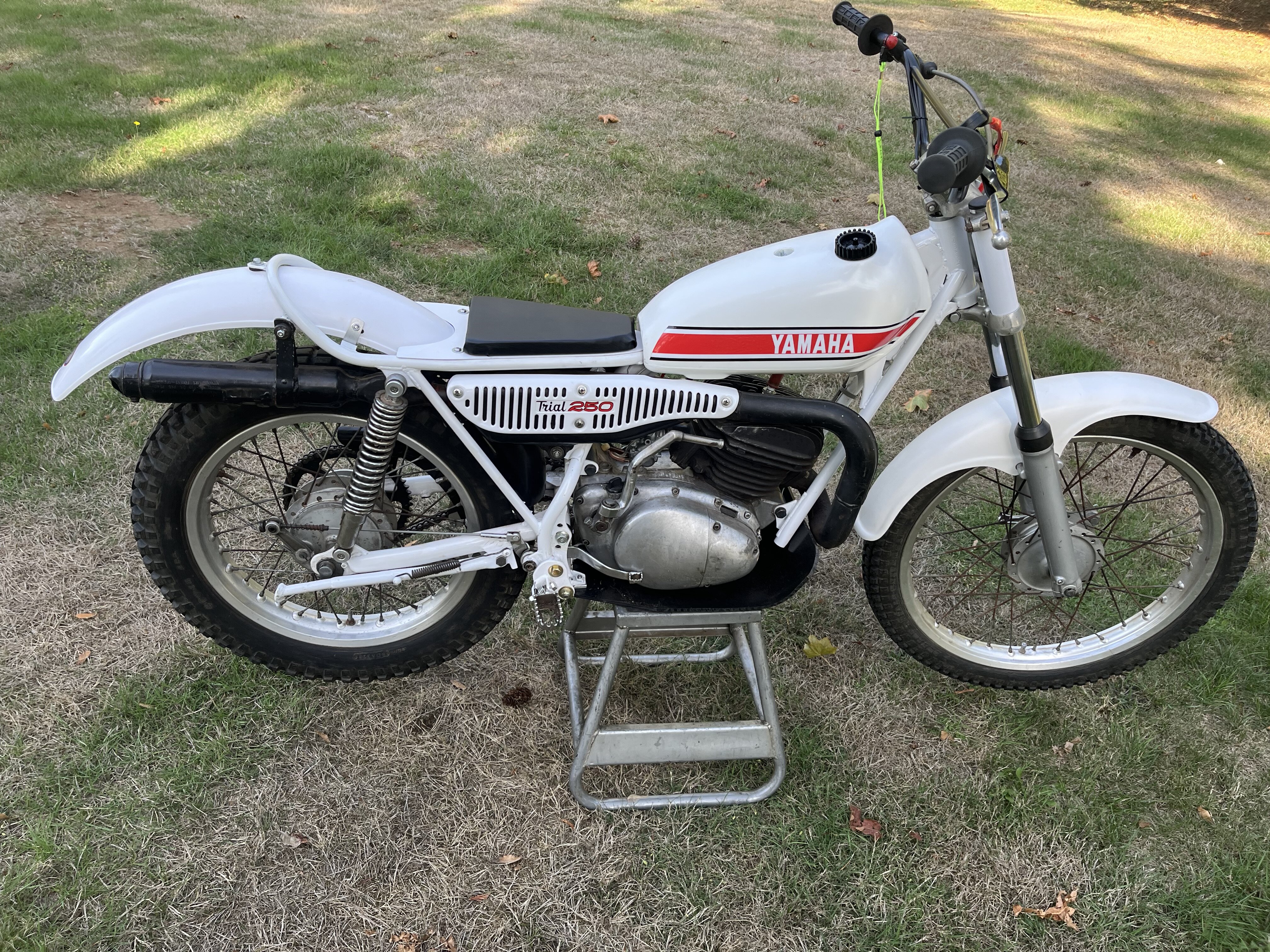
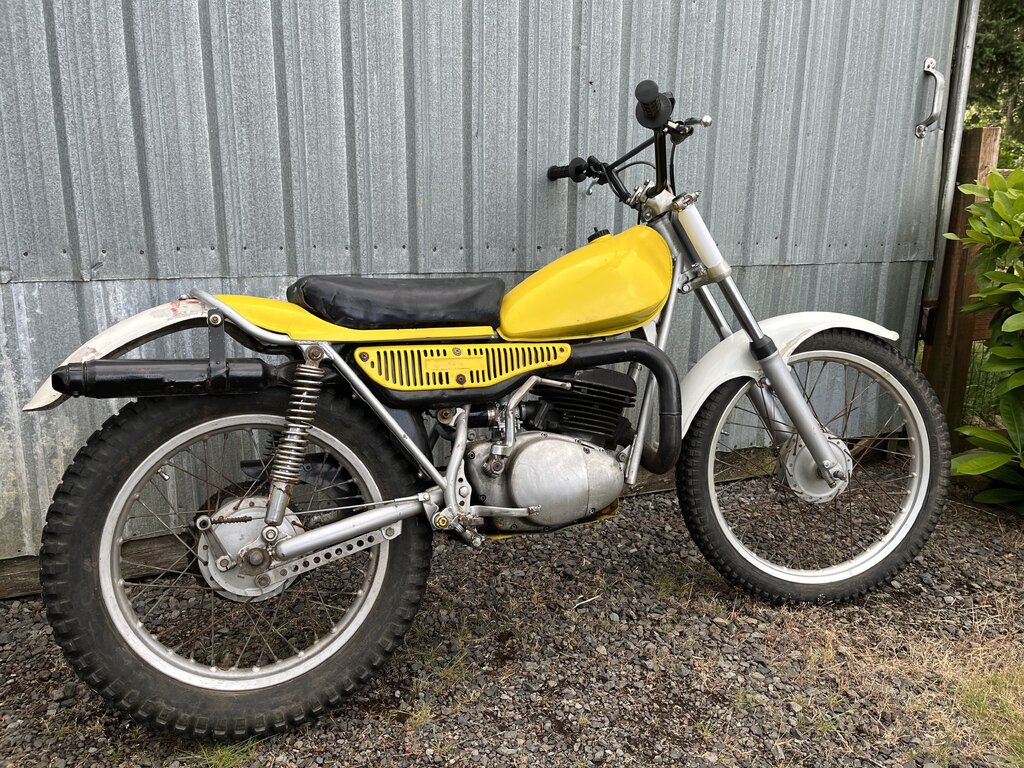
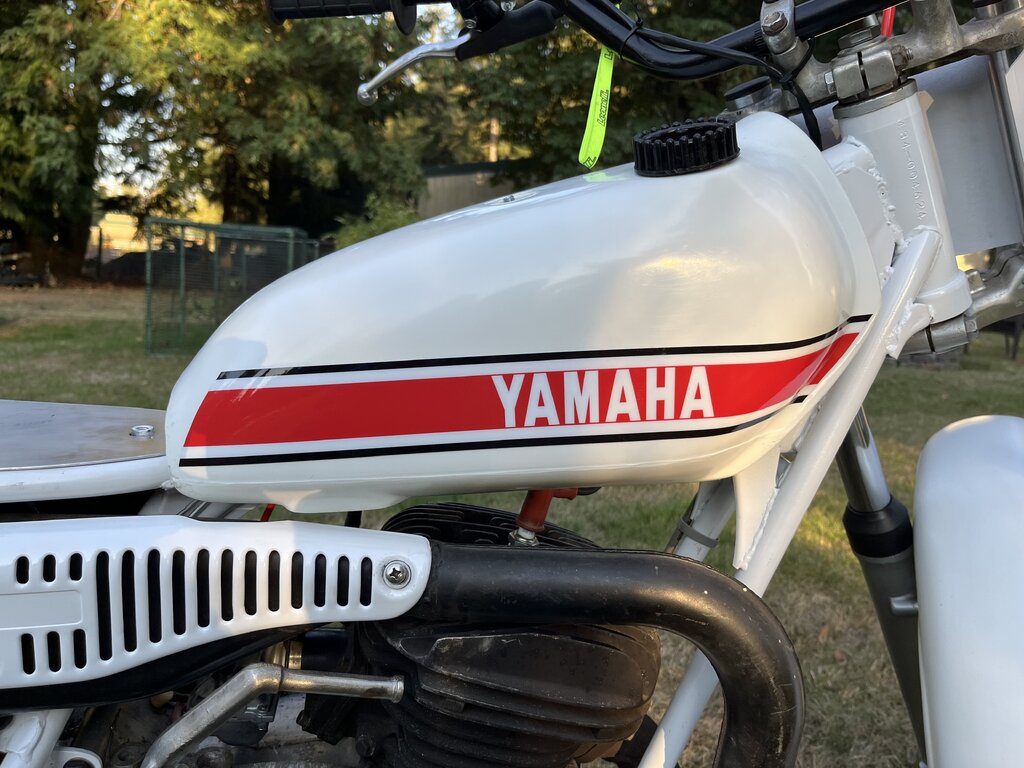
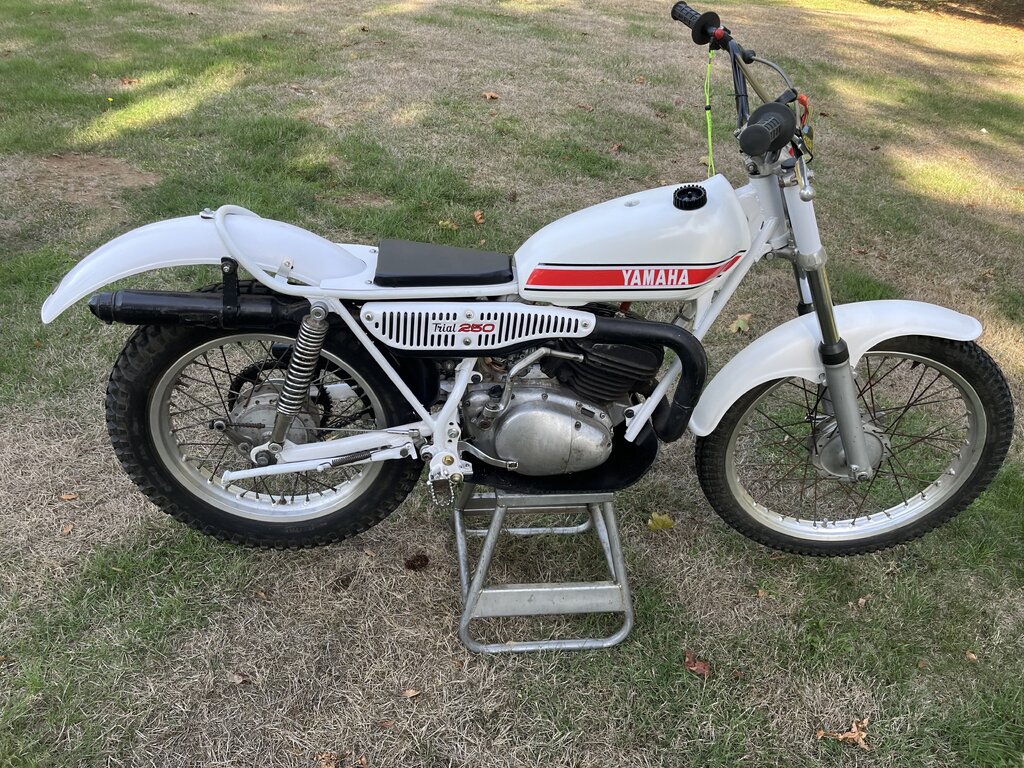
Yeah, I'll try to post a couple of photos. My phone and this laptop are currently "not on speaking terms", so maybe some old pics...... The picture of "the yellow bike" are after I first got the bike in May. I had to tear the motor out to repair a broken upper rear motor mount, so I repainted the frame white. This bike had A LOT of problems, issues, and stuff needing repaired and replaced. It still has a lot of stuff that needs addressing to be a reliable ride, but I'm slowly getting these things taken care of. Needs a front tire, shocks, handlebars, and other nagging little things. I put on a Clarke Racing white plastic tank to deal with rust and leakage issues). I replaced the cracked fenders. I have a new side panel (in white) coming, and just made a seat and seat base (very ugly stuff), and a very ugly skid plate, which I have no pictures of. I may try posting the newer pics from my phone, if possible...... Tr1AL, Thank You So Much for your help here. Think I'll go with the IRC heavy Duty tube, and hopefully, not have any issues with pinch flats........ Will try to add another newer pic later. Jimmie
-
I have a Tube-Type IRC TR-011 tire ordered to replace the very old, cracking, and worn Dunlop on my 1974 TY250 project. Do most people run a "regular thickness" inner tube, or the thicker (and heavier) 3mm/"heavy duty" tubes? I don't like the weight of the heavier tubes, but hate pinch flats even worse, where I'd suppose the thicker tubes might be better in that department. I'll be running 2 rim locks. What is the reasonable tire pressure range for a tubed tire like this? Sorry for this question, but the only other experience I've had with Trials tires was on my 2010 Gas Gas 280, which was the tubless rear, and a Pirelli MT-43/Nuetech TUBliss on my old KTM 300. Thanks, Jimmie
-
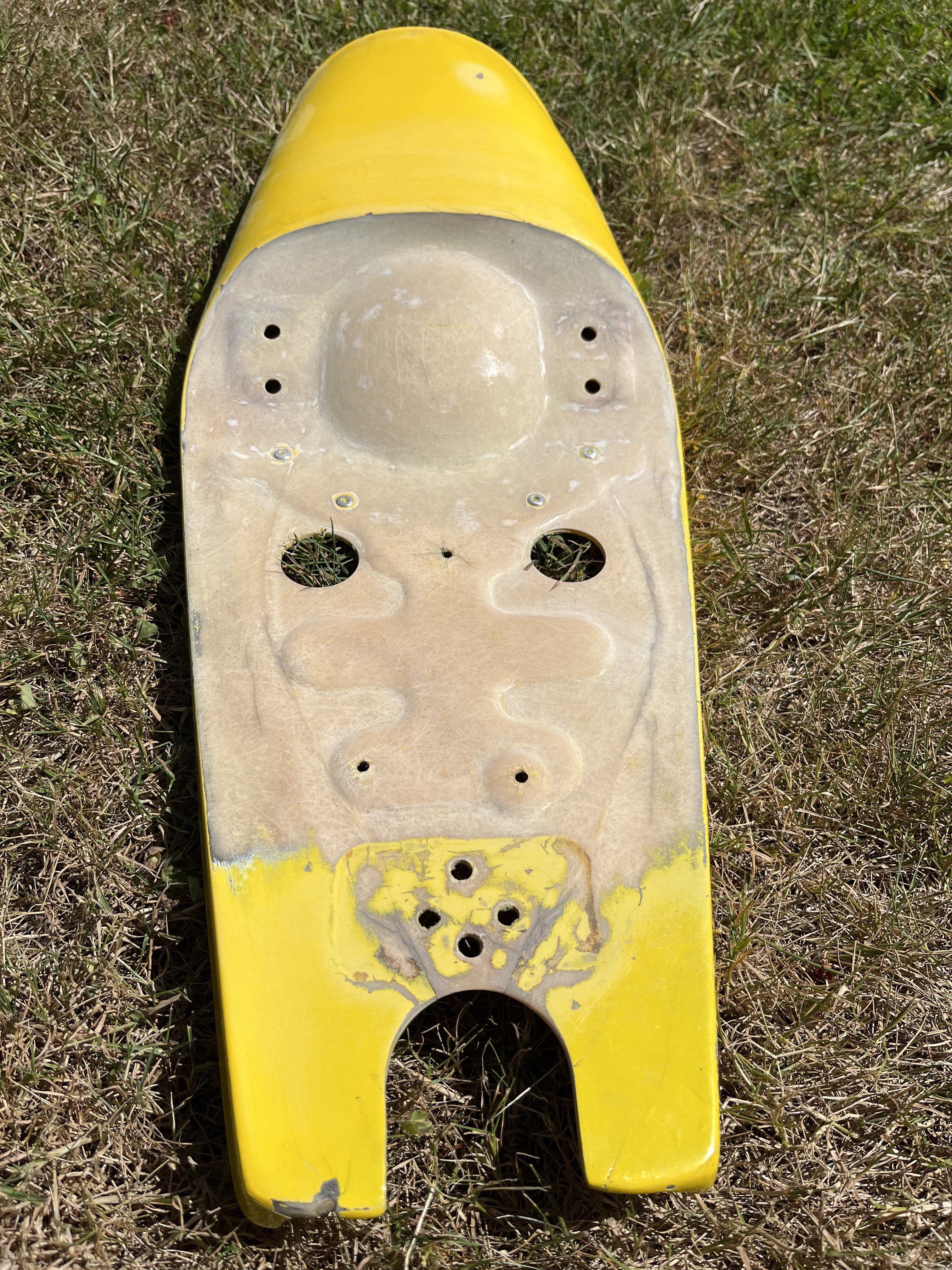
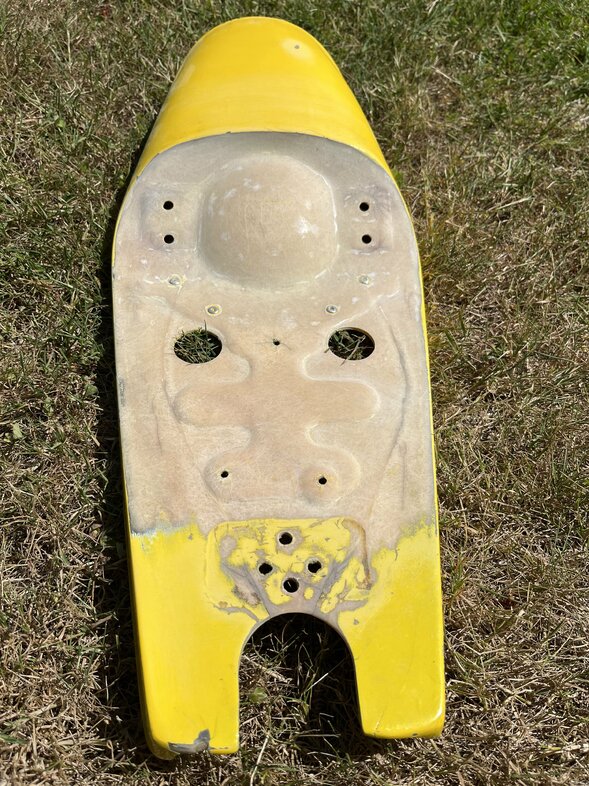
Thanks, RonH!! I'm grateful for your reply here. Yeah, that was not the answer I was hoping for, but it kinda confirms 1): stuff I've been reading online, and watching in videos, and 2): it kinda explains why the paint put on by the previous owner is flakier than all git out. I don't know if you're located in the U.S. as I am, or if you're familiar with Rustoleum brand paints like their inexpensive line of rattle cans and quarts called "Stops Rust" Gloss Protective Enamel. I've had really good luck with this paint on metal (like the swingarm) & wood whether from a rattle can, or stuff I mix up with acetone and Valspar hardener and shoot from a spray gun. It's cheap, easy to come by for me, and fairly durable. But I *think* it's basically just an ordinary oil-based enamel, and probably not the acrylic enamel that you recommended? FWIW, here's a pic of what I've done so far, regarding prep. I've sanded what I consider "the hard parts" (has all the intricate curves and such) of the fibeglass base with 120 grit. I know that I want all that flaking paint off, and figured I may as well take it the mostly bare fiberglass while I'm doing it. I just hope I can follow the contours well enough of the parts of the base not covered by the seat. I also found a couple of cracks, and some chips in this base I'll need to repair before priming. For some reason, the entire part I've sanded, and some I haven't had a thick layer of silver silicone seal over all of it that the seat covered. It clogs my 120 grit sandpaper up like crazy, and doesn't make this kinda tedious job a bit more difficult. Again, many thanks for your advice and help here, RonH!!
-
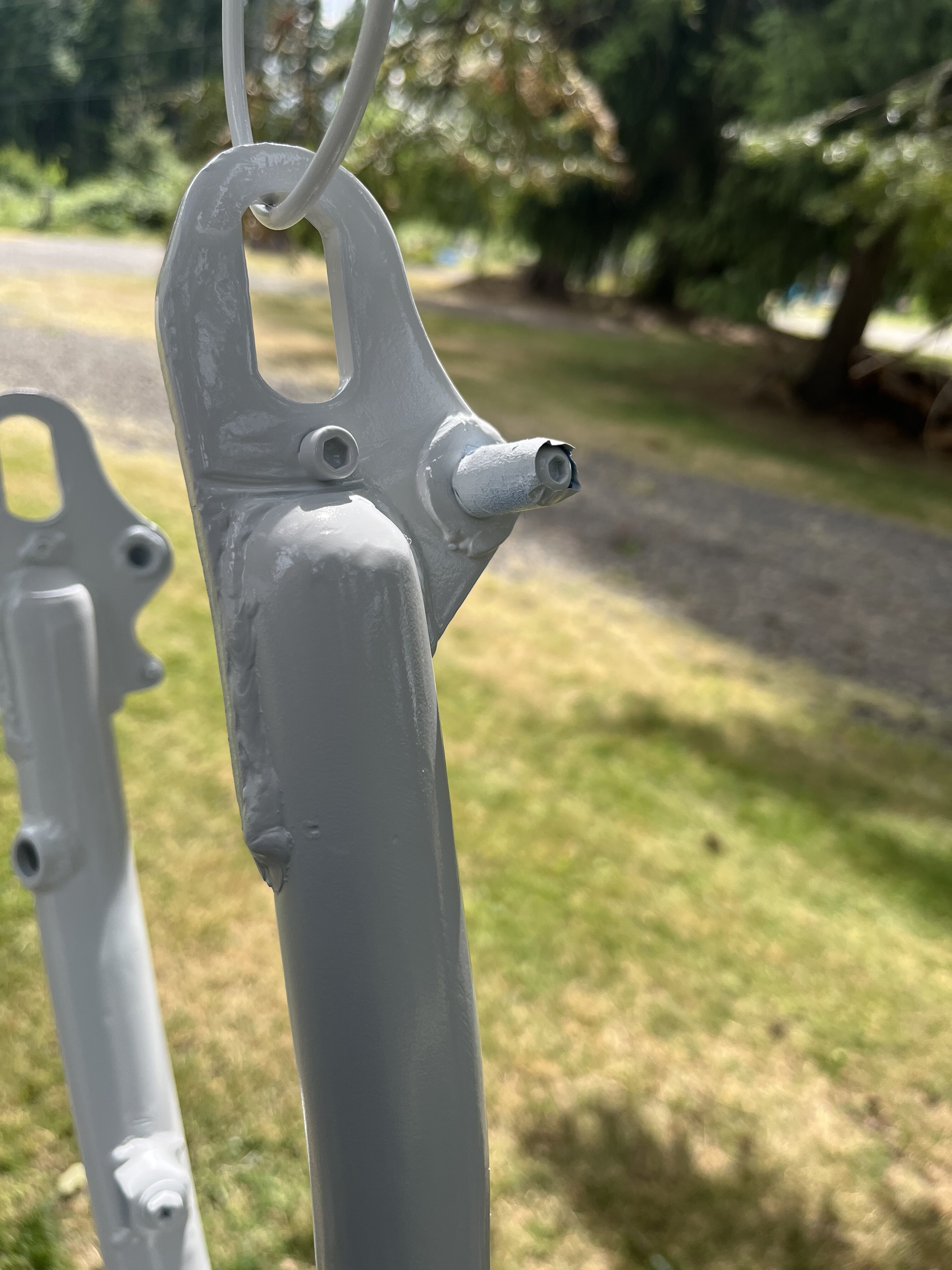
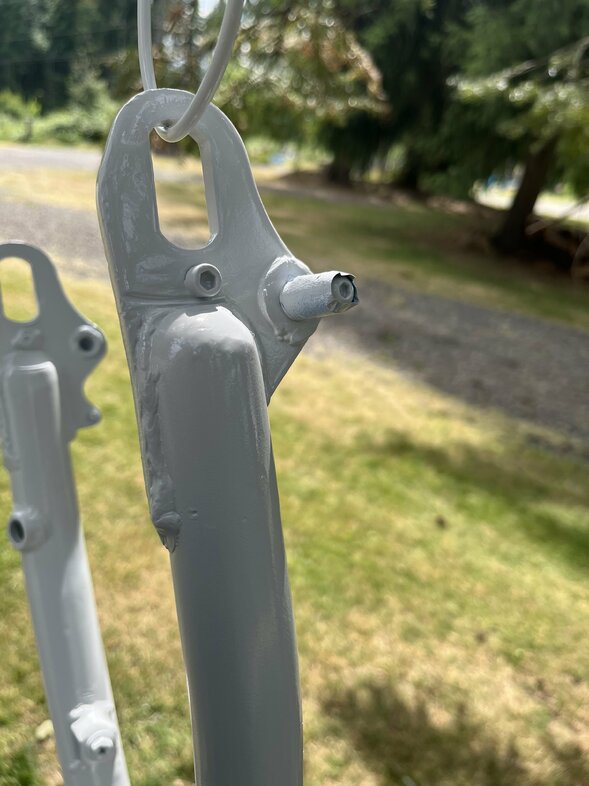
Hey, All! I'm slowly getting work done on my project TY250A. I got the swingarm "repaired", sandblasted, primered and shot some rattle can enamel on it today. The old "bumps" on the the swingarm that the snail chain adjusters push off of were really worn with grooves somehow. Maybe someone (previous owner) let the rear axle get loose? I say this because there is also damage to the dust collar on the drive side of the sprocket and the inside of the swingarm itself. I dunno how it could've happened, but it did. I ground off the old bumps, and drilled and tapped for 6mm allen headed bolts for the adjusters to work from: Now, I'm working on my fiberglass seat base. I made new brackets for the seat's rear mount before I found out that Feked sells them. Now, I'm sanding off the yellow flaking paint the PO put on, as well as some of the original yellow, down to the bare 'glass. My questions are: Does painting fiberglass actually require any "special" type of primer and paint? I'd really like to just put on some paint I can easily/inexpensively buy for now, and can use for future repairs. Something like a rattle can primer with rattle can hi-gloss enamel over that? I don't really want to shoot, say, colored gel coat on, or some of the more pricey marine products. Sorry for what's probably a stupid question. I suppose I need to say that I want this bike to be something I ride and crash, not a restoration showpiece. It's been 40+ years since I've done any bodywork involving fiberglass, and while I don't recall doing anything special while putting on and glassing in some fiberglass fender flares for my old Datsun 510, I would suppose there's been some improvements in chemicals for painting fiberglass by now........ Thanks for your help here, Jimmie
-
I'm thinkin' your probably right on that, guy53! I would do my GasGas 280's steering head bearings, swingarm pivot, and linkage in the winter (once a year), and it came apart and went back together fairly easily. On most of my MX and Enduro bikes I've owned over the years, once a year seemed good enough for those bikes. My Suzuki DR200 has been done once in the 4 years or so I've owned that one, but it gets ridden very little. It's my "other bike"......... But with the kinda "special" swingarm pivot bolt they give you with the Sammy Miller footpeg relocating kit (wider/longer length than the stock pivot bolt, due to the thicknesses of the new foopeg brackets), I believe I'm gonna need to do this greasing job a bit more frequently. I don't wanna take a chance on that "special" pivot bolt getting stuck like the stock one did.........
-
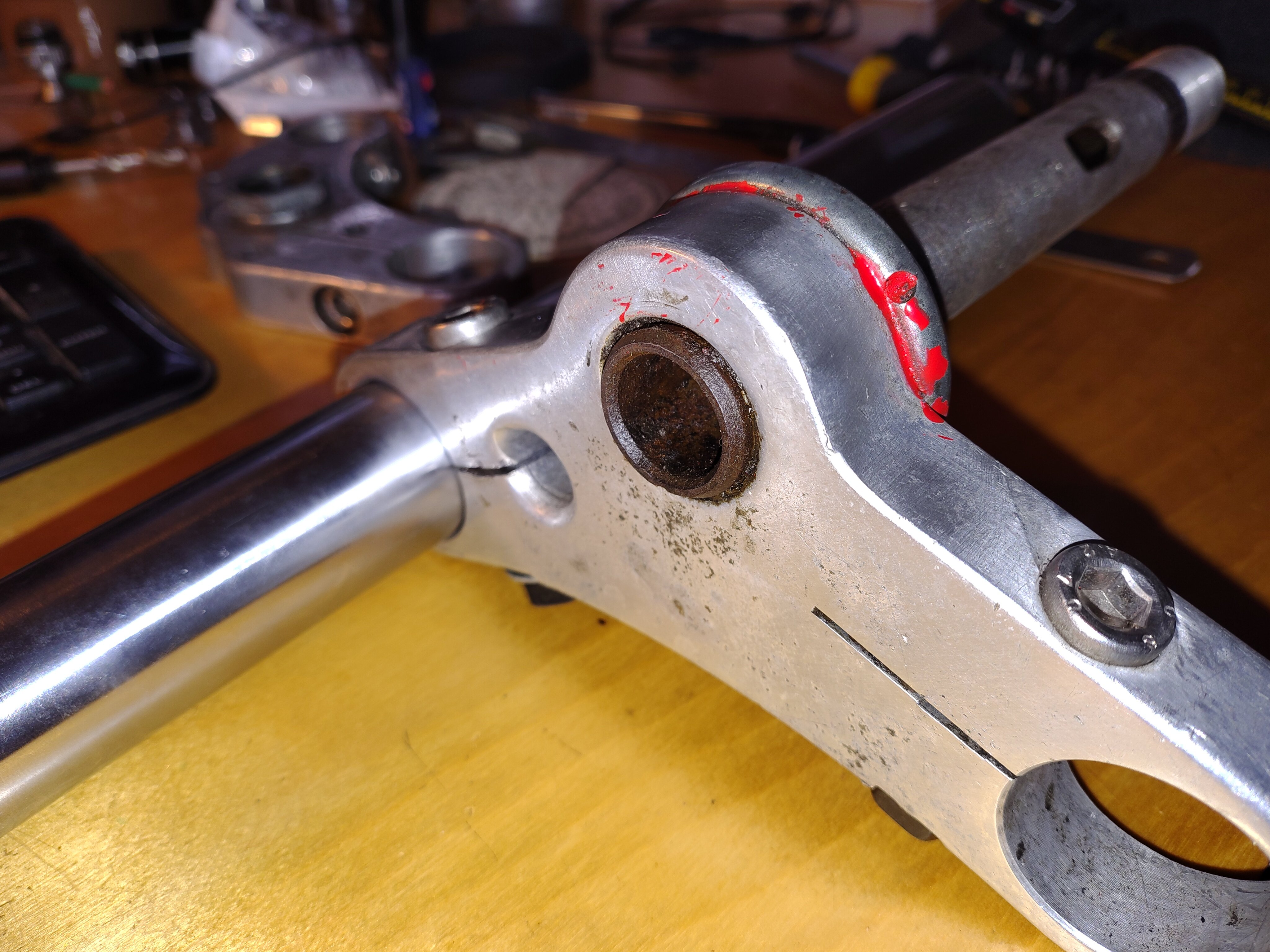
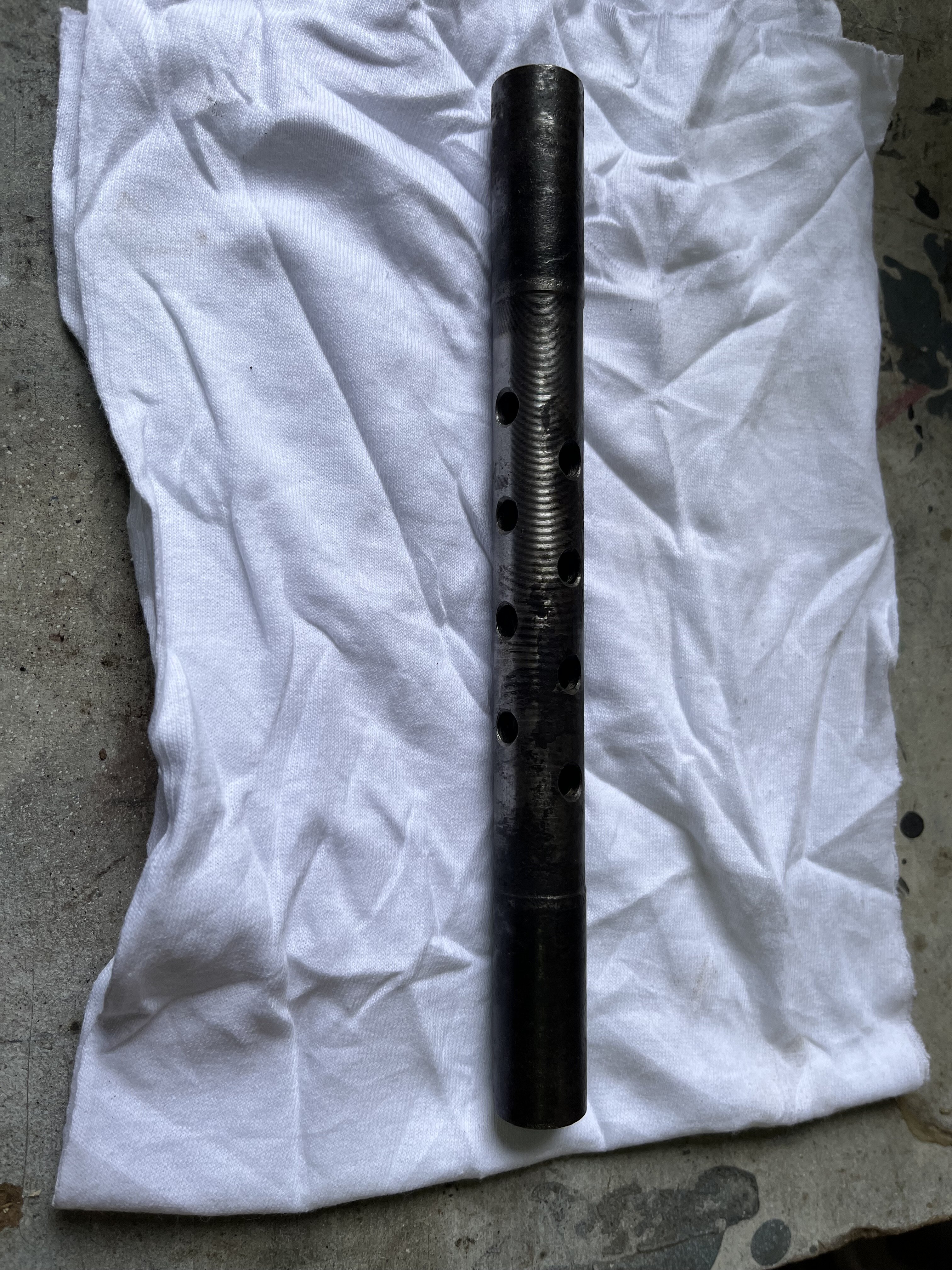
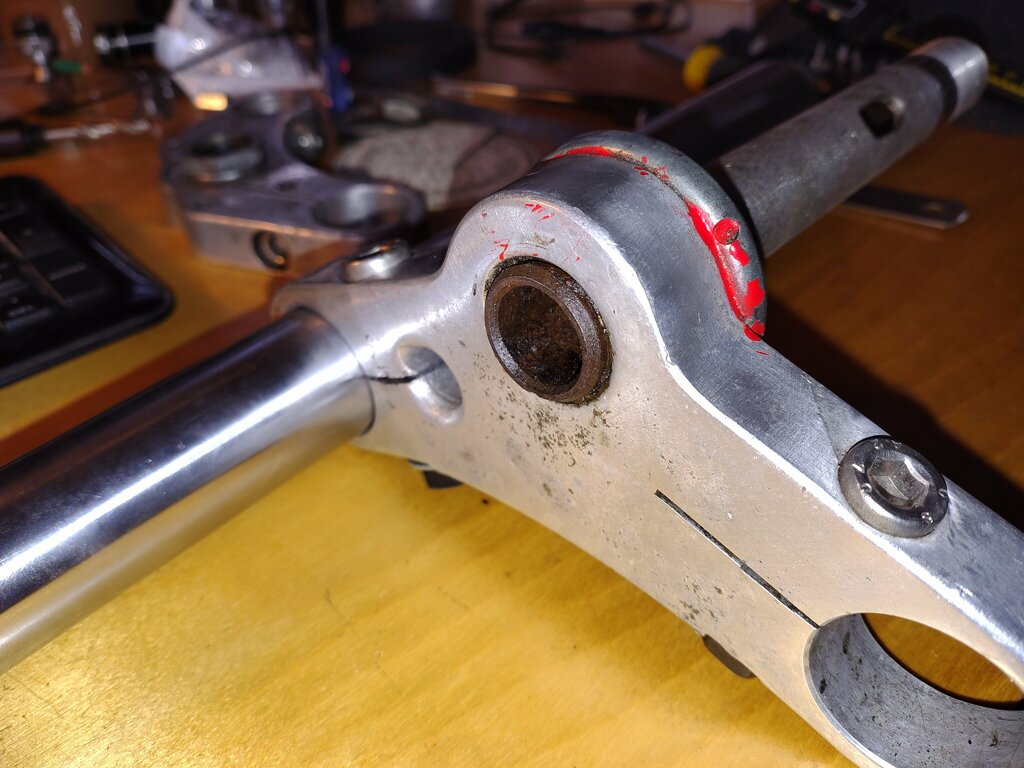
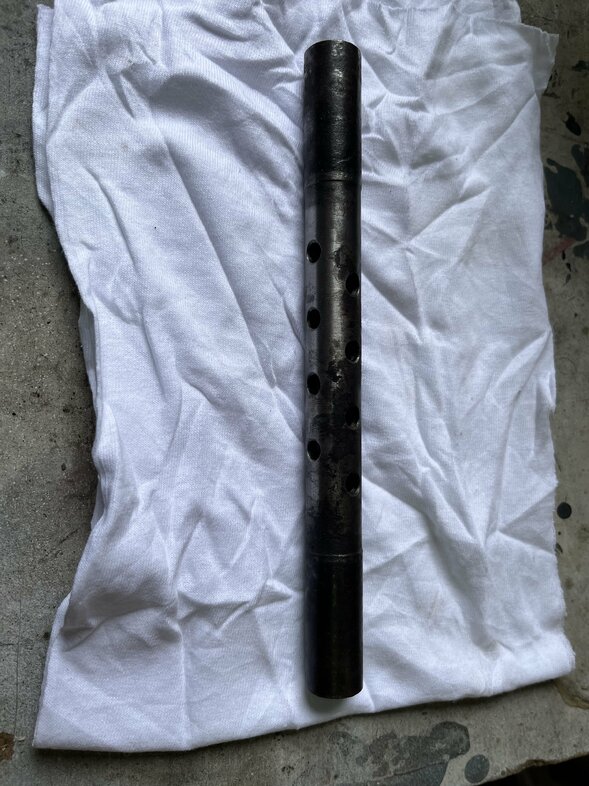
You're fortunate to own a lathe, Lemur. I wish I had one. Ran one for Boeing for 20+ years before retiring. I would probably do something like you did as well if I had a lathe. Would try to add spiral lube grooves to the i.d. as we did frequently for bushings I made, to allow grease to flow in....... How often do you take stuff apart to slather some grease in there? I hope that you don't have the problems getting stuff apart like I did on mine. No telling how long mine went without any sort of regular disassembly, cleaning, and re-greasing....... Here's a picture of my recently removed swingarm pivot bushing that shows the cross drilling. Are all TY250's inner bushing cross drilled like mine is?
-
YAAAYYYY!!!! Success!!!!!!! A combination of soaking the inside of the pivot area overnight with WD-40, my goofy all-thread "press", and Feetupfun's suggestion of some heat got things movin' outta there! Thanks so much for your help, Feetupfun! I'm grateful! Truth be told, your posts and comments in other threads have been a help to me even when ya didn't know it. Again, Thanks!!! Now, has anyone here ever used Speed and Sports' bushing kit for a TY250? I ask because it comes with the tube the swingarm bolt goes through (the tube I just had a tough time getting out........ ), as well as the bushings and seals. But in the picture they show, it doesn't appear to be cross drilled for grease to get through like the OEM tube. Can't see how grease from the fitting is supposed to get to the pivot bolt....... Maybe I'll call them tomorrow and see what they say......... I know I could cross drill it myself, or possibly re use my tube, or........
-
Well, Big Lumpy Poopy Pants! It's lookin' like your idea to heat up stuff might be how it gets done, feetupfun........ My efforts with my all thread puller didn't work out at all. Can't get that inner steel tube to even budge a tiny amount. It's the first time I can recall stripping nuts and all threaded rod without being able to get something to move. I have the swingarm lightly clamped in a vise while soaking in penetrating oil for now, hoping that enough liquid can get through all those holes that grease is supposed to travel through to do some good for me. Judging by how tight this long steel bushing is in the plastic bushings, and how tight those plastic bushings are pressed in the swingarm, I'm beginning to wonder if I should've not even bothered to remove them. It also makes me curious about how reassembly will go as well........ Any tips, words of encouragement, and facts pointing out what a Goober I am are welcomed! Jimmie
-
Okay, I guess I "panic-posted", THEN decided to think........ I recall having done something similar with a length of all-thread rod, some washers, some nuts, a sleeve or two, and used all this stuff similar to how a wrist pin puller/pusher works (gudgeon pin????). Will let ya know how it works out tomorrow. Thanks, Jimmie
-
Hi, All! Working on making my recently purchased 1974 TY250 rideable. I'm doing repairs from probably decades of neglect, abuse, and a bit of "Hillbilly Engineering" from the previous owner(s). At the same time, I'm making a few minor "upgrades"; like the Sammy Miller wide footpegs that lower and move the pegs slightly rearwards. This requires removal of the swingarm bolt. While that bolt is out, I thought I'd look into replacing the grease nipple and the pivot bushings. I got the swingarm bolt out after somewhat of an epic battle. Now I'd like to get the long inner bushing out; the one sorta shaped like a long dog bone that goes completely through the swing arm pivot and the plastic bushings. After that, I'd like to replace the plastic bushings, seals, and such. But that long steel bushing I tried to describe above is really, REALLY stuck in there. I don't want to bugger it up as I need to reuse it. How is the best way to rmove this, without doing any harm? If I had a lathe, I'd turn some barstock with a step in it to use as a driver, and maybe try pounding/pushing it out that way??? Any tips from those that have done this before? Thanks, Jimmie
-
Good idea on the cutting board for the base, Dave! 👍 I made a skid plate for my Pukey Suzuki DR200 from similar material (UHMW, I think it’s called. 3/16” thick). I formed it with the heat gun. Should hold the staples well. Understand about getting “sidetracked” with other stuff. I have to split my diesel tractor in half to replace a leaky rear main seal. I think I’d rather work on an old Beemer…….. 🤔
-
SlowDave, I recently bought '74 TY250 which probably has a top candidate for "Ugliest Seat In The World" type of seat. Has a home made seat base of plywood on the flat portion, and some sorta plastic for the part that molds/curves over the rear fender/seat pan hump at the back of the seat. I'm kinda fortunate in that my bike's yellow fiberglass seat pan is actually in decent shape, but with some very funky mounts from the seat pan to the upper/inner rear shock mount. These will reqire some mild "engineering" and fab work, as decent used parts are tough to come by, as you know. I have had no luck finding very many parts here locally in the NW part of Oregon. One Vintage parts dealer in Portland tells me the fiberglass pan and the seat are among the first thing he sells when he gets a TY in........ I don't know how YOU plan to use a rear seat on YOUR bike, regarding whether you mostly stand while riding, or plan on sitting a lot while, say, trail riding. That would probably determine just how good of a seat you'll need. Mine will be a minimalist type of seat, since 1), I mostly stand while riding anyway, and 2), my last modern trials bike had no seat, so that's what I'm used to......... I've decided to make my own seat base from sheet thermoplastic. I'm still in the "Research Phase" of this, but it seems "doable". I watched a youtube video of a guy that did this for a road bike, which was helpful. Our seats have what is a fairly simple base. Mostly flat, with an angled portion that molds over part of the seat pan. Heat a sheet of thermoplastic cut just slightly larger than what is needed in an oven at 325-350 degrees, and place it on the fiberglass pan to form to the seat's base. Wear gloves for this. If any parts of the thermoplastic cool too quickly to form correctly, a heat gun will give enough heat to form as needed. It will need to be trimmed a bit after it's formed and cooled. A bandsaw will be helpful for that, but a handheld jigsaw will work also. This stuff can be heated, formed and cooled, and reheated several times. A fairly understanding wife may be necessary to heat plastic in the oven, so the heat gun might be the best way to do the whole enchilada. I've heated and formed a part for the airbox on my pukey little '92 Suzuki DR200 (needed this after a carb swap), and made several holsters for my handguns with this stuff. This plastic can be cut, drilled, sanded, and etc.. It's not too hard to work with. I've found seat material/fabric at Guts Racing and Parts Unlimited (some fabric called "Texhide", which I know nothing about, but is cheaper than what's available at Guts Racing...... ) for the cover itself. I still need to find some suitable foam. Assembly will, hopefully, consist of stretching the seat fabric over the foam, folding it under the base, and stapling it similar to how other dirt bike's seats get re-covered. Anyway, that's my plan for my bike's seat, for now. I should have some time to start on it in a few weeks, and hopefully will be able to report on any progress I may have made on the deal, if anyone is interested. Wish we didn't have to jump through these kinda hoops for parts for our bikes, but that's part of the charm, I'm told....... Hope this might help some, or at least give some ideas and options! Jimmie Added in EDIT: A link to the video of making a seat base I mentioned above:
-
Heather, are the turns you're doing pretty much on muddy soil, or in rocks, or somewhat of a mix? Jimmie
-
I find that offering them a handsome cash reward for a "clean" on their section helps break the ice...... Until they realize what a cheap schmoo I actually am..... Jimmie
-
Agree with Dick & Bashplate. I wear progressive, or lineless bifocals for work (safety lenses) & my "fashion" (street) glasses. Personally, I think the progressives kinda suck for most everything, especially my "narrow" street glasses. I liked my old fashioned bifocals better, for everyday use, driving, & etc.. But the light (titanium framed) pair I have for riding is a prescription for focusing farther away the end of my arms, out to infinity. This works out much better for riding. When I do wear my progressive/lineless bifocals while riding, there will always be some point where my head is tipped wrong, and I'll have to try and focus through blurry bifocals at something 15 ft. away...... Jimmie Added in EDIT: Do you guys with contact lenses ever have any problems with dust? Not that often we get to ride in dust here in western OR (kinda like Britain, from what I understand), but we do have 2 months of summer some years..... Also, do contact lenses work for folks with astigmatism & nearsighted probs?
-
I do indeed like the chest mount view you have as a viewer watching your videos, The Addict & MIchaelT! Nice!!! Another view I personally like from when I rode mx was with my old GoPro on a flat plastic mount that I zip-tied to the lower chin bar part of my full face helmet. That gives a nice "Rider's Eye View" as well. You won't see quite as much of the rider's "inputs" (hands, forearms, & etc.) as with the chest mount, however. Nice skill, and a nice riding area! Didn't take me long to figure out why it's called the "Dishes"....... Jimmie Glenn (axulsuv), GoPros are heaps & heaps of fun! I have what I think is the least expensive version they ever offered, the old model 960. It was given to me as a gift from my wife a long while ago. Video aside, they take some very, very cool still shots as well. The "fisheye/wide angle" lens deal adds a really cool effect to certain shots. Go somewhere with tall trees, or tall buildings, point the camera straight up, and it gives a really neat perspective. I did this while in the canyon at Zion National Park; really neat pics from that little camera while pointing up in that very narrow canyon! I stood on a sidewalk in downtown Portland one day and took a neat photo of one of the streetcar/train cars (MAX_Metropolitan Area eXpress....) from about 10 feet away. The camera made it appear to bend around me like a horseshoe. They're a hoot!
-
Heather, One thing that I learned, but still struggle to do, is this: Pick your spot where you want to stop & balance well ahead of where you are as you are slowing down. Begin slowing VERY GRADUALLY. The transition from moving to stopping is tough for us folks learning this sport; it's a little easier if you slow very gradually, then stop with as little front end dive as possible. Stopping quickly seems to make the transition much less "fluid". And the advice from 0007 to simply ride slowly is very good advice....... Now, if only I can take this advice, and simply learn to "Ride Slowly!!" to begin with. I pretty much "motocrossed" my sections at today's trial, and my crummy scores reflected that. Learning to ride slowly, or while not moving, is tougher than I'd figured it would be...... Jimmie
-
Okay, I can deal with the hula skirt...... But please, no coconuts! Damn, he can ride really good!!!! Jimmie
-
Will it be in Sandy, Oregon this year?????
-
Man, that looks like a GREAT place to ride, Brian! I envy ya...... Jimmie
-
Was the slo-mo a function of the GoPro, or your editing software? I have an old GoPro model 960, and wouldn't have a clue what setting to use for slow motion..... Jimmie