
feetupfun
Members
-
Joined
-
Last visited
Everything posted by feetupfun
-
I used a piece of thin-walled rubber hose as a sleeve when I fitted a KT250 Mikuni to my 348
-
heat the outside of the case around the main bearing you want to come out of the casing. Use discretion to avoid overheating the aluminium. You are aiming for about 150 to 180 degrees celsius
-
I have a M49 (1968 model) with those tapered top forks and I can't tell any difference between the quality of the fork action of the M49 forks and M198 forks on an M198. The later type top triple clamp does make it easier to remove the tubes though. The later type (curved downwards) lower clamp is meant to provide reduced fork flex but I don't think many people would be able to tell the difference when riding. From memory of when I had both sets of forks apart, the damper rod assemblies looked the same.
-
247 front wheel is the same as 348 but 247 backing plate is different to 348 and brake arm may not clear 348 slider. 349 fork sliders are the same as 348.
-
I'm pretty sure this question has been covered a number of times on this forum or in the Twinshock forum. If there is nothing turns up in your searches, I will take a photo showing what a standard bike arangement looks like
-
Yes thankyou Jon, I am cogitating on it
-
Jon the TY250A model motor behaves nothing like a standard BCDE motor. For our conditions (dry - dry - dry), the A model motor is perfectly good to use and makes for a terrific play bike too.
-
The OSSA MAR forks are amazingly good for an early 1970s trials bike and the rear end works very well too with the right shocks. Yes I concur with lineaway the standard MAR 250 motor is quite amazing. The OSSA motor is a distinct advantage in muddy or other low traction conditions compared with the A model Yamaha. Both TY250 and OSSA MAR are both quite low under the motor compared with others of the same era. I'm not sure the terrific suspension on my MAR ever saved me any points compared with my TY250A, but it does make it feel more luxurious and steady to ride in places where the suspension get a workout.
-
Absolutely spot on Jon - my sentiments exactly
-
Good photos and location are needed if you want a serious answer to what they might be worth
-
Unless you are wanting the Cota just to be used for static display, plastic guards are the only sensible choice. You can buy the universal guards in grey/silver which looks good on a Cota 247. White and black plastic guards also look quite good.
-
cornishrockhopper do you really ride trials with 8 PSI in a rear Dunlop?
-
Sometimes people run an earth wire all the way from the stator backing plate to where the HT coil attaches.to the frame. This avoids any concerns about the resistance of the connection between the backing plate to the inner case, the engine mounts to the frame, and the frame to the coil. Sometimes that same earth wire is also run to the kill switch to avoid passing a current through the steering head ball races when the kill switch is operated. That current can cause damage to the bearing surfaces. Having an earth wire run to the kill switch also makes the kill switch more reliable for stopping the motor. The third stator coil is probably for lighting/battery charging. Some bikes have two or more lighting coils on the one core and others have two separate stator coils for the lighting. Bikes with points/flywheel magneto ignition usually only have one (stator) ignition coil.
-
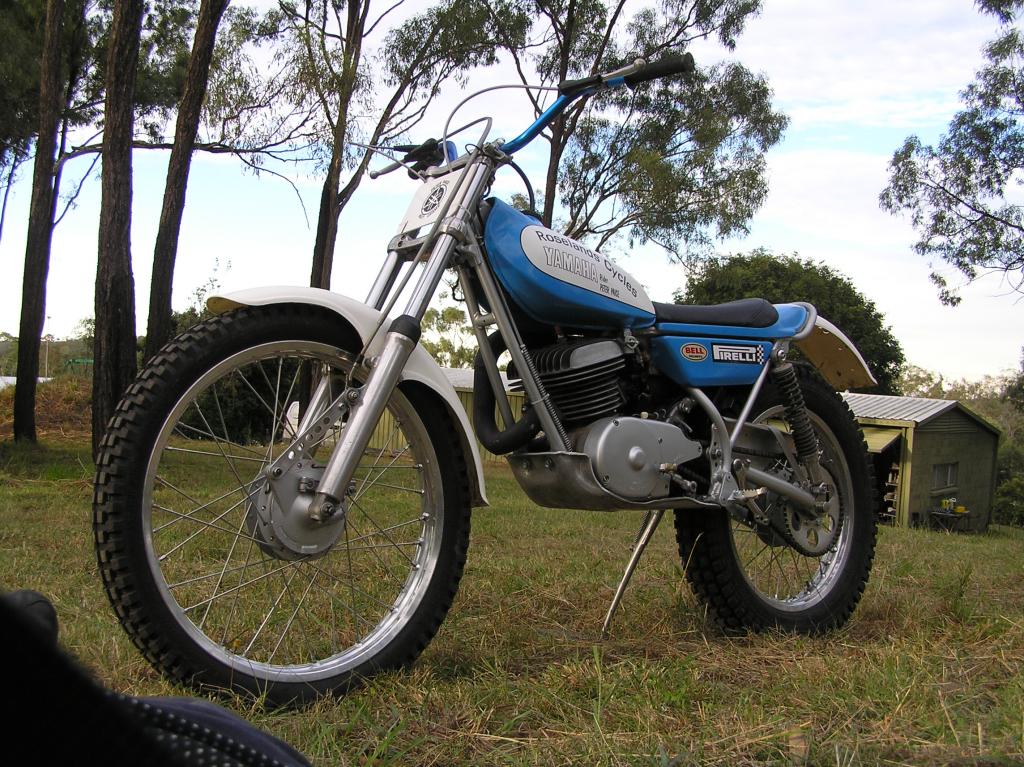
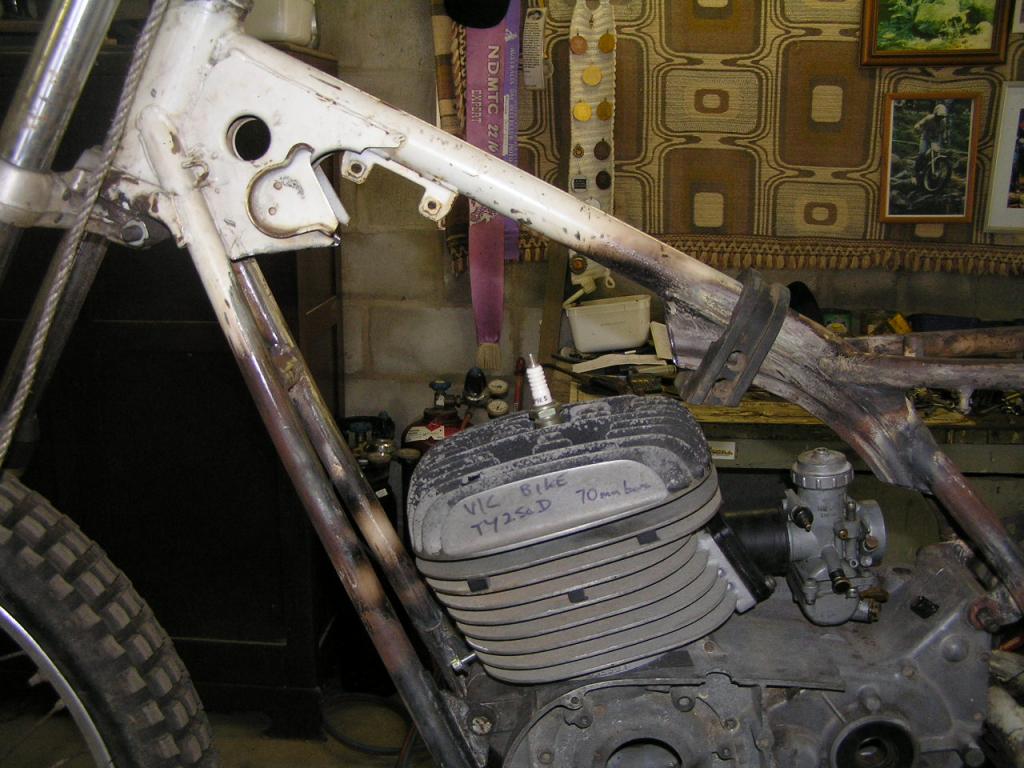
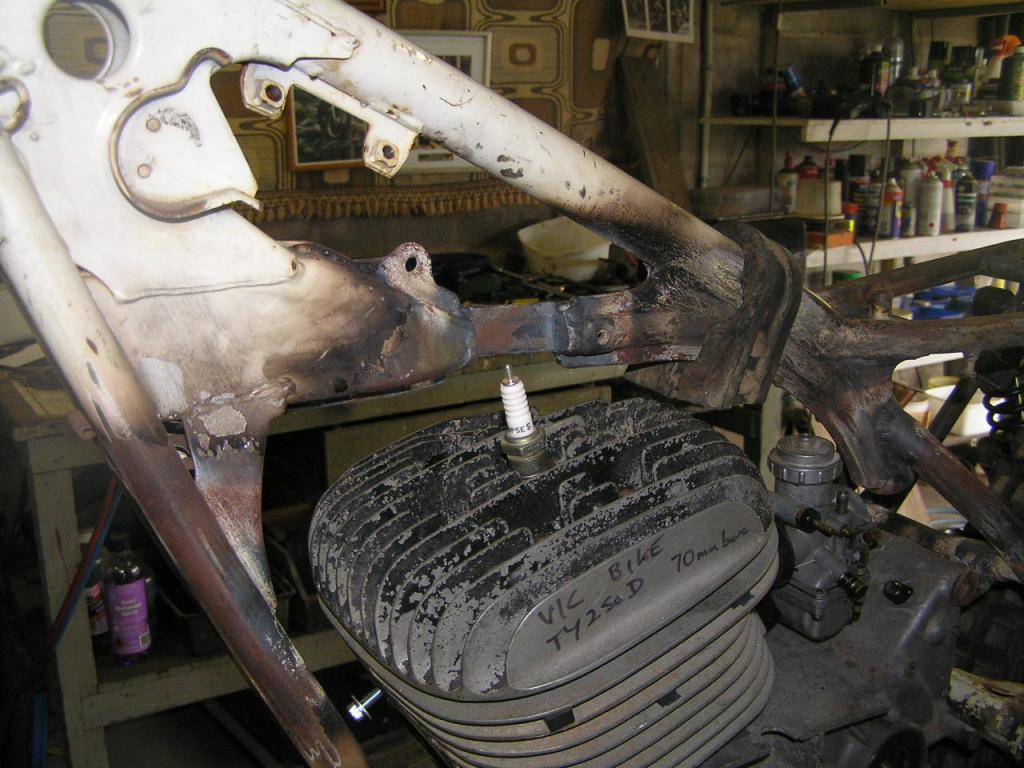
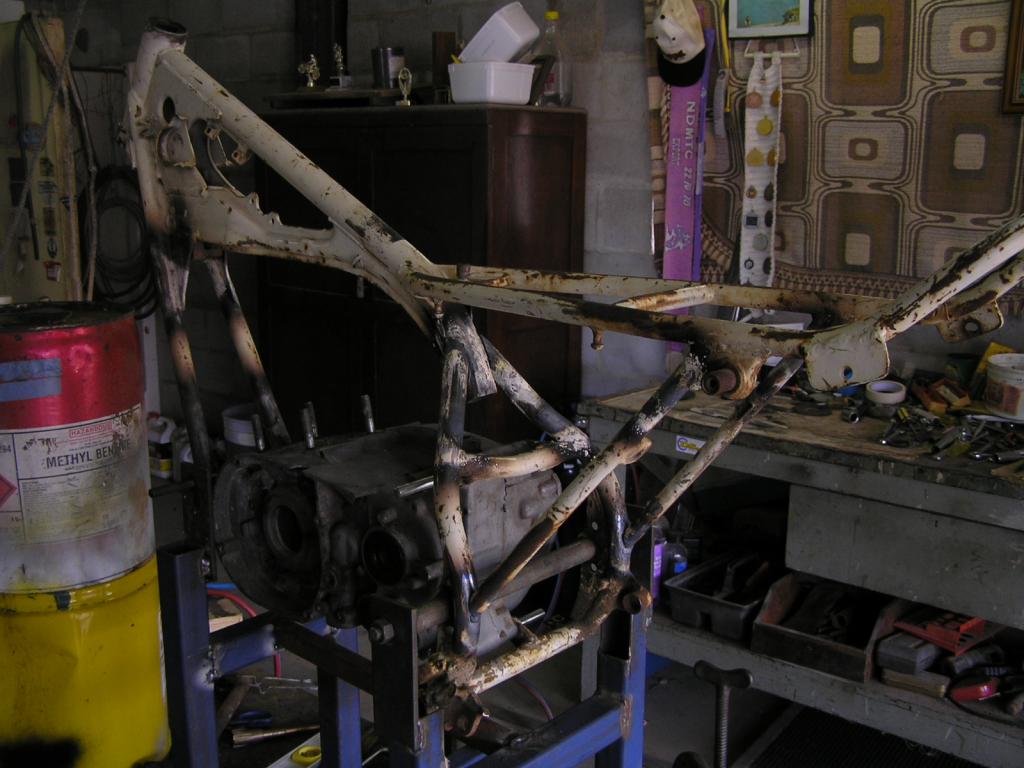
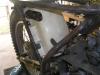
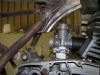
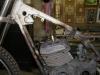
Thanks Tony yes the toolbox is completely gone. I started out with the Majesty idea of making the notch for the sparkplug, but to be authentic to the original, I later removed the toolbox completely. The standard airbox was too tall to fit after the frame mods so I made one from 2.5mm aluminium sheet. Another thing is that the original bike retained the standard botom shock mountings, which means that the shocks have to be the same length as the original Yamaha shocks. If I was to fit shocks of 340mm, the swingarm would go down too far, and modern 340mm shocks have so much shaft travel, that the tyre would hit the rear frame loop. If I was to ride this bike in competition, I would probably have 320mm shocks made and fit a spacer so they didn't compress too far. The photos in VMX magazine have the bike fitted with NOS TY175 shockies borrowed from a friend. Alternatively I could have made new shock mounts further back on the swingarm and fitted 340mm shocks, but then it wouldn't be a copy of the 1976 Peter Paice bike. Peter used standard TY250B shockies on the original.
-
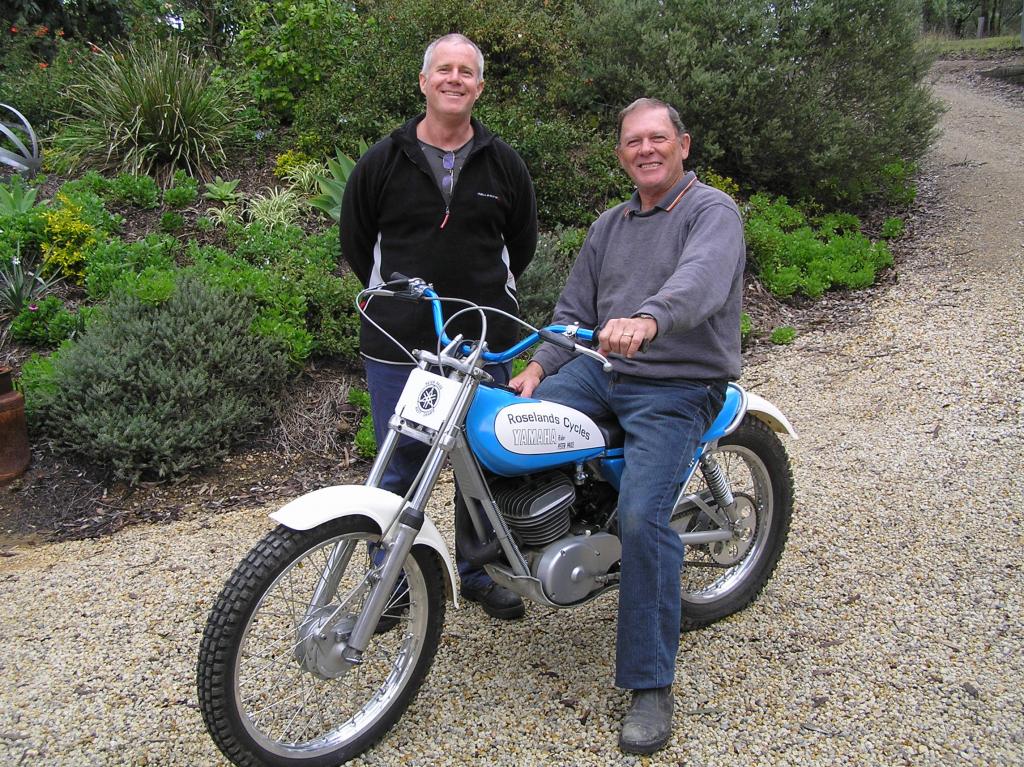
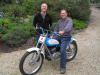
This is the finished bike being shown to Peter Paice.
-
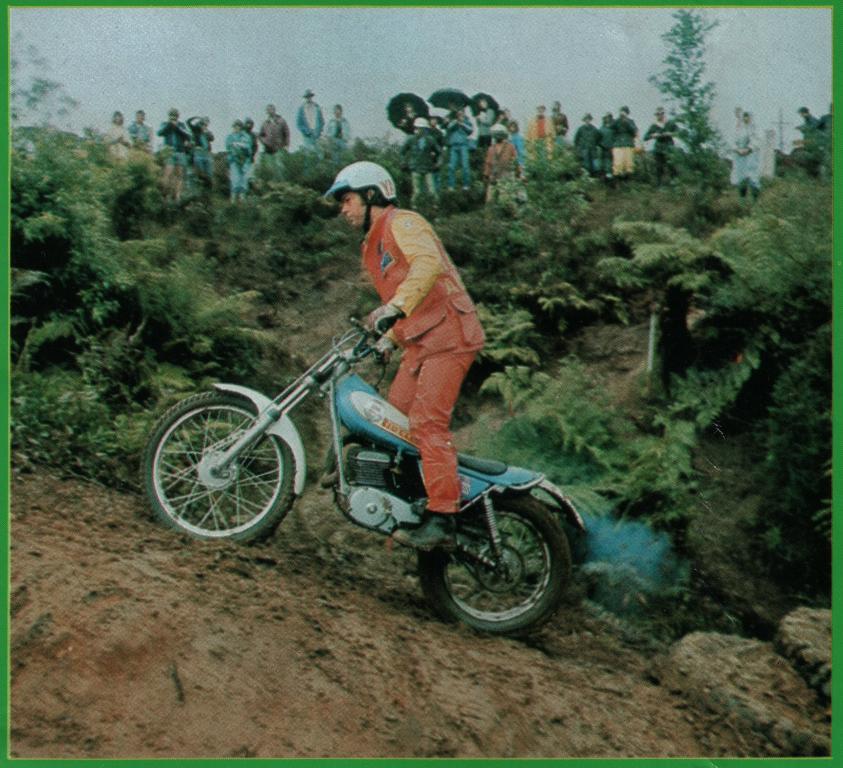
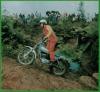
magazine photo of original bike that this copy was built to celebrate. Photo taken at Aussie Titles 1976. Rider Aussie Champ Peter Paice.
-
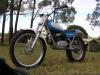
photo of finished bike except for shockies
-
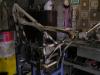
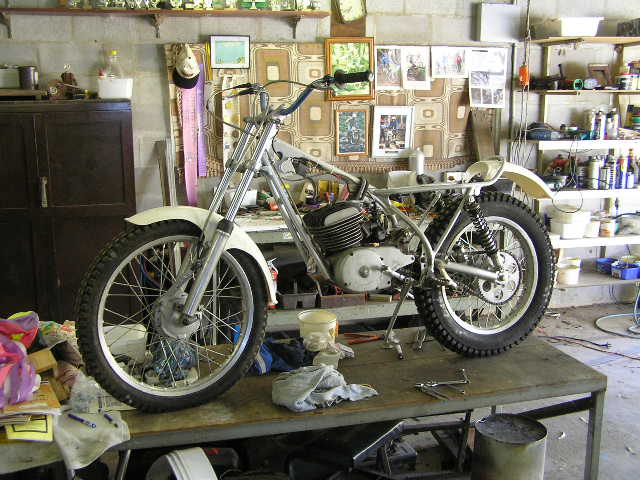
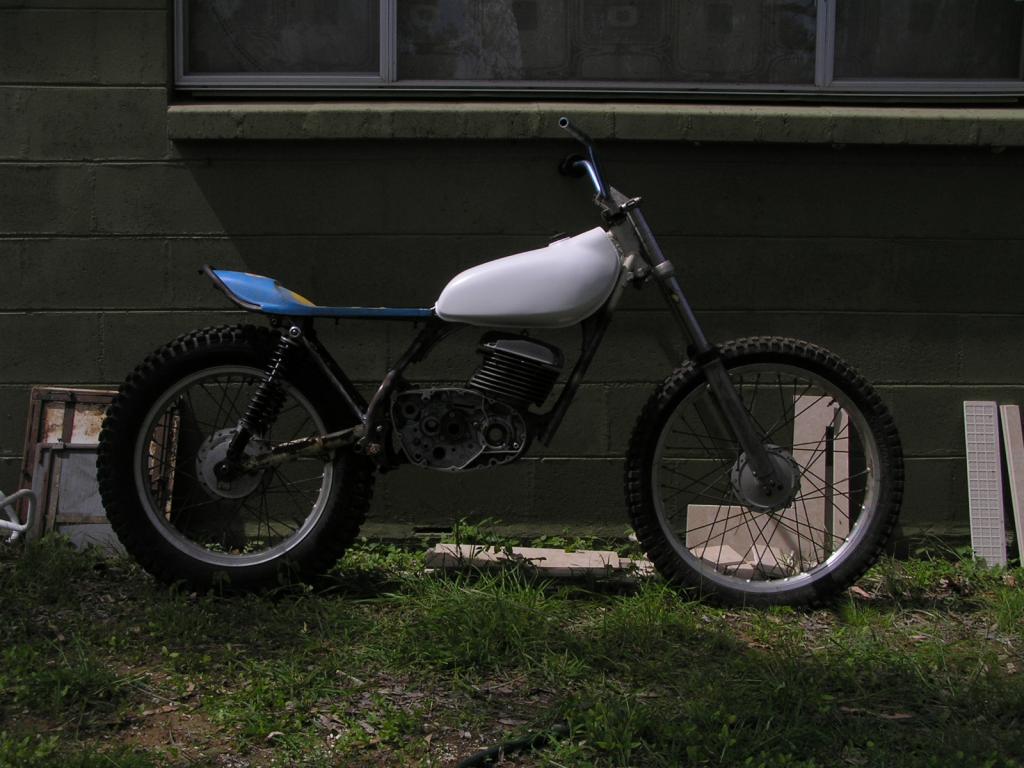
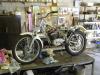
Frame painted, motor fitted, assembly in progress
-
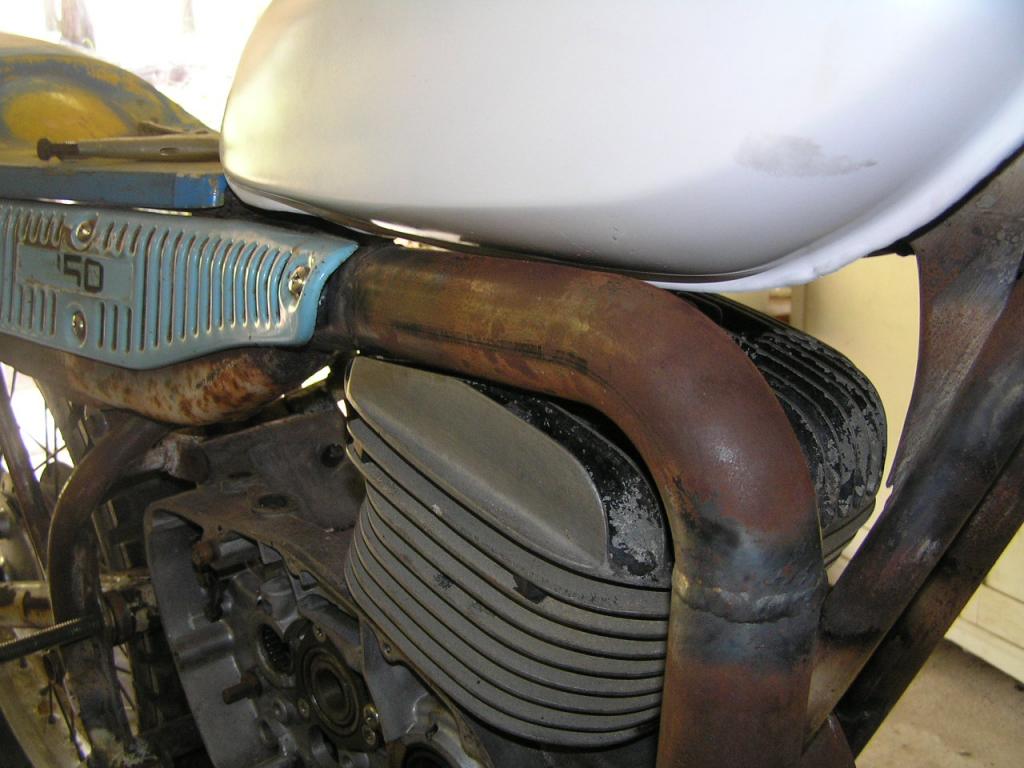
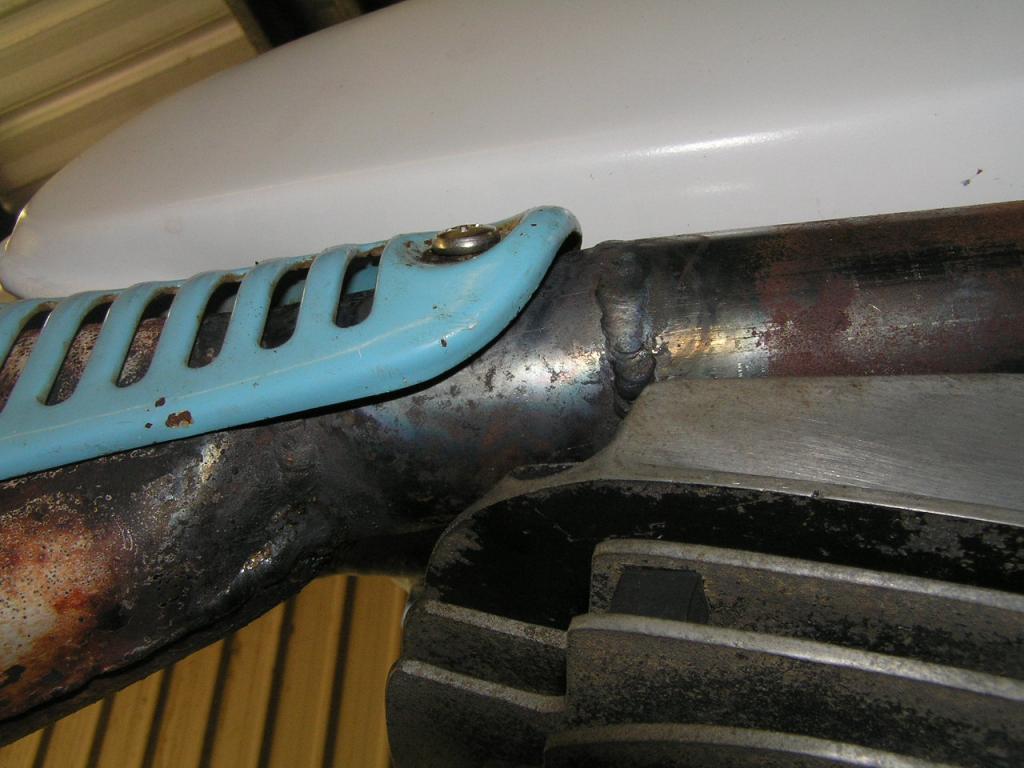
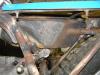
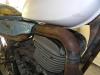
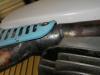
Showing the making of the exhaust. Main chamber reshaped at front end to miss cylinder head, dent on inner side reshaped to clear the middle downtube. Rear end of chamber shortened to clear the gusset avove the shock mount. The routing of the section of tube above the head is critical. This one ended up with 3mm clearance to the head fins and 3mm clearance to the fuel tank. It would have been easier if I had used smaller diameter exhaust tubing.
-
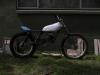
photo showing a test fit-up with suspension in place
-
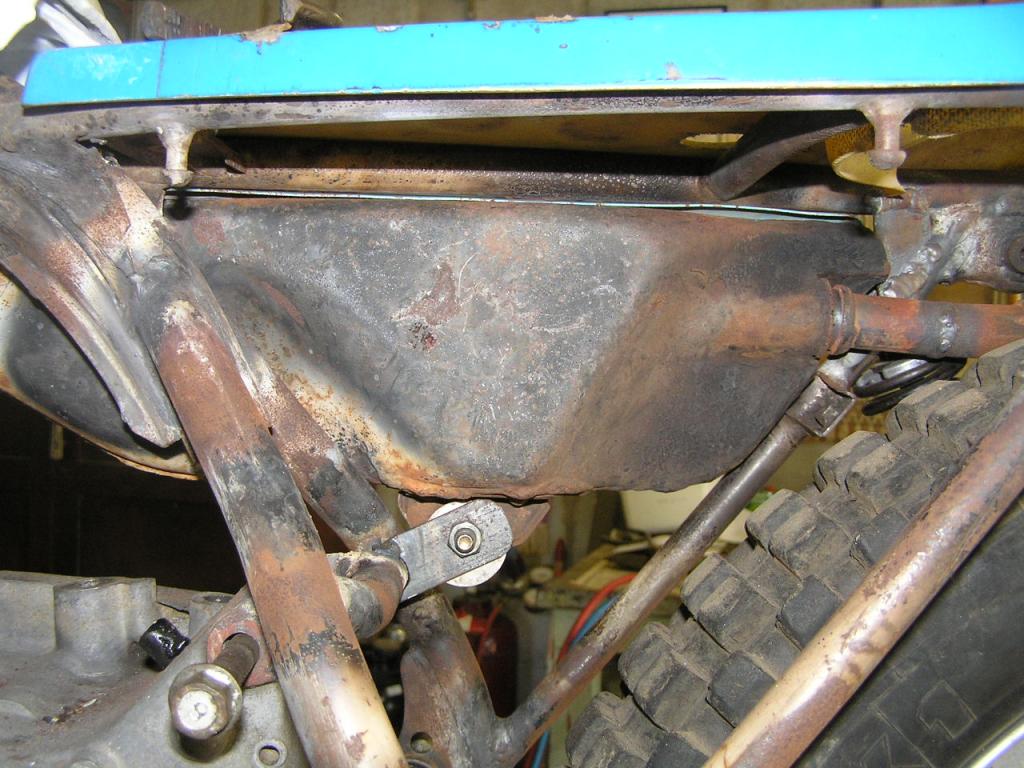
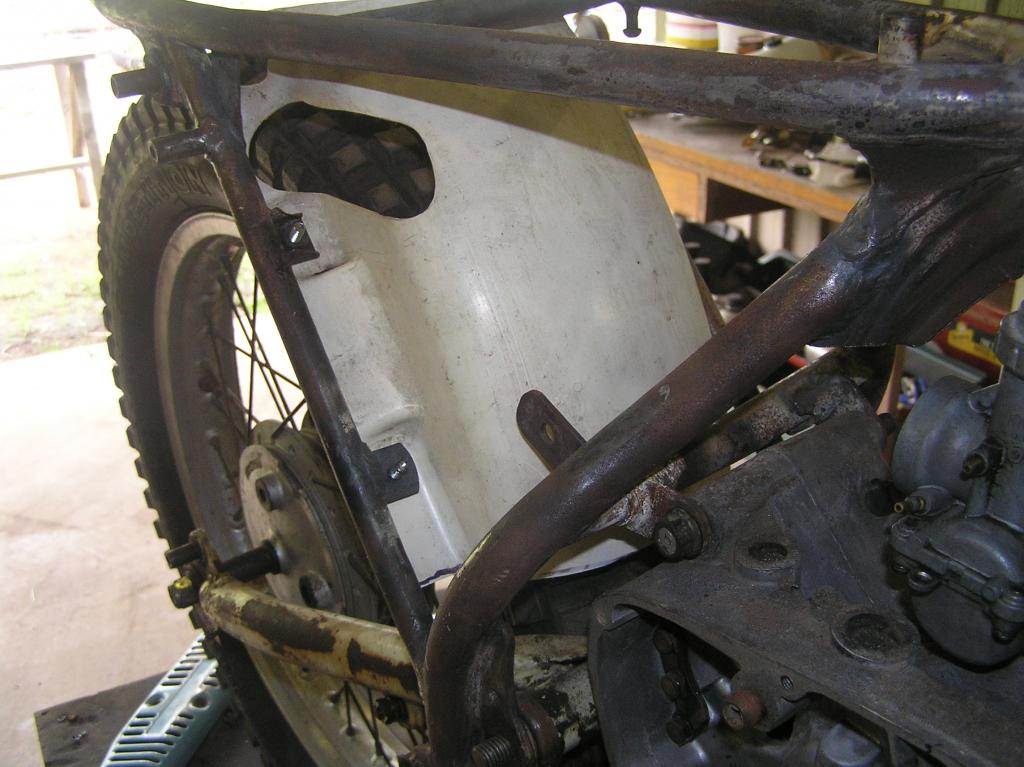
Photo showing new mount for exhaust chamber, new lower mount for inner rear guard, new shockie mount and new frame gusset above shockie mount. Inner guard shown is fibreglass Majesty item made in early 1980s. Shockie mount pin goes right through downtube and is welded both ends. It is tapered from standard pin size on outer end to 4mm diameter on inner end.
-
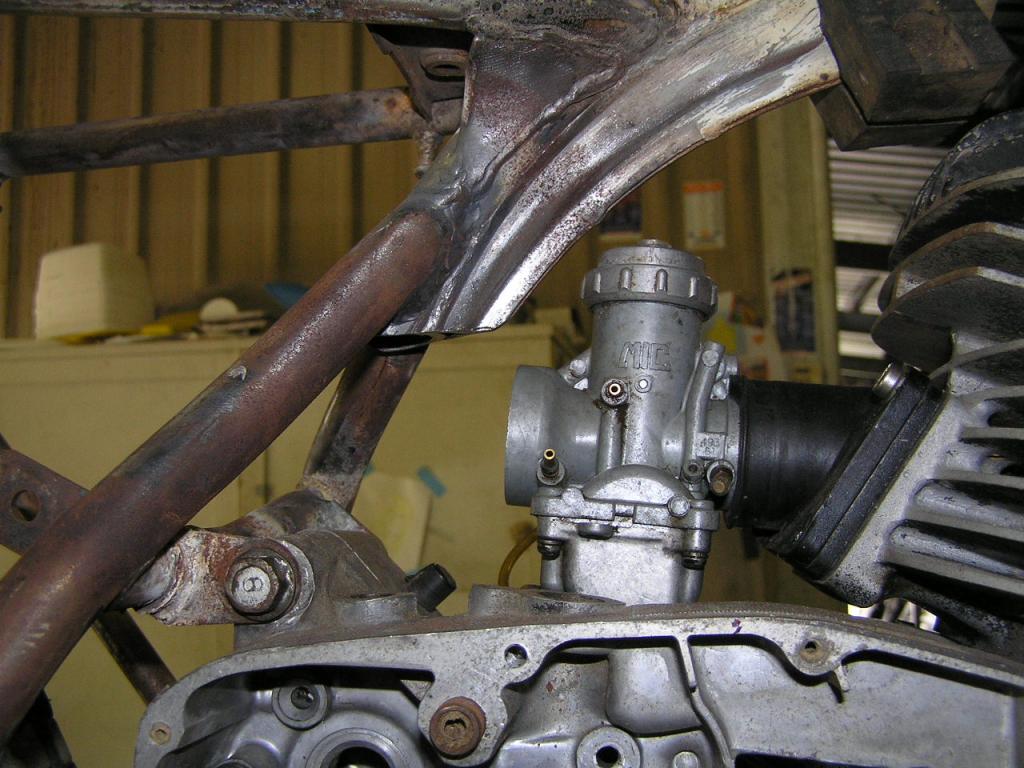
Backbone end shortened to make room for air intake hose
-
toolbox brace completely removed!
-
Mods to toolbox brace
-
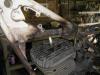
Rear downtubes tacked into position. Mid downtubes bent inwards and forwards ready for welding