
feetupfun
Members
-
Joined
-
Last visited
Everything posted by feetupfun
-
The rotational play to the big gear is fine unless it has worn the cush rubbers so much the rivets hit metal to metal. 2-3mm play at the OD is normal It is common to hear a rattle with the clutch pulled in in neutral - on many bikes. It is the sound of the steel plates rattling on the splines of the hub. If you let the clutch out the steel plates are held firmly so don't rattle. If you put it in gear the drag of the friction plates against the steel plates causes the steel plates to be held against the splines of the hub, so don't rattle. Clutch released, in neutral = rattle = no worries mate
-
do you mean a kdx220 piston? I have a feeling the kdx220 piston works with the Ty175 motor. Haven't heard of an rdx220 I don't think you will be able to use the standard liner for a 70mm bore
-
Twinshocks require correct technique to turn tightish. They respond very well to being leaned over, and the outside peg carrying the riders weight. It is easy to tell if the brake is really dragging or not. Turning tight will be much easier if you can get it to run well at low RPM. Until you can get it running right, use the rear brake to maintain bike speed in tight turns (with the clutch driving ie rear brake vs engine) Yes it sound like an air leak. Most common sites on a 247 are the crank seals and between the carby and barrel, and if you have an AMAL carby, yes the slide and body are commonly worn out
-
Guy my log revealed that at the same time that I fitted the Boyesen Reeds, I also replaced the LH crank seal, which had been leaking, so while it did run much better after the work on the engine, I can't attribute the improvement solely to the Boyesen reeds. David
-
Test for sag with rider aboard before making changes to your fork preload. You are looking for about 1/3 to 1/2 of the travel being used up with rider aboard with all weight on footpegs
-
Thanks for the feedback everyone. I will check the reed seats
-
Guy it was quite a while ago and I don't remember. I will have a look in my log and see if I wrote about it there.
-
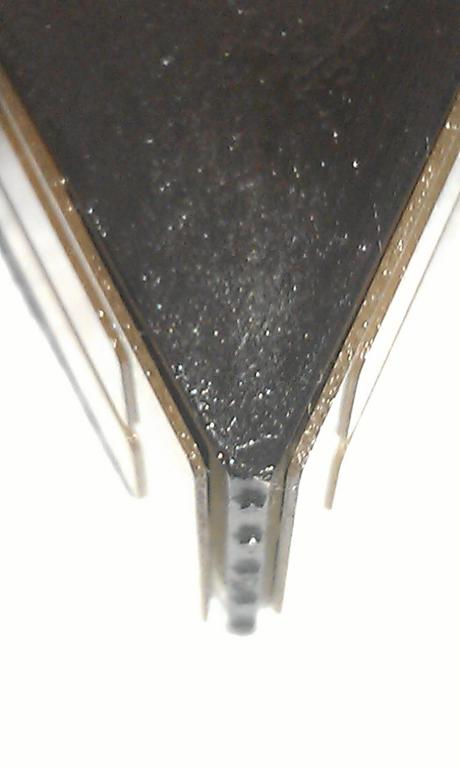
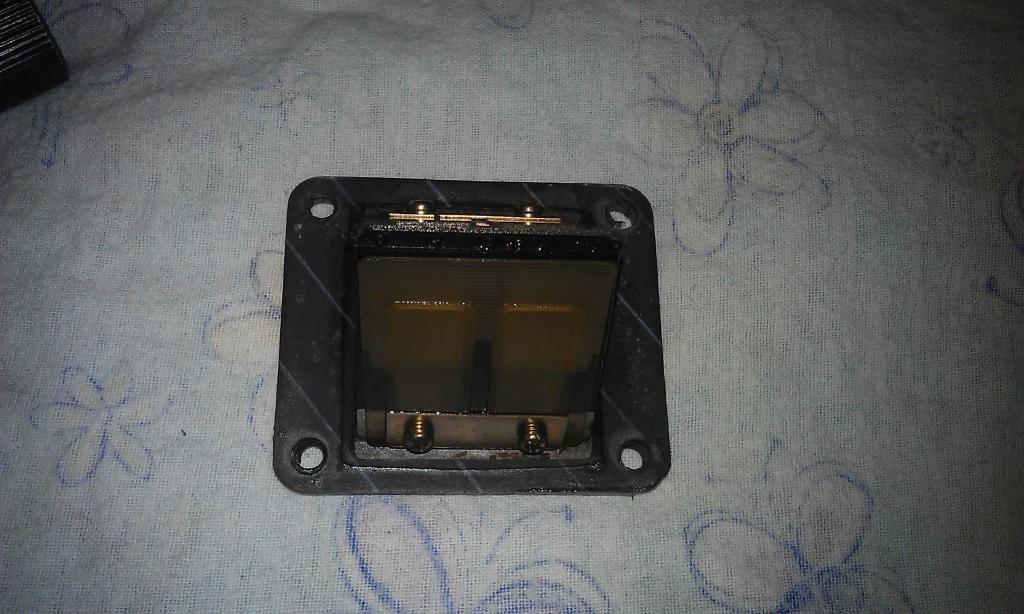
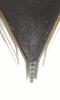
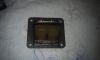
This bike motor (TY250D with standard carby) started running a bit unsteadily at very low RPM a while back. I have serviced carby and ignition with no fault found or improvement in the way the motor runs found. Today I took the reed cage out for a look and found the petals were not sitting against the seats. I tried turning them over but it made no difference - there was still a gap. I then held them curved for a while and assembled them with the inside of the curve against the cage, and the gap was reduced, but still there. I'm suspecting there might be a problem with the alignment of the reed mounts relative to the reed seats. These Boyesen reeds have been in the bike since 2007, and previous to that it had the standard Yamaha metal reeds. I'm pretty sure the Boyesen reeds sat against the seats back when they were new. Until today I have not reinspected them. Has anyone else come across this problem?
-
Ball bearing end is meant to be flat. Left hand end is meant to be convex (domed outwards)
-
We do lots of long-distance trail-riding in Australia so it soon becomes apparent which bikes are the go for mechanical longevity High performance 4 stroke 250/450 (Yamaha WR/KTM/Honda) will incur approx $1 per km ridden in engine rebuild cost ($6000 per 6000km) Modest 4 strokes are much more sensible for this sort of use (not for racing though). The KTM Freeride will probably prove to be a great choice but is too new to be considered a proven thing. History has shown that the Suzuki DRZ400 has a long service life and as a result is very popular here.
-
I think we have so far avoided rules against hydraulic brakes or clutches on Twinshock or P-65 in Australia, yet there are very few hydraulic clutches in use and no hydraulic brakes that I have seen. Clutch: Main reason for not using one on a clutch is that most P65 and Twinshock engines still have a mechanical linkage/mechanism/gizmo of some sort between the cable and the pressure plate, so the only improvement with the Hebo comes from eliminating the cable friction, and if you set the clutch up cleverly there is only a low load on the cable to create friction in the first place. When people test my (cable operated) Bultaco and Yamaha twinshock clutches for lever pull load they usually tell me that they are as light or lighter than their Beta, Sherco or whatever modern bike clutch. An exception to the linkage friction issue on old bikes is the Bultaco, because a hydraulic cylinder can easily be fitted co-axially with the pushrod, which means it then has as little friction as a modern bike setup. Brakes: The reason why setups like the Hebo shown are not used on trials bike drum brakes is that by far the greatest source of friction in the brake mechanism is the cam shaft to bushing and cam to cam followers. In a car with hydraulic drum brakes, the hydraulic cylinders act directly on the brake shoes, so there is no frictional loss. If you could find a way to fit tiny hydraulic cylinders inside the brake drum on a classic trials bike, you may get a better action than with a cable/cam system.
-
MITAS rear is a good tyre for road work, smooth dirt and dirt track racing but is total rubbish on anything that is not smooth. As you found they are also a bit wider than a competition tyre so cause problems with bikes that have the chain close to the tyre (Bultacos)
-
The 35mm Spanish trials bike Ceriani rip-off forks of that era (Bultaco Betor, OSSA Betor and Montesa Cota forks) all use springs of the same OD, but are of different lengths. I use spacers of about 65mm from memory with the Alpina springs in the 348 forks. If you buy springs made for the 348/349 you may not need spacers at all. In Motion Trials in the UK will have Cota fork springs, or you can get Bultaco springs from Hugh Weaver Bultaco (Craryville, NY State)
-
Those forks may be the ones with the very light springs that were meant to be used with a bit of air pressure (which was a short-lived fad in the late 1970s). One of my 348s came with those springs and caps. If yours are that type, the forks will work much better with normal weight springs (easily available) and no air pressure. If you want to give the air pressure a try, you will find they will only need a few psi to work as Montesa intended. I disagree with Chuck about the fork oil, suggesting you might try something heavier than 7wt fork oil, but fork action is a very personal thing and bear in mind that Chuck is a fair bit lighter than you. I'm 210 pounds and am currently using car engine oil (10W-50) and Bultaco Alpina fork springs in my 348 forks.
-
Black guards or grey guards look fine with a silver frame
-
black frames look terrible on Bultacos
-
get going on the leg exercises so you will be able to start it when required more seriously there is nothing in particular to look out for mechanically If it still has the original swingarm it will be a relatively long trials bike. Later model 349s and the 348s have a shorter swingarm and wheelbase. If it has the triple clamps that have the tubes very close together, it will be relatively easy to put a twist in the front end in small incidents, compared with other twinshock trials bikes You are lucky having that front wheel because the alternative front hub on 349s is fragile Unless you support the carby by using an airbox or some other way to hold it up, the rubber tube between the carby and cylinder will not last long
-
gig755 was there a weight saving with the WR200 lever?
-
Sorry to disagree bestrcpilot, but it looks very much like the first model 349 to me. The clues are the truncated frame tubes behind the seat, the muffler and the lack of frame tubes under the motor. The tank and seat appear correct for that model 349
-
It costs about $160 here plus postage for an exchange (sleeved) Bultaco hub
-
How about you post photos showing what backing plate you are using, and what the RH fork slider/axle mount looks like
-
I had exactly the same issue on my A model and yet there was nothing worn on my clutch cam, and there was not enough adjustment using the height of that cam to get the adjustment right. In my case the problem was the cable. It is a simple matter to find where the problem lies because if you can achieve a cable-to-arm angle of 90 degrees as the clutch pushrod starts getting loaded, then the problem is in the cable. If your cam/pushrod/ball/plates are fine, the cable problem can be fixed by fitting a spacer to the cable outer at the gearbox end cable retainer.
-
If you are asking about present-day popularity then yes, probably the small number of Whitehawks made is why there are not many seen nowadays. I think the reason why there were much fewer Whitehawks made is because there were no Whitehawks made for the 250 motor. If you look at the relative popularity of the smaller Majestys to the 250/320 Majesty back in the day, the 250/320 seems to have been way more popular than the 175 Majesty and 175 Mini Majesty. I think that this would have meant that Whitehawks, which were only made for the TY175 and TY80 motors, would not have been a popular choice for adults. As for one being better than the other, Whitehawk frames have a visual advantage, having nicely brazed joints, compared with the MIG welded Godden Majesty and the Yamaha-based frames. Then again, the three Majesty designs that use the TY175 motor all have longer rear wheel travel than the two Whitehawk designs that fit the TY175 motor.
-
Yes as JC says, I think the spacer that fits against the brake drum side wheel bearing is a different length. No big issue but watch out for it
-
If you mean the white wonder 349, it is quite a good bike and a better thing than the first model (red) 349, which I would have called the 1979 model, mainly due to the white wonder having a shorter wheelbase. Both 349s are quite different to ride when compared with a late model 325 Sherpa T and a lot of why people like one and hate the other can be attributed to personal taste. The Montesa has an absolute killer motor but to me feels like it takes more effort to ride (compared to the Bultaco, and the 348 Cota). A lot can be done to either bike to make it behave any way you want and so yes, to compare a standard 349 with a Puma Bultaco is not very fair. Seeing you asked specifically, I would say that as far as standard bikes go, the Bultaco 325 would be the easier to ride of the two, and a 250 (238) Bultaco is easier again to ride for an intermediate level rider.