

billyt
Members
-
Joined
-
Last visited
Everything posted by billyt
-
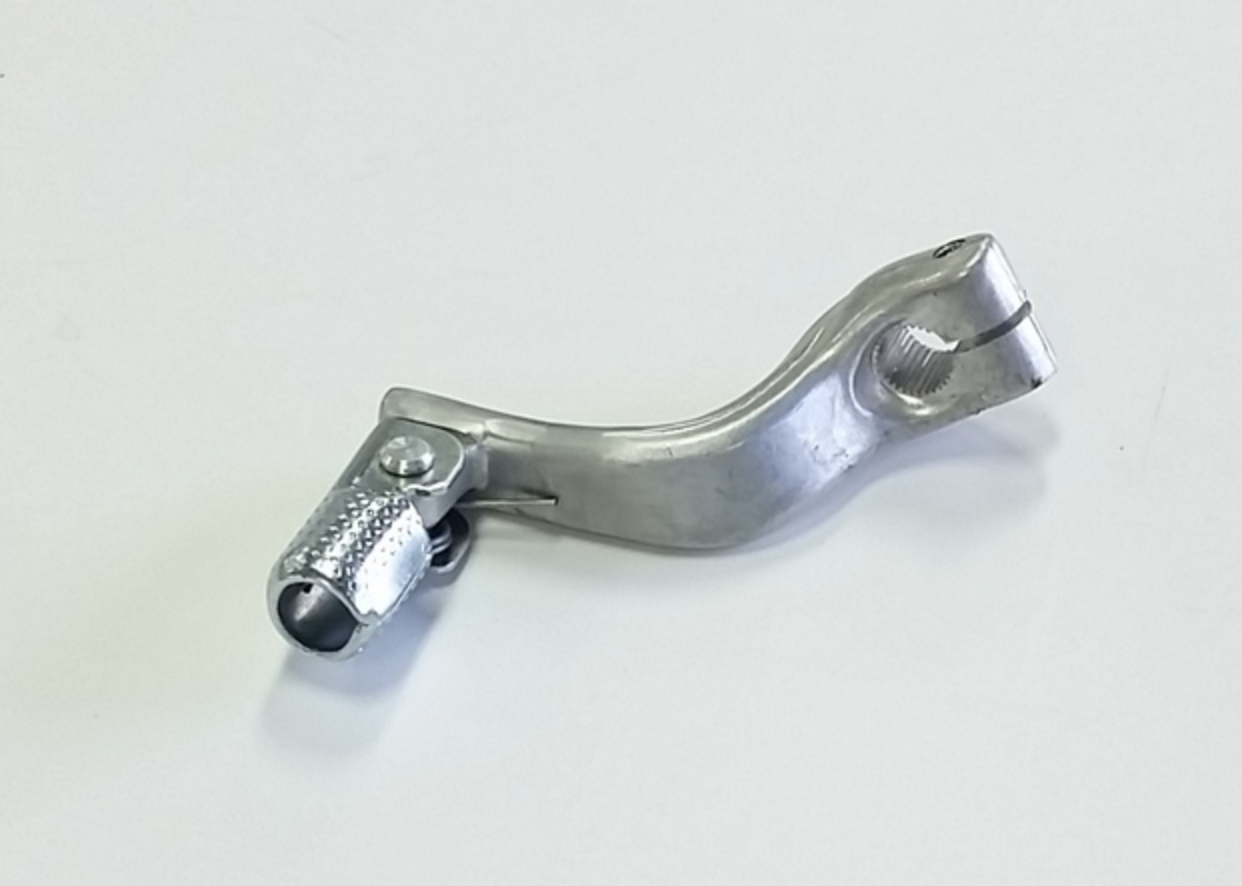
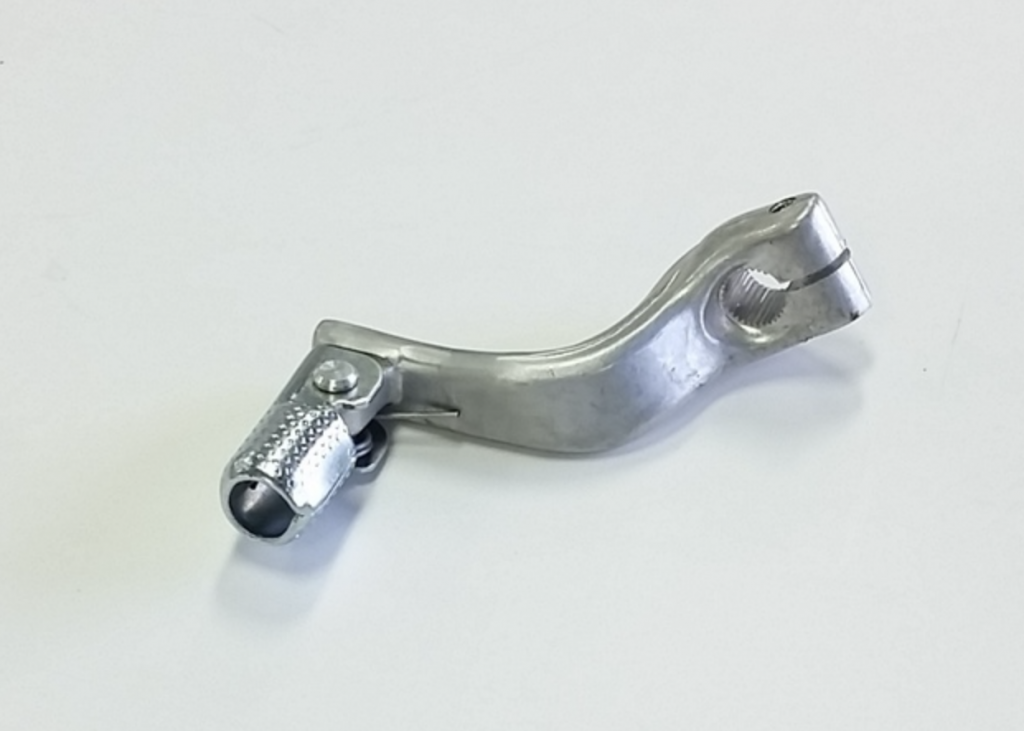
Hey all..... I had some 1st gear jump outs into neutral with my 2019 Factory Beta 250. Before I went into the guts of the gear box work to solve the problem I did a simple experiment out side the gear box. I changed the gear shifter to the shorter one offered by Beta. Presto no 1st gear jump outs anymore. Did this solve the initial cause or just camouflage it? Either way it is telling me something... The long stock gear shifter affords a longer lever bouncing effect exposed to more things touching hitting it??? Not saying that is the issue, however that little bit of extra length does have to move up and down as it re-acts to jumping off and up rocks etc and if the gear box drum and pawl is dodgy to begin with the longer fulcrem lever won't help the issue. I would say that 90% of the Beta riders I see out there have their stock gear shifter set way to low. The gear shifter should be equal to or covering the proud standoff Beta name on the cover. A shorter shifter makes for easier up shifting and more positive gear engagement, the shorter shifter takes more effort to travel in given direction with less movement a longer gear shifter is easier movement but with more travel and more potential over shooting a selected gear. BillyT ? The Shorter Beta gear shifter.
-
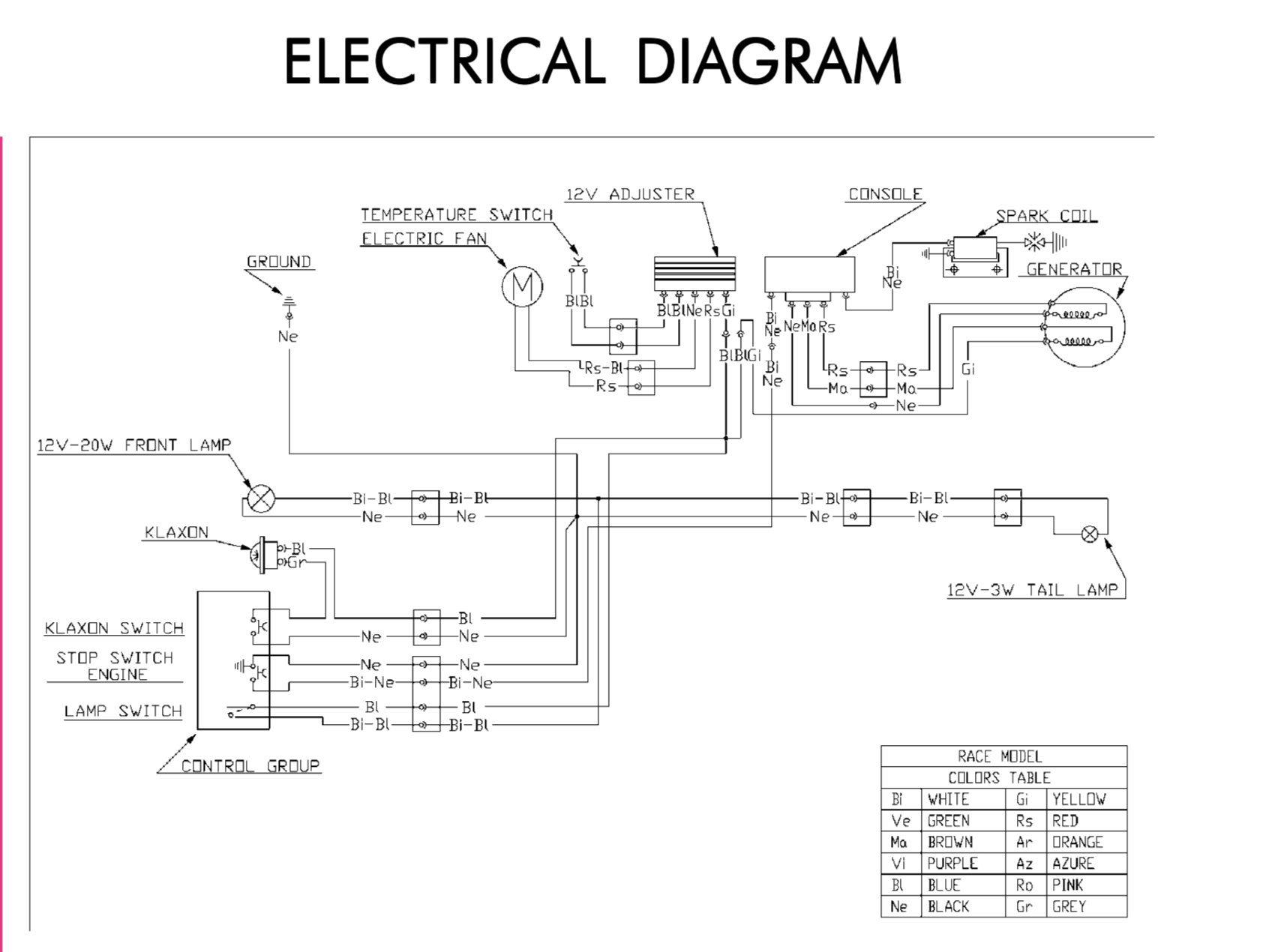
Is there AC current/voltage coming out of G1 going in to B1 at the DC Rectifier / regulator coil? The voltage coming out of the DC rectifier is 12 VDC so the AC voltage going in should be higher... Although this does not speak to the AC voltage side that feeds the spark plug it is health check of the AC mag in general.
-
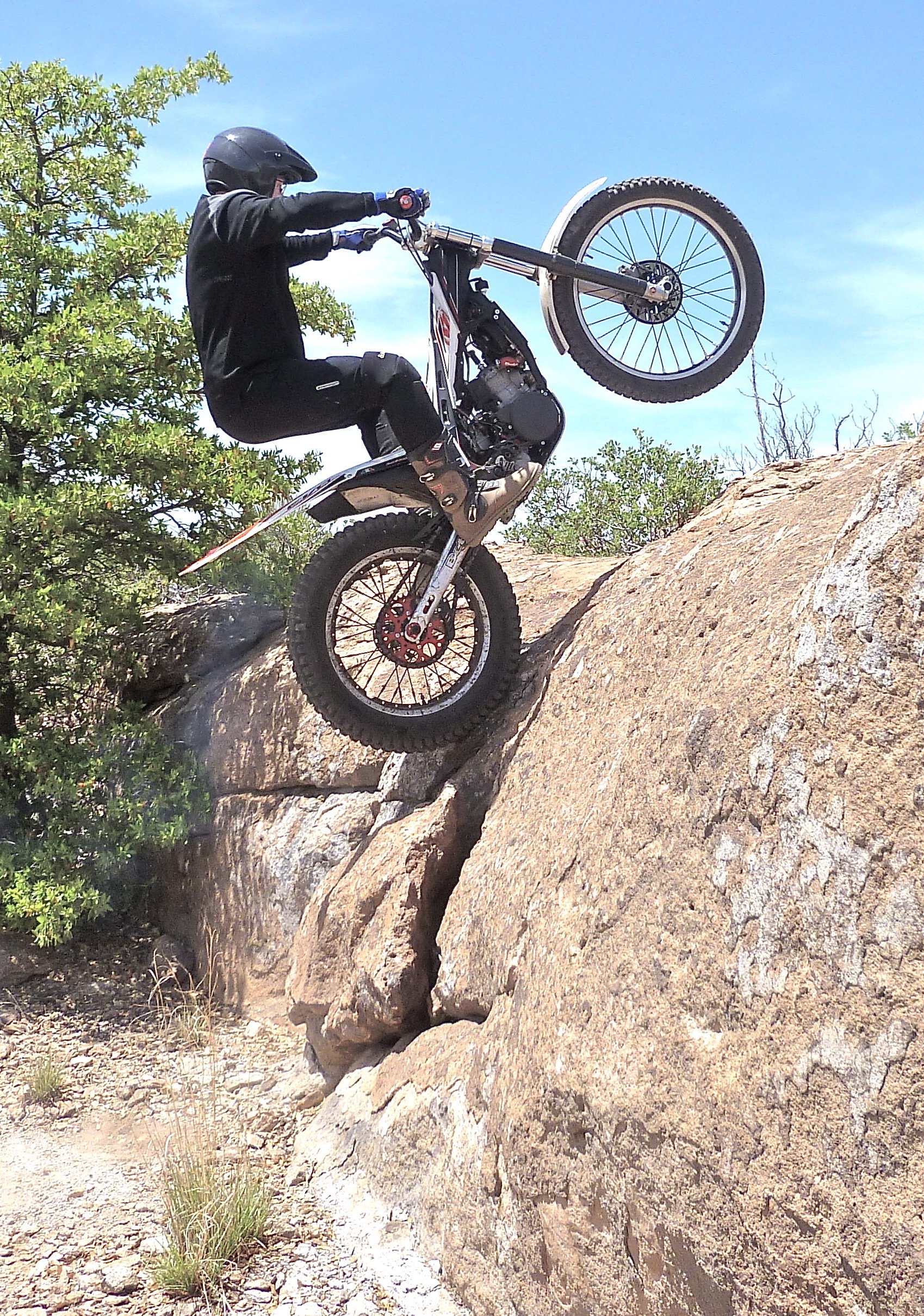
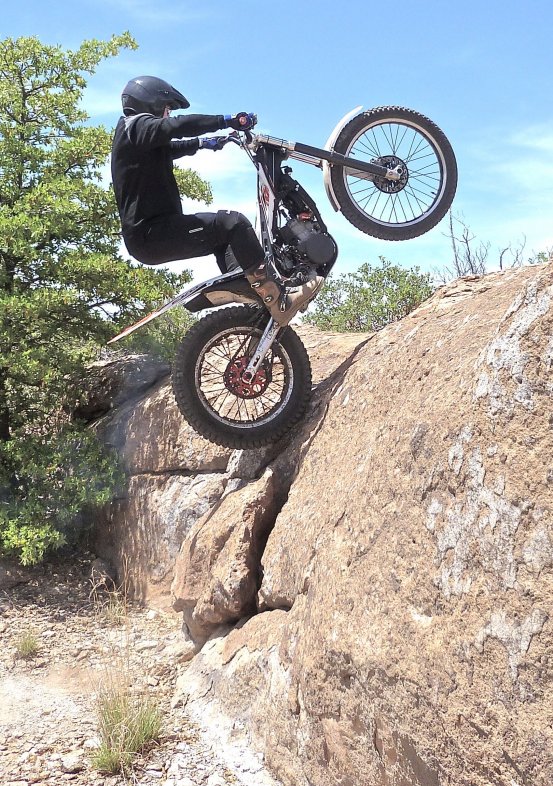
Hoodie What year and cc is the Beta so I can pull the schematics?Hoodie As we know the mag is creating AC. Low voltage AC goes up to the high tension coil and is stepped up to high voltage AC to generate a spark.? The low voltage AC from the mag is also sent up to the bridge rectifier and regulator for the DC ran electrics. Is there any low voltage AC at the bridge rectifier/regulator input side?Hi Hoodie2: First check: Is there any spark be it weak or strong ? Take the high tension lead off the spark plug. Remove the spark plug Re - attach the high tension lead to the spark plug Put on a par of heavy duty work gloves on and hold the bottom of the spark plug to the frame or the cylinder head. Here is the important part. Turn off the lights (test best done at night time ) and have someone kick the bike over several times in the dark. Do you see any spark at all in the dark? Sometimes the spark is so weak that it cant be seen in daylight. If there is a spark as weak as it may be then we trouble shoot accordingly. If there is absolutely no spark then we trouble shoot accordingly Second check: With the spark plug in the bike and the high tension wire attached. Kick the bike over and look to see if the high tension wire from the coil is jumping the spark over to the frame as we have witnessed this before and it was a cut in the high tension lead from the coil wire insulation allowing the spark to jump to the lowest form of resistance hence right to the frame rather than through the spark plug. Again, do these tests in a darkened area so you can see the spark. This will help us start to trouble shoot the bike. NaebotherataweStephen 123 Don't you mean the "Yorks" We are flying above his head Mark LOL Stephen they are called Forks not "Folks""R" is no where near "L" on the keyboard mmmm If you mean it sits lower? One FORK has a spring one FORK does not. All normal and equals out once you put the axle through them. .Collyolly oops I see it now DUH my bad.SIP (SNP?) What year is the Beta? If the gasket has a corresponding hole then it was that way from the factory. I think it may be a dowel pin hole for aligning the first outer case! If so then you are missing dowel pin.... Is it hollow? The picture is fuzzy it even looks like the head of a screw has broken off. Does the matching case cover have a locating hole also?Sportsawyer They spoke about changing jets sizes (orifice) to accommodate lower engine braking. I also believe that they updated the reed valve materials somehow the part number should reflect that. Not sure it would get that's specific as it is year model backward compatlbe. Not 100% sure as that is what I had heard back then. Could be a translation missenterpretation from Japanese to English ? .Sportsawyer is correct. Montesa/Honda even advertised it that they modified the reed valve to help with engine braking. Check back in the old PR ads etcAs a side note to Oni Nou's advise above: After various testing and re-testing of the rear shock rebound adjustment on the Montesa R16V it affects around 90% rebound and approx 10% compression. Even though it is mainly a rebound adjustment it seems to affect compression also all be it at a much lower rate/effect. I don't realy believe it was designed to be that way it just is. Turn the rebound adjuster to full slow rebound adjustment and see how it affects (slower) compression as well, back it off to a quicker rebound and see how the compression gets quicker also, seems to be somewhat linear. Skeptical ??? Run some tests of you own.....Oni Nou You may be correct about the model years. However I doubt he was feeling engine braking from 9cc's of a difference.... More like the changes Montesa made to the engine braking aspect itself thru the model years.FYI: The Montesa Repsol and the Standard 4RT are both 258,9 cc. The 300RR is a 289cc "I found the engine braking a lot less from the 250 to the 260" Where and how did you ride a 250cc Montesa to feel a difference in engine braking as to a 260cc as there are only two cc sizes 258.9cc & 289cc?What was the original problem that could not be solved? The issues with the 315 clutch have been spoke about and solved for quite some time now. While the above modification is quite ingenues I do think the clutch would slip or wear out the fibers plates or indeed warp the metal plates with a more aggressive rider on it. You are still 15 stone and expecting less square inches of surface clutch area to pull you around with no degradation on clutch wear due to extra heat being generated in a smaller square surface area??? This modification also throws the weight further out to the periphery of the clutch housing causing all sort of problems and balance issue which in turn may cause bearing issues and clutch chatter. The oil in the clutch is not juts a lubricant it also draws away the heat from the clutch plates to keep them kool and the clutch feel consistent. You have the same amount oil in the clutch with the fewer plates sharing the load so the oil will be hotter and therefore it makes it harder to keep a consistent clutch feel. Due to the weight being further out it will have more centripetal effect and won't let the plates separate as much. There is also extra mass with the weight being further out and it will have an effect on how the clutch takes up and on the outer basket fingers. My points are all mute if you are riding simple basic sections etc but a for a higher level rider not a good idea at all. Respectfully BillyTYes, Practice practice practice pushing a 125cc up a hill. Of course a 125cc will go up the hill if you get a long enough run at it but try cutting back and forth across muddy hill and then going up an obstacle from standing still. Get serious here! You need low end smooth grunt to do that successfully not balls to the wall RPM's The picture below is me going up a fair sized wall on a highly tuned my 125cc quite a while back. It was done from a very short run (about a bike length away from the rock face). The 125cc was revved up high to make the wall, I speak from 125cc ownership experience. The bike had nothing left when it reached the top and if there was another step to go up right away I would not have made it. Nastys is asking for advice and has some riding skills sets and can handle a 250cc bike. Opinions are like elbows everybody has them........... Some elbows have just been around trials for a lot longer and made lots of mistakes to learn from
 Hi Nastys Welcome to the sport. As you have recently experienced there will be many subjective responses based upon mainly where they live and past riding experience, what else could there be! I hope to provide you with objective and subjective words of advise. As a person who has ridden trials for 40 years now in the UK and in North America (Canada & the USA) I see it from both perspective and points of view as I have ridden trials bikes 125cc and 300cc in both continents. The fine folks that ride trials from the UK on this site have little to no compression of the vast differences of elevation changes there are across North America. In North America you can ride a trial at sea level (around 500ft) and another trial at 8000 foot elevation. The UK is mostly at sea level at any trial one is never really any further away from a sea @ 100 miles in land. Whereas in North America you can ride @ 500ft or 8000 ft so you have to pick a cc not purely based upon skill level alone but also elevation. Once you get above 1000ft foot elevation the power drops off exponentially. At or around 3000ft it is a struggle. A 125cc trial bike will be VERY un responsive with little to no power at higher elevations so be careful getting advise from those that live at or near sea level on what size of bike regardless of what continent they live on. If you are riding at higher elevations where you live be cautious of what you buy. A 250cc is a good all around docile machine and can be tweaked to make it a rocket ship or a pussy cat. A 250cc will start to feel like a 125cc at around 4500ft elevation. From a grown ups perspective a 125cc trials bike is ridden on RPMs where as a 250 cc is ridden from HP. A 250cc has higher resale value should you decide to sell it down the line. As stated prior by another poster 125cc and 300cc are the on the lower demand of re sale with the 250cc being the most in demand. On a 125cc you will be trying to make it more reactive as you progress through the sport. Respectfully BillyTAdditional outlet breather spigot on frame + Gas Fumes = Problematic Gas Caps Defined and known Stay tuned ?"The first production Honda motorcycle to feature electronic fuel injection technology was the 1982 Honda CX500TC Turbo, Click below: https://transmoto.com.au/10-common-efi-misconceptions/Not 100% sure but doubt it was. The EFI on the Montesa is actually a Keihin PGM-FI EFI system.Honda did NOT develop the EFI for the 4RT. The EFI technology had been developed and applied to other bikes long before the 4RT. Honda just tweaked it for the 4RT.Dan Ban BillyT here. A few words of observation based on your posted picture. All the oily spots, dirt and corrosion on the engine speaks to the standard maintenance or lack of done on the bike. I would be giving the engine a good clean before performing any surgery on the carb, who knows what foreign matter is in the carb blocking jets or get in there during carb surgery etc. Suspecting that the oil spots are an enthusiastic application of chain lube? The dirt is just dirt. This is NOT a negative comment on the state cleanliness of the bike but rather about performing carb surgery in those conditions? The bottom of the float bowl looks like it is making contact with the top of the gear box, if so this is no-no even a little tiny gap is bad as the carb will sink down and touch the gear box after a big/hard landing causing frothing (through vibration of the engine and the sudden stop) of the fuel in the carb and playing havoc with the float levels ie leaking gas and sticking floats. The carb is suspended by rubber boots to keep heat transferring from the engine through the aluminum and into the petrol, isolate float bowl from engine vibrations, affording miss alignment between engine and an air box. The top fuel hose tube seems to be coming down from the petrol tank VERY close to the exhaust pipe, this is not a good idea apart from flammability issues it can also heat up the fuel. Move the fuel supply hose to the front side of the carb down and away from the heat source. I wrote the The 'Mikuni Gas Leaking" post a VERY long time ago and it has been proven to work for many riders over the years. There is nothing magical about it, just basic carb physics. Please let us know how we can help you? Respectfully BillyTHi Mark. The reason it is much quieter is because it had the correct oil in from the get go. I miss her !!!!