

billyt
Members
-
Joined
-
Last visited
Everything posted by billyt
-
Diesel With all else being equal, the reason they are popping out is due to a vacuum being created by the movement of the pin through the rubber boots. Put plenty of Armor All on the rubber boots and be patient they will loosen up.
-
PUD Did you damage the housing or was it already damaged? There are two seals in there. One to keep transmission oil out of the cooling circuit and one inverted to keep water out of the transmission. Did you find the remnant parts of the seal? Seals are meant to be friction fit, grease will lower the friction. Message me again on FB.........
-
Mon bon ami dieu pas. Lisez attentivement ce qui a été écrit. Friends don't let friends strap clutch levers down for the winter.
-
Oni Nou I have never had this happen to me as I would never do it. How ever I do know of some guys where it did happen to. The key here is the original post and I quote "and haven't ridden it much this year." which says to me it was sitting for long period of time. What you are proposing is the same as tying down your forks and loading the front fork seals under pressure and leaving it that way for a while, never a good idea. Keep in mind some guys store their bikes for the winter months so I am just asking the guys to be cautious of doing this for an extended period of time. Also is the possibility that the oil soaked fibre plates can swell if the pressure is removed from them for an extended period of time. This is know from fact and first hand experience. Respectfully BillyT
-
It is NOT a good idea to leave your bike for a long period of time with the clutch or brake pulled in by string, elastic or whatever. This will cause premature seal leakage as the hydraulic fluid will be under pressure for a long time and will eventual cause the seals to weaken or fail. Besides there is NO need for that at all if you do what was suggested by rocking etc.
-
Cabby I think you should read what I wrote way back then. It is NOT just bending tangs.
-
Antfar unless you tell us where you live then you will not get a correct answer. Deliveries of the 300RR vary across the world.
-
What is ACTUALLY known about Bou's & Fujis bikes? What is known versus conjecture, guessing, he said she said etc ? How different are Bou's Fuji, and Busto bikes to each other? Really curious to learn by the knowledge out there. Thanks for the responses.
-
Not saying you do. However there are several people who do have issues with dragging clutches on the 260 & 300. Seems to be sporadic at best. Awe the best.........
-
Cornishwinspring My comment about NOT removing springs has nothing to do with clutch slippage it has to do with uneven plate release and re-engagment. This is true regardless as to the clutch being 260 or 300.
-
As point of reference: While the 300RR & 260 use the same basic clutch the addition of washers under the springs on the 300RR make all the difference. If you own a 260 then it is not a real companions to a 300RR in how the clutch feels. Basically how many people in this post have said how their Montesa feels yet don't own a 300RR?
-
Adding washers to a Montesa clutch does the opposite to that of the top hat type on a Beta as the clutch works the opposite way to that of a Beta.. The Montesa 300 clutch has washers under the spring to increase pressure due to the extra cc ( i.e. 300cc). You can remove the washers under the springs for a lighter feeling clutch. It will be just like the 260 Montesa which doesn't NOT have the washers under the springs. I would NOT remove springs as this will make the engagement and release dodgy...
-
A great name for a Chinese trails bike would be "Some Ting Wong"
-
A 13 year old bike with high compression.. suspect.......... Mmmmm Has someone installed a new piston, rings, done a re-bore? If not then maybe eat some poutin mon ami. Seriously
-
Where are you located in the world.......
-
Use a inflated bicycle tube as substitute for the Jitsie foam O ring. Works just a good or better. Inflate it and lube it up, pull it out as the new tire starts to bead.
-
Moto VS DH - Which Helmet is Safer for Cycling? Among many gravity riders, there is a common assumption that Motocross helmets are safer than full-face bicycle helmets. On the surface, that seems like a sensible notion: Motocross helmets are larger and heavier than mountain bike lids, and having more material between your head and the ground in a crash is a good thing, right? Downhill helmets and Motocross helmets may look similar, but there is a key difference between them. Unfortunately, it may not be that simple. There is an ongoing debate in the motorcycle industry about how stiff a helmet should be to offer maximum protection. A number of critics have suggested that many motorcycle helmets, particularly those made to meet the demanding SNELL certification standard, are engineered to be so rigid that they actually offer less protection in the most common types of crashes. What does this mean to you as a mountain biker? If you choose to wear a Motocross helmet instead of a bicycle helmet when you ride downhill, it could mean a lot. Which Test is Best? To understand why the motorcycle helmet debate matters to bicycle riders, you have to understand the testing demands that these helmets are engineered to meet. Common testing procedures for motorcycle helmets seek to simulate the crashes that a rider could encounter on the road. The tests at helmet labs routinely drop helmets onto differently shaped objects from considerable heights. These intense impacts make sense considering the energy levels involved when a motorcyclist's head strikes the ground (or another vehicle) at highway speeds. The testing used by the SNELL Memorial Foundation, a non-profit group that has certified motorcycle helmets for decades, involves even greater stresses than the standard Department of Transportation (DOT) testing that a helmet must pass to be sold in the U.S. The latest SNELL certification standard (M2010) requires that a helmet transmit less than 275 g-forces to the headform inside of the helmet in any part of the testing - a process that involves some very severe impacts. Helmet testing at Moelfre Hall. Aaron Hilton violates the keep-the-rubber-side-down rule - hugely so. Turnip Towers photo According to critics, trouble arises from the substantial stiffness that motorcycle helmets must employ to manage these very severe impacts in the SNELL testing. In a sense, the energy absorbing EPS foam inside a helmet works the same way as the suspension on a mountain bike. Just as the suspension on your bike absorbs the energy and slows the impacts from bumps and drops, a helmet is made to absorb the energy that your head encounters in a crash. In most crashes, the helmet's primary job is to slow your head down so it doesn't take the full force of the impact. It's the EPS foam inside of the helmet, rather than the helmet's outer shell, that handles most of this task. The foam is designed to compress upon impact, slowing your head as it does so. But if the foam fails to slow your head sufficiently, your brain will smack into the inside of your skull, causing a concussion. And if the helmet really fails at this task, the consequences are usually grim. The problem with a very stiff helmet liner - one engineered to withstand the brutal impacts a motorcyclist on the street could encounter - is the same problem you'd find with a downhill bike that's been set up specifically to withstand ten-foot drops to flat. The helmet with its super-stiff liner won't be compliant enough to cushion smaller impacts, just as the downhill bike with super-stiff suspension won't effectively cushion small and medium-sized hits. Kali's Prana Downhill helmet passes the US DOT and the European ECE 22.05 helmet standards, but does not pass the SNELL standards. Recent information indicates that this may be a good thing. Ian Hylands photo When it comes to brain trauma, small and medium-sized hits matter. Neurologists have learned many new things about the effects of concussions in recent years, and the news usually isn't good for those who've suffered them. Repeated blows to the head have been correlated with chronic traumatic encephalopathy (CTE), a brain condition linked to the deaths of some retired NFL players. All of this has led researchers to suspect that concussions may be much more dangerous than previously imagined. Critics also point to the fact that it doesn't take multiple concussions to change a person's life. Even a single concussion can cause problems with cognition and memory that can last indefinitely. James Newman, a former director of the SNELL Foundation, has estimated that impacts of 200 g's or more - 75 g's less than the figures required for Snell M2010 certification - typically correspond to severe brain injuries or worse. Alex Mancini Supermans into a rock garden at Contermanskloof, South Africa - probably happy that his helmet is certified to withstand a sharp impacts. Steven Morrow photo Experts square off So are the motorcycle helmets being made to SNELL standards too stiff? According to a 2005 article by Motorcyclist magazine, DOT helmets outperformed their SNELL counterparts in independent tests that were designed to simulate slow- to medium-speed crashes. This wasn't especially surprising, though, since DOT helmets aren't typically engineered to be stout enough to meet SNELL standards, which means they theoretically should be more compliant in small crashes. What was surprising was that the DOT helmets also transmitted fewer g's than the SNELL-certified helmets in the highest-energy impacts as well, raising the question of whether SNELL testing had truly become too rigorous for its own good. Ironically, the best performer in the 32-helmet Motorcyclist test was a $79.95 DOT-certified helmet, which transmitted as much as 67 g's less in violent impacts than a $400 SNELL lid. After publication of the article, SNELL issued a rebuttal that questioned Motorcyclist's testing methods (although since then, SNELL has moved toward requiring more compliant liners in its testing -- one of the chief points of the Motorcyclist article). But the rebuttal didn't stop the controversy from growing. The debate reached a boiling point in 2009 when Dexter Ford, the author of the 2005 Motorcyclist article, wrote a story on the issue for the New York Times. Shortly after that article ran, Motorcyclist fired Ford, a veteran of three decades with the magazine, allegedly due to boycott threats from helmet manufacturers. The 2005 story no longer appears on the Motorcyclist website. Kali Protectives Founder Brad Waldron at work with one of his full-face DH helmets. Ian Hylands photo Talking Helmets With Kali's Brad Waldron Brad Waldron, a long-time helmet designer and a product-testing fanatic, agrees that a more compliant shell offers more protection for lower-speed impacts typically seen in DH and Park riding. We asked Brad to comment on the differences between Moto and Downhill helmets, and the possible benefits of less-rigid shell construction. -RC Yes, on average DH helmets are more flexible. One of the biggest reasons for this is that the DOT test for MX helmets requires a penetration test that forces the use of a stiffer shell. The test basically drives a pointed anvil directly through the shell. SNELL believes that having a more rigid shell saves lives at the highest end of the crash spectrum, while sacrificing concussions on the lower end. I just had this discussion at the Indy motorcycle show with SNELL. I think there are arguments to this as well, but arguing the benefits of SNELL is not where I am looking to go in this discussion. Rigid shells are worse at low-speed impacts. I believe that you want the shell to deform as soon as reasonably possible. Remember, a body in motion stays in motion until acted upon by a force. If your head hits a hard shell, your brain will continue in motion until it hits the other side of your skull. If on the other hand, the shell starts to break down and the foam is soft enough, then the dissipation of energy is starting quicker and your brain moves slower. Slowing down your brain moving inside your head is a good thing. Our technology is to in-mold the foam with full-shell helmets, we found that when we in-molded, but did not change the stiffness of the shell, that we saw little benefits. When we made the shell much less stiff, we lowered g-forces 20-percent and more. So I am a big fan of less-stiff shells. There are limits though. You have to balance and tune the shell's stiffness to make sure it is not too soft. This kind of testing takes much time and energy. Not everyone is willing to put in an effort of such magnitude. Making the choice All of these facts raise a number of concerns for mountain bikers who choose motocross lids. If it's true that some top-of-the-line motorcycle helmets may be too stiff for even highway motorcycle use, what does that mean to riders who use them for downhill, where the speeds are typically much slower? Are downhill riders better off choosing helmets that were engineered for the crashes they'll likely face on a downhill course, rather than those engineered for 75-mph trips into car barriers? While that choice remains up to you as a rider, it's clear that there are some good reasons to think twice before opting for a motocross helmet over one engineered for bicycles. This is particularly true since ASTM F1952 - a downhill-specific helmet safety certification - now appears on many bicycle helmets, giving gravity riders a discipline-specific standard of their own. Regardless of where the controversy over helmets ends, choosing the right helmet for your type of riding deserves your attention - at least to the extent you value your head.
-
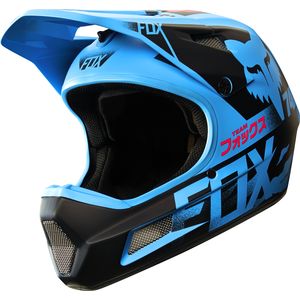
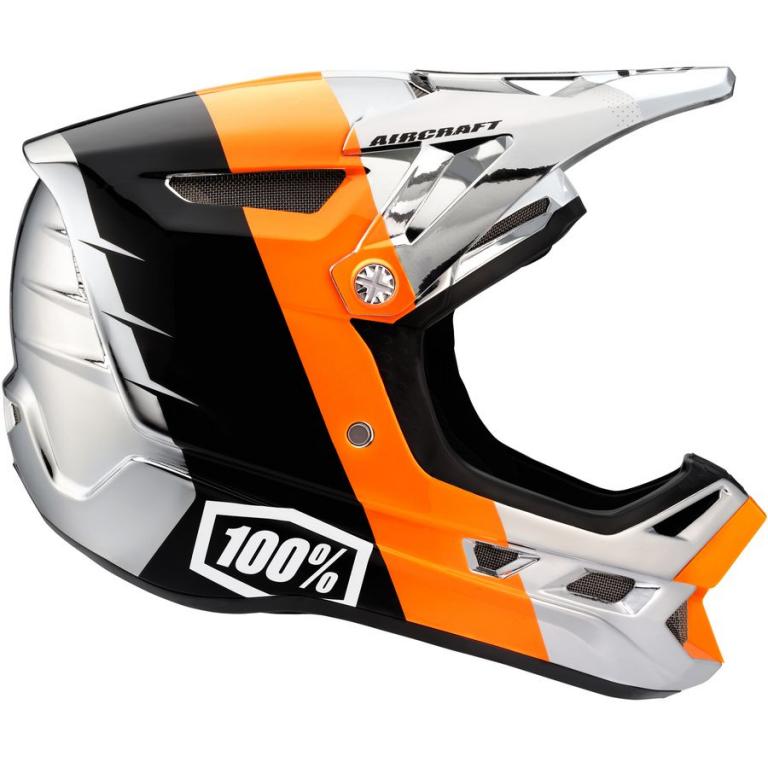
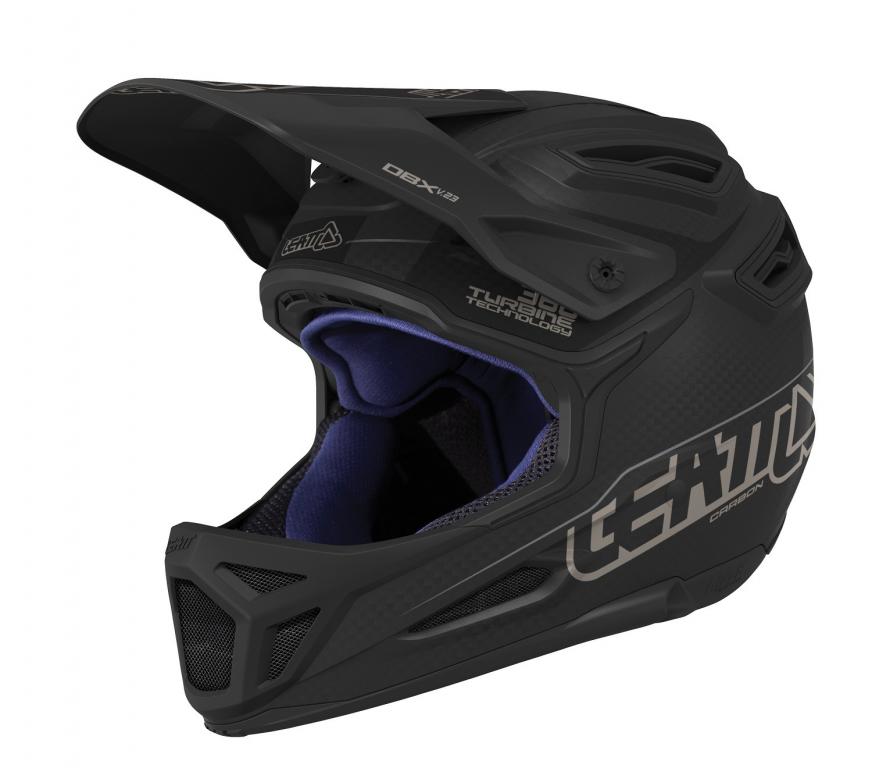
Some Down Hill Sanctioned Full Faced Helmets. Notice how they slope down at the front........
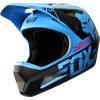
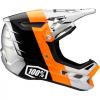
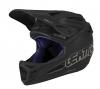
-
This is an interesting post. I live in Arizona and my friend and I have been thinking about full face helmets. We took it upon ourselves to get educated by reading and speaking to people in the helmet business. There is a lot a bunk and miss information out there in the trials world around this subject. The only difference between a USA DOT certified full face helmet and the downhill certified helmet is the venting specs. The usage of a full face helmet in the US nationals is a controversial one. While it is true that a full face helmet made for motocross and carries a DOT sticker on it is way to heavy for trials. That is why some of the US national riders are using downhill bicycle certified full face helmets. No they do NOT explode on impact. Trials riders see slower impacts speeds that motocross riders and therefore need a helmet that is geared towards that slower type of impact. Just because a helmet is full faced does NOT mean it is a "Downhill Certified Helmet". There are many full face bicycle helmets around that would NOT be allowed in a sanctioned downhill bicycle race. Some trials clubs are experimenting with the usage of full faced bicycle helmet ONLY if it has the Downhill Bicycle Certification on it. My Airoh open faced Trials helmet is NOT DOT approved and it is sold for trials, go figure.......... Ask for the claustrophobia concern of a full face helmet. A full face motorcycle helmet designed for motocross is not the same shape as full faced helmet designed for down hill bicycle racers. A motocrosser generally has lots of shoulder padding on and therefore the pads can push the helmet up at the back which will push down at the front especially coming off large landings. A downhill bicycle racer does not usually wear lots of shoulder padding so less chance of the helmet getting struck at the back and being forced down at the front. That is why a good designed down hill helmet is already sloped down at the front as there is little chance of it getting knocked down further by shoulder pads etc. This means better visibility out of a Downhill racing full faced helmet than a motocross full faced helmet. Look at the picture of the full faced SSO helmet you posted above, see how it slopes down at the front??? If your friend Sean is wearing a Six Six One then that is also a downhill bicycle helmet as Six Six One is company that makes protection gear for the radical bicycle guys. I have purchased a Leatt Carbon Kevlar full faced downhill sanctioned helmet. It is lighter that my Airoh trials helmet. Check the facts on what I am saying I know we have................ The Leatt DBX Carbon helmet is the latest, lightest innovation that has been added to the Leatt bicycle helmet range. It is extremely lightweight and features innovative 360 ̊ Turbine Technology integrated with Armourgel® cushioning material. Ten turbines made of 3D molded Armourgel® are set inside the helmet. Flexible in their natural state, these turbines stiffen upon impact and deform to absorb both vertical and rotational impact forces. This means that the faster or harder you fall, the better it works. This technology reduces up to 30% of head impact at concussion level as well as up to 40% of rotational acceleration to the head and brain. The Carbon helmet also has a smaller shell, which means that up to 20% less rotational forces are transmitted to your neck, head and brain. Engineered with comfort in mind, the 6.0 is extremely ventilated, has low friction cheek pads, is neck brace compatible and has a Fidlock® magnetic buckle that offers easy custom fitting. Another key feature is the breakaway visor that provides you with world-class protection.
-
Here we go again. No idea of where you live, altitude, temperatures etc. Not your fault that you don't supply this basic info it is the normal for the site....
-
The "Does a 125cc trials bike have enough power" is all relative to where you live. At sea level or slightly above it is more than adequate. Go up to about 3000 feet and it struggles. Keep going up to 5000 to 8000 ft above sea level and it is useless. Caveat: When asking the above question be careful on the answer as they may live at or near sea level and the person posing the question may live at a much higher elevation.
-
Does it "Pink" when you roll on the throttle or off the throttle?
-
BBK It is on the Honda USA Powersports site. Order books are open.
-
Honda Announces 2017 Montesa Trial Models Cota 300RR and Cota 4RT260 benefit from Honda's competition achievements PRINT ADD SHARE DOWNLOAD Sep 16, 2016 - TORRANCE, Calif. Capping off a season that saw Repsol Honda trials rider Toni Bou land an incredible 20th World Championship (10 outdoor, 10 indoor), while U.S. Montesa Honda rider Marc Freixa landed the AMA/NATC MotoTrials National Championship, American Honda announces its lineup of 2017 Montesa trials motorcycles. Between the exclusive Cota 300RR and the capable Cota 4RT260, Honda Montesa has something for trials riders of every level. "No one is more passionate about their pastime than trials enthusiasts, so it's gratifying to continue supporting these customers in the U.S., particularly given the success Honda has enjoyed this year in international and domestic competition," said Lee Edmunds, Manager of Motorcycle Marketing Communications at American Honda. Montesa Cota 300RR Introduced last year, the Cota 300RR was made for competition (the "RR" suffix stands for "Race Ready") and is the production model most similar to the prototypes used by factory Honda Montesa riders. For 2017, the 300RR is even better, with new ECU mapping that improves engine response in the low and middle rpm ranges that are especially important for trials motorcycles. Another aspect that contributes to engine response is the new three-ring piston (up from two), which helps prevent leakage and improves durability. The piston is now lighter and has a flatter top, reducing vibration and making combustion more efficient at low rpm. The cylinder has also been redesigned to match the new piston, further improving engine efficiency. The chassis has also been updated, with new, suppler settings for the Tech fork, similar to those used by factory riders. Finally, the muffler is more robust with reinforced mounts, and the rear-brake pedal has been shortened to avoid impacts and allow the rider more freedom of movement. Color: Red Price: $9,999 Availability: December 2016 Montesa Cota 4RT260 A cutting-edge machine that is attainable both for trials enthusiasts and those looking for a cross-training tool, the 4RT260 was first introduced to the U.S. market in 2015. Now offered in a striking new White/Blue/Red livery, the 2017 version also has the longer kick-start lever from the 300RR, making starting easier. The aesthetic changes can also be noticed on the fork, now included with a chromed tube and black leg. The 4RT260 retains the reliable 260cc four-stroke engine that was improved last year, boasting a strong power curve, with an emphasis on bottom end and midrange. A clever crankcase decompressing system reduces the engine-braking effect at closed throttle, improving handling and making the bike feel lighter. Also standard is top-level suspension, with a fork from Tech and a shock from R16V—both well known in the trials world. Colors: White/Blue/Red Price: $7,899 Availability: November 2016 Click here for more information on the Honda Montesa Cota models.
-
Welcome aboard. You need to help us first. We have no idea what planet, continent, country, city you live in. Lots of replies will come pouring in once we have your approximate location. BillyT