

konrad
Members
-
Joined
-
Last visited
Everything posted by konrad
-
It depends a lot on the ambient temperature and the condition of the cooling system. I would not worry about wearing out the fan motor. A more important issue is over-cooling the engine. Generally, competition 2Ts are run as cold as possible to improve charge density and maximize horsepower. But trials bikes rarely need maximum power. A more important consideration is improved charge vaporization (best throttle response) and a warmer intake charge helps that.
-
You should perform a pressure/vacuum test. There are many instructional videos on the topic on YouTube. This is the shortest and will show you the basic concepts: https://www.youtube.com/watch?v=kUmeyVcnZrs
-
I agree with lineway. Have you examined where the idle screw contacts the slide? Wear on the slide will cause difficulty setting the idle speed. But brass slides are less susceptible to that trouble than aluminum slides.
-
It's easy to try the encoder re-calibration process described here: https://www.electricmotiontech.com/home/em-epure-race/motor#h.aqwdzouw61q4 It's possible the throttle signal is out of range. You can try unplugging the throttle, cycling the battery on/off and then reconnecting the throttle. A crash can also pull on the handlebar wiring and cause trouble. It's best to have some slack in the wiring to the handlebars. Check for poor contact at all the connectors. Failing that, it will take someone with electronics knowledge and a multimeter.
-
You need to explain the problem in more detail. Do you have the optional regen lever (EM calls it PRB-R)? Are any tones emitted by the motor when you press the map button? Note that the controller will not permit the motor to run if there is a fault with the throttle. You can find the wiring diagram here: https://www.electricmotiontech.com/home/em-epure-race/wiring-diagram
-
There is a saying in electronics troubleshooting, "If you can't make it better, try making it worse. You may learn something." Based on your measurements, the finger height is nearly a millimeter out of spec. I would correct that. I have found it difficult to measure the clutch pack thickness accurately. A caliper is better than a micrometer for this job due to the increased surface area. The variation in pack thickness is important on the OSSA. Here is the procedure to check that: https://www.ossa-efi.com/home/my-upgrades/clutch-control-ring#h.twzu1hiimf5e The two good rides is a puzzler. Did you soak the new friction plates in oil overnight prior to installation? I find that helps maintain consistent operation. Finally, it's not something crazy like inadvertently mixing DOT fluid and mineral oil in the clutch hydraulic system is it?
-
Good question. It would not with a wire-wound spring. But disc springs are not like wire-wound springs. The finger height being wrong could also change the leverage ratio. Are you sure have everything assembled correctly? On the OSSA, the fingers have an inside surface and and outside surface. The difference is subtle but noticeable. You should be able to see which way there were installed originally by slight wear marks.
-
I don't see why you couldn't re-weld it. BUT... is the weld designed to be the weak link that fails thus preventing more costly damage elsewhere? I assume a crash on the gear-shift caused the weld to fail. Because OSSA gearboxes are so fragile, I machine a Nylon washer for the shift shaft that goes between the lever and the engine case. This prevents the shaft from being knocked inboard. No gearbox failures from crashing, but unsure if I have ever actually had occasion to test it.
-
Now you know it's out of tolerance. GG sells different thickness steel plates to correct that. Alternatively, some combination of new and used plates may bring it back into tolerance.
-
Some applicable information here: https://www.ossa-efi.com/home/engine/clutch#h.844fxvcen1dt
-
Impact gun, electric or pneumatic.
-
You can download a service manual here: https://store-c2wf2mdg6g.mybigcommerce.com/content/Workshop%20Manual%202008-2024%20Evo%204%20stroke.pdf Go to PDF page 29 (3.10 shifting mechanism). I would be looking at item #1. It is accessible after removing the clutch casing (no need to have the engine out or dismantle it entirely).
-
The throttle body does not need cleaning, that is the air filter's job. Or are you talking about the outside of the TB?
-
Member poll: Bot or Not?
-
No experience with this, but can you modify the head gasket so you can use an o-ring? My old Norton required annealing its copper head gasket to ensure a good seal.
-
I don't think top riders' preferences have anything to do with a TL125. 🙂 Personally, I like a lot of flywheel inertia. See: https://www.electricmotiontech.com/home/em-epure-race/my-modifications/adding-flywheel-inertia The best test would be to borrow your buddy's flywheel and install it on your bike. That way, any other differences won't complicate the evaluation. P.S. I'll bet that steel spacer is more corroded into the case than pressed. Aluminum has a greater coefficient of thermal expansion than steel, so a little heat will probably loosen it.
-
Sorry, no clue. The clean pilot just look like a modern Keihin. I'd advise sending pics to your next vendor to make sure it's what you need. Maybe you can find a part number here: https://www.cmsnl.com/
-
Maybe the finger just got tired? Human evaluations are subjective. I've used a fish-weighing scale to quantify how much force it takes to pull a lever.
-
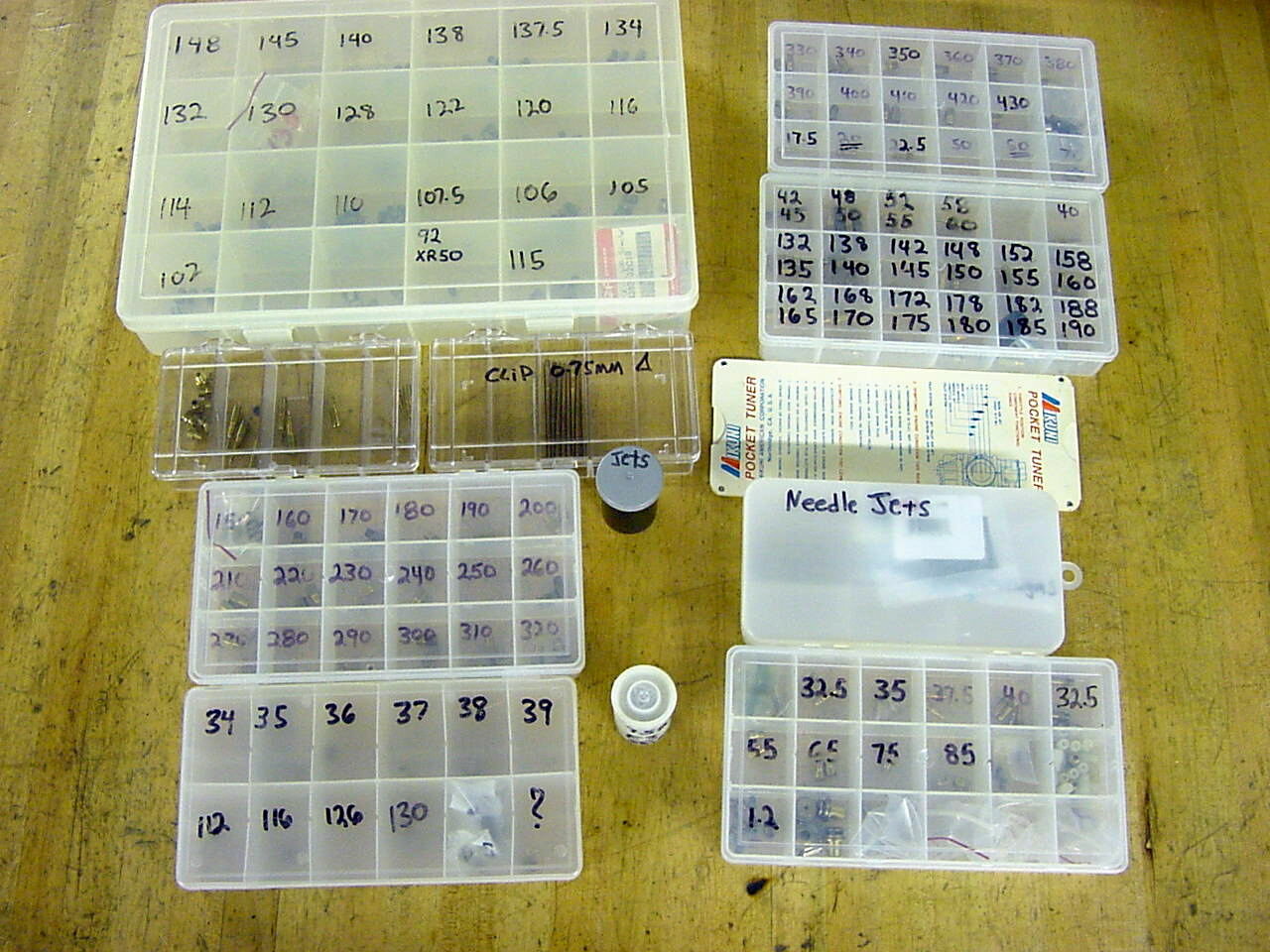
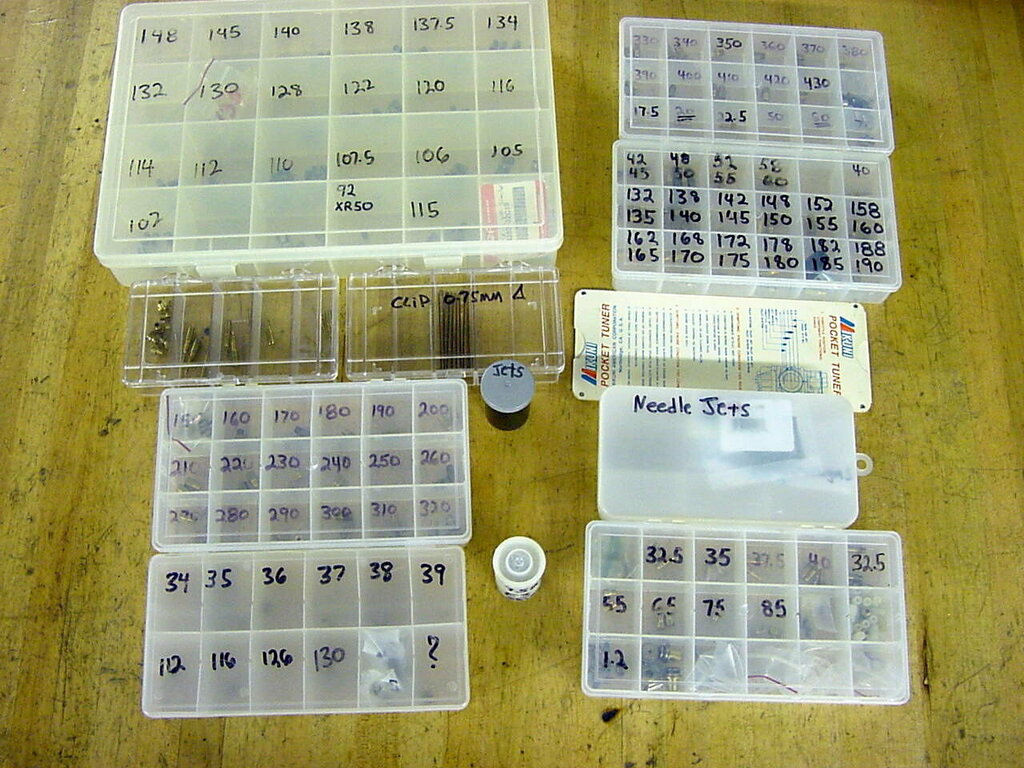
Don't shove the wrong pilot jet in! Yes, that is a limiting cap that was introduced for EPA compliance. Reading a plug is a skill that can't be taught -- only gained through much experience and experimentation. Rather than bother about how the plug looks, concentrate on how the bike performs. Don't be afraid to experiment! I like to have at least one jet either side of standard to know in which direction to go.
-
Some water pumps have a drain screw. Otherwise, you’ll have to temporarily remove a hose. You may need to tip the bike to get out as much old coolant as possible. Refill so the tops of the radiator tubes are just covered. Run the bike for 30 seconds to see if any air was trapped in the system. Refill if necessary. Since there is no coolant recovery tank, any excess (due to thermal expansion) will just flow out the overflow hose. This is the correct level.
-
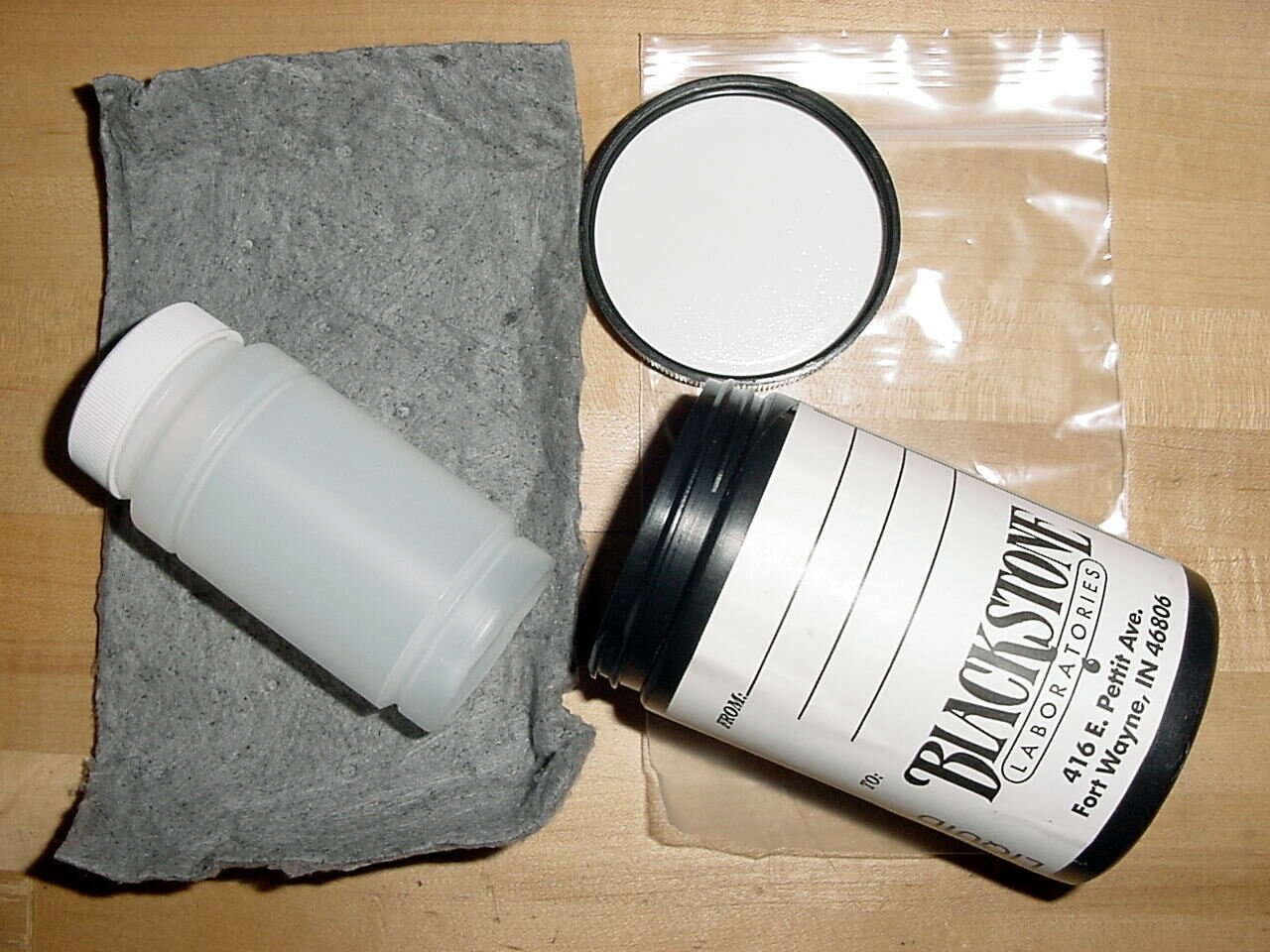
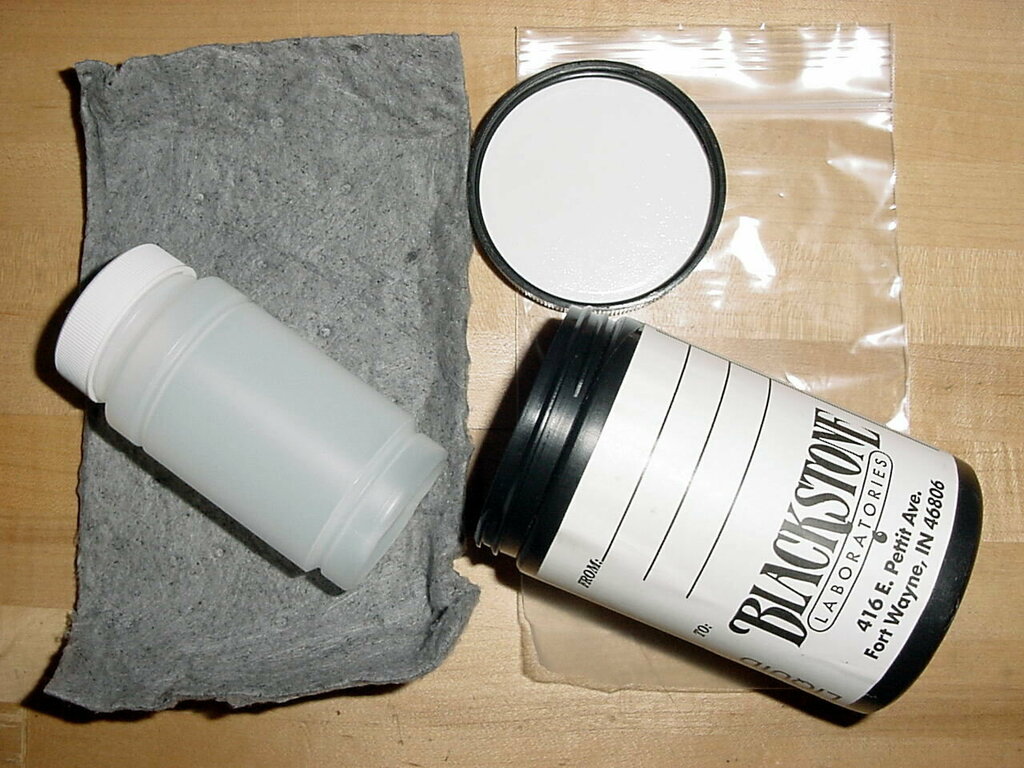
I agree with Lemur. But if you insist, I can highly recommend Splatshop. They are second to none in terms of price, convenience, and support. But shipping oils by air will likely cause a problem. The US Postal Service allows a small volume of oil to be sent by mail, but only when using the special precautions shown below.
-
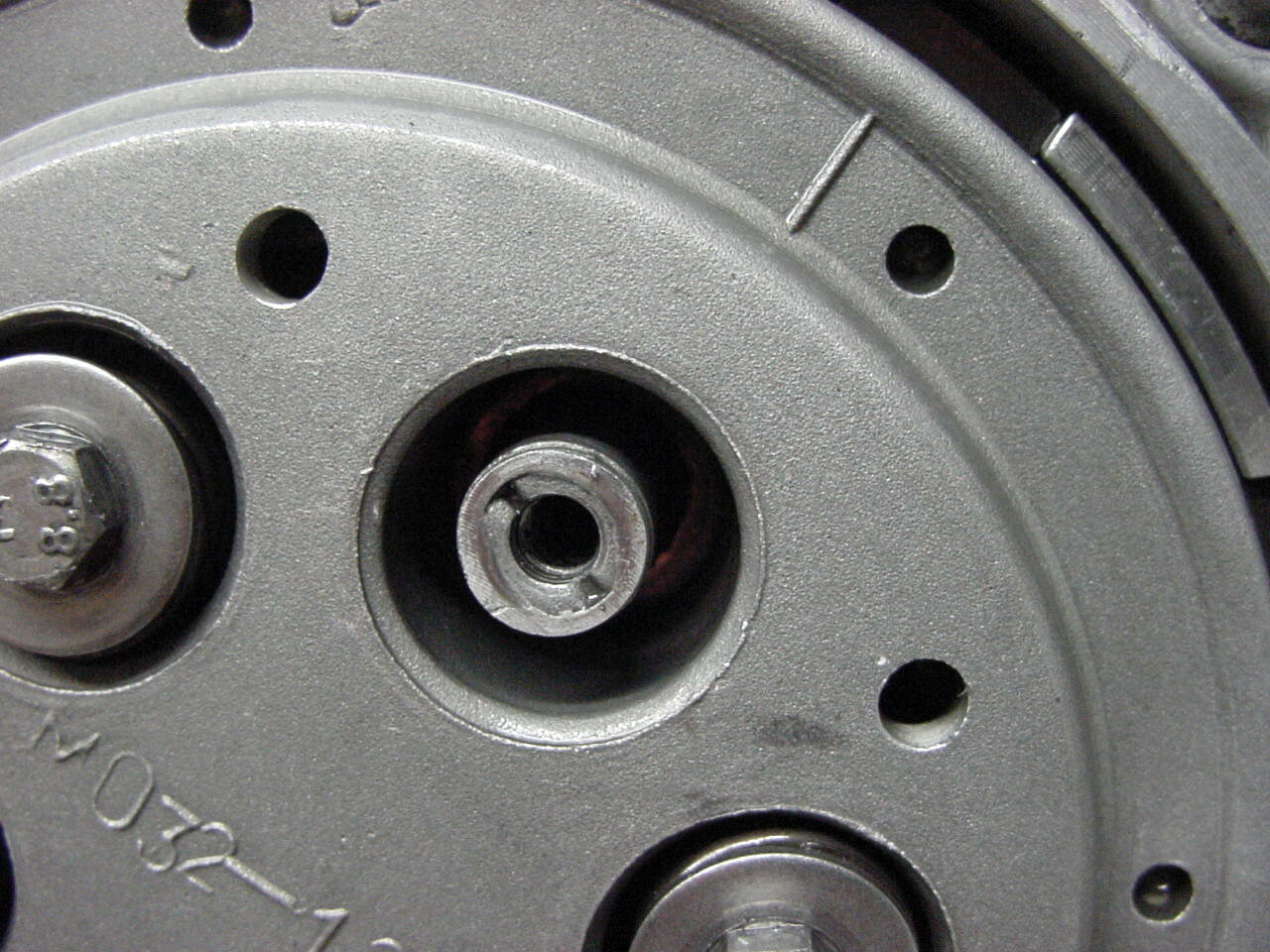
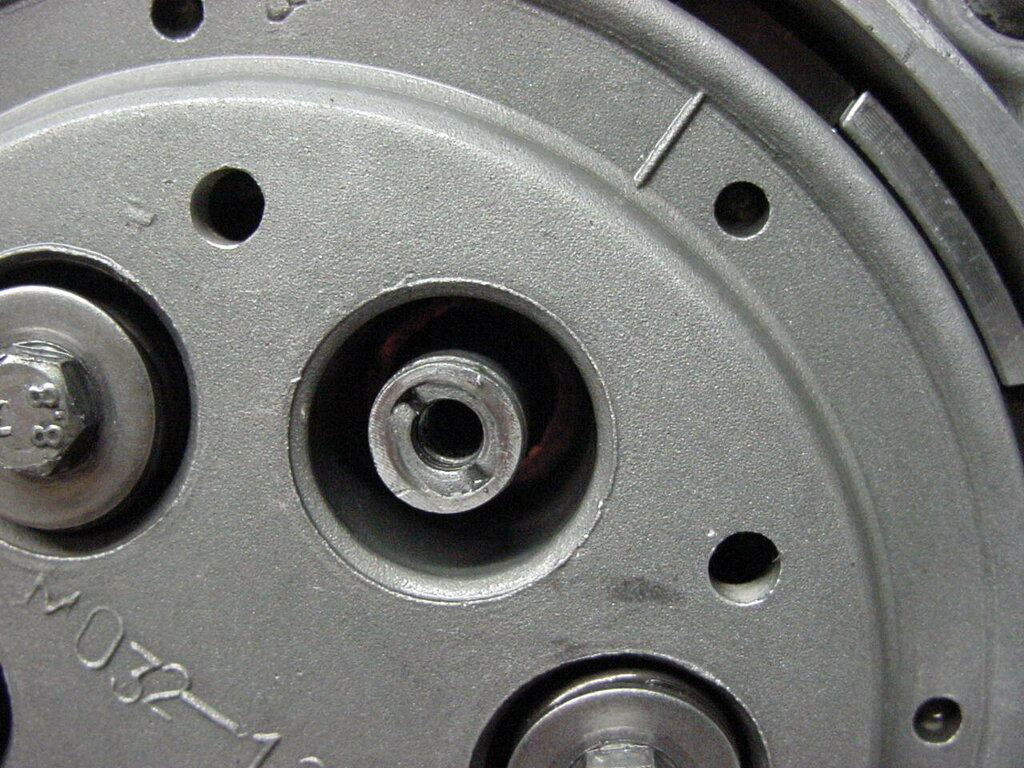
The TXT321 was my first trials bike. I have a vague recollection that the pressure plate requires a specific orientation. Found the following pic in my notes on the bike. Note alignment marks. Also, I always short-filled the gearbox (using 450 - 500 ml) to reduce clutch drag. Discovered that on my own, but later learned it was the factory-approved fix.
-
In lieu of a mechanics' stethoscope, I've used a length of hose to track down the source of noises. Run the bike on a stand. Since you needed to replace the chain, it's probably time to lube the suspension pivots.
-
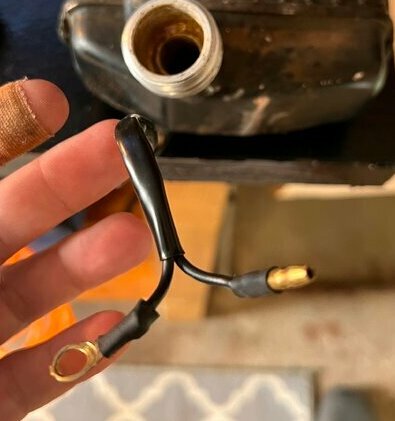
Your circled part is the old version of the silver part in your photo. Had the jumper wire caused the fan to run, it would have showed that the thermos-switch (thermostat) was defective. Time to take it to the bikes shop. Konrad out.
-
What you have circled is for an older model bike. Fun Module is a misprint. It should say Fan Module. The thermostat should actually be called a thermo-switch. It is electrically open when the engine is cool. It closes to turn the fan on when the engine requires cooling. Connect a jumper wire between the two terminals in the photo I have cropped. At this point you may need to enlist someone locally who has some electrical knowledge to help.