

konrad
Members
-
Joined
-
Last visited
Everything posted by konrad
-
Seeing that corroded pin is really discouraging. The JAE connector used on the ECU is the sealed type. Is that connector's blue sealing gasket still present? Maybe Hawaii's environment (sea air) has something to do with it the failure? Prior to buying the OSSA, I weighed heavily the fact that most of its electronics were designed/manufactured in Japan (a huge plus in my opinion). P.S. I'm now wondering if the pin snapped off, and then corroded?
-
I'm feeling a bit sheepish now for having said the signal out of the ECU was unlikely to go bad (I was thinking of just the internal circuitry -- had not considered a broken pin). It's impossible to tell from the photo, but is that pin 17 or 18? (numbers are on the back of the mating convector). Pin 18 is for the injector, but pin 17 is switched 12VDC out of the ECU (which you may be able to work around). An obsolete electronics solder that contains lead would by my choice with a rosin-core flux (if it comes to that). P.S. If you destroy the ECU, don't throw it away. I've been wanting to get my hands on a dead one!
-
Am assuming diaphragm clutch. Gotta say, I'm not a fan. In my experience, seemingly small dimensional changes cause large changes in operation. I admired Sherco for sticking with what worked for so long.
-
Possibly the wrong seal for the fluid? The seals for DOT4 versus mineral oil are different. If the wrong seal for the fluid is used, swelling can result.
-
I now have about 3 hours, over 3 days of riding, on the Dexron-VI. At first I thought the Dexron-VI was a bit grabbier initially (before the fan runs the first time). Maybe the friction plates had to get fully saturated with the new fluid? Now I think that if there is any difference, the HTX 740 may be slightly worse in terms of range of clutch modulation. They seem to perform very similarly. To discern any real difference, I think you would have to ride the bike back-to back under exactly the same conditions with two sets of new friction plates that had only been in contact with the fluid to be tested.
-
Good diagnosis so far! 1. Yes. 2. Possible, but highly unlikely. 3. Likely nearly impossible to find. Plus it would have to be programmed for your bike. 4. Yes. 1000x more likely than just the injector signal out of the ECU going bad. Have you read my Notebook? https://www.trialscentral.com/forums/topic/69622-efi-ossa-notebook-formerly-tr280i-wiring-diagram-annotated-in-english/ Lots of relevant information there. The industry standard is to provide a "limp home mode" in which the vehicle runs (but very poorly) if one of the sensor inputs is bad. But I don't know if that is true of the OSSA. The ECU provides a ground to one side of the fuel injector when it is supposed to inject fuel (the other side of the injector is connected to +12VDC constantly). Remove the injector from the engine. Disconnect the injector from the bike's wiring and provide 12 VDC to it intermittently. (The injector is not polarity sensitive.) It should squirt fuel as long as there is fuel pressure. EDIT, I see you've already effectively done this test. At this point I would make sure the TPS is working properly.
-
Here's a link to a white paper by the US firm Lubrication Engineers: https://www.lelubricants.com/lit/news/White%20Papers/simple_viscosity.pdf It's entitled Putting the Simple Back into Viscosity, and I think it adds something to this discussion. I'm not saying anyone here has this misunderstanding, but it's commonly thought that "W" stands for "weight" when talking about oils. As the paper points out, '...the grades denoted with the letter “W” are intended for use in applications operating in low-temperature conditions. The “W” was originally coined for lubricants that were considered “winter grade.” Today, these products are formally called multigrade lubricants, whereas the grades without a “W” are recognized as monograde, or straight grade, lubricants.' I'll also direct your attention to the viscosity equivalence chart for engine oil and gear oil found on page 6.
-
I knew nothing about Elf lubricants before seeing it was specified for the Montesa gearbox. This Wikipedia entry https://en.wikipedia.org/wiki/Elf_Aquitaine says, "From its very beginnings Elf used motor racing as a means of promotion." Lots of companies do that, but Formula 1 has got to be the most expensive way possible! Makes me wonder if HRC's specification of HTX 740 might have more to do with a business relationship than being the best fluid for the job? I changed my gearbox oil to Dexron-VI last night. Riding in my yard, the clutch seemed less draggy right away (before the fan runs). But as coochb said, the real test will be how it performs in an actual trials. And is it ELF, Elf or elf? Completely inconsistent usage on their own website.
-
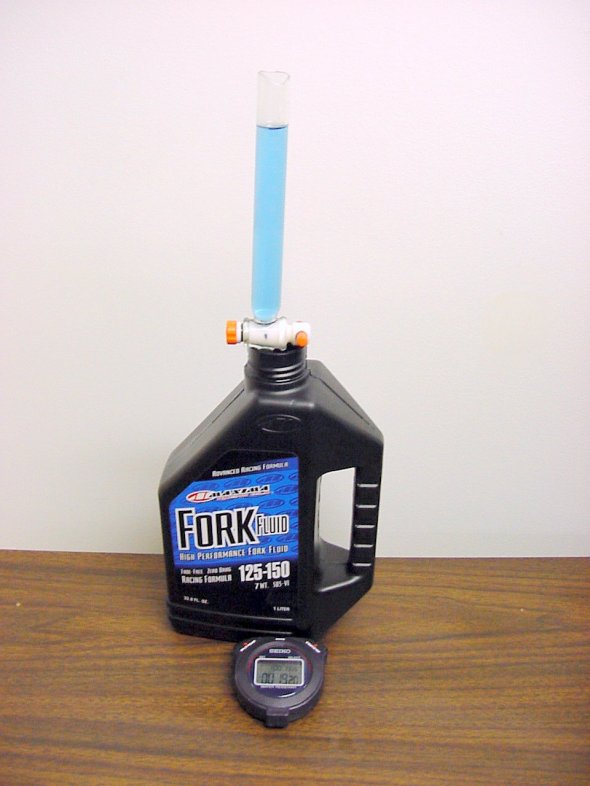
Excellent. Maybe this is a good place to post the following? I'm also very fussy and only change one thing at a time because I want to understand the effects rather than just fix a problem. I'm running 4 clutch springs. As expected, the force required to pull the lever decreased. This is a good modification for me as I have a wimpy finger and use the clutch constantly. Have not noticed any slipping, but when I do it will be time to replace the friction plates (I'll be inclined to use OE or EBC). My bike is currently running the HTX 740. That oil has the characteristic gearbox-specific smell which I find most unappealing. I also think it's an odd choice for the job. Elf says it's designed for very high performance dry clutch applications like 2-stroke GP bikes and shifter karts. HTX 740 is a special-order item in the USA, and costs $50 per liter. I'd like to find a substitute. I often use the BITOG website https://www.bobistheoilguy.com/forums/ubbthreads.php to find 40 and 100 degree C viscosity data for various oils. There I learned that HTX 740 is a synthetic that measures 21.4 centistokes @ 40C and 7 cSt @ 100 C. Also discovered that Valvoline Dexron-VI synthetic ATF is a possible substitute rated 29.5 cSt @ 40C and 6 cSt @100 C. (Which does not seem all that close to me.) I bought the Valvoline locally for $5 per quart, but have yet to try it. I have used my own viscosity measuring setup (shown below) to get a feeling for the difference. I often test suspension fluids by flowing 10cc through a burette at ambient temperature. My result for used HTX 740 was about 42 seconds @ 57 degrees F, whereas virgin Valvoline Dexron-VI came in at 62 seconds @ 57 degrees F. Clearly the HTX is considerably less viscous at 57 degrees F, but possibly has sheared down somewhat from virgin.
-
I'm new to the 4RT, but have a lifetime of working on bikes. The correct clutch pack thickness is important to proper operation of all clutches. Honda does not provide that specification, but does give a range for the individual plates. My 2016 workshop manual specifies the nominal friction plate thickness as 3.22 to 3.38mm, with a service limit of 3.15mm. In my opinion, 1mm of lever freeplay is too much. The freeplay must be non-zero under all temperature conditions, but I prefer the minimum. I use my clutch constantly. My bike shifts flawlessly, but I can't select neutral without the bike rolling -- not a big deal. I would also suggest bleeding the clutch hydraulics.
-
Mine says 16400-NN4-J11 (same as 2017 but different from 2015 according to the parts books) and supports dual maps. Is that user programmable?
-
I recently bought a 2016 260 model. Can anyone tell me where the red Service Check Connector is physically located? The programming software is quite inexpensive at around $31 USD, whereas the interface hardware costs $414 USD. I have a guess as to what the hardware does and would like to experiment with building my own. TIA.
-
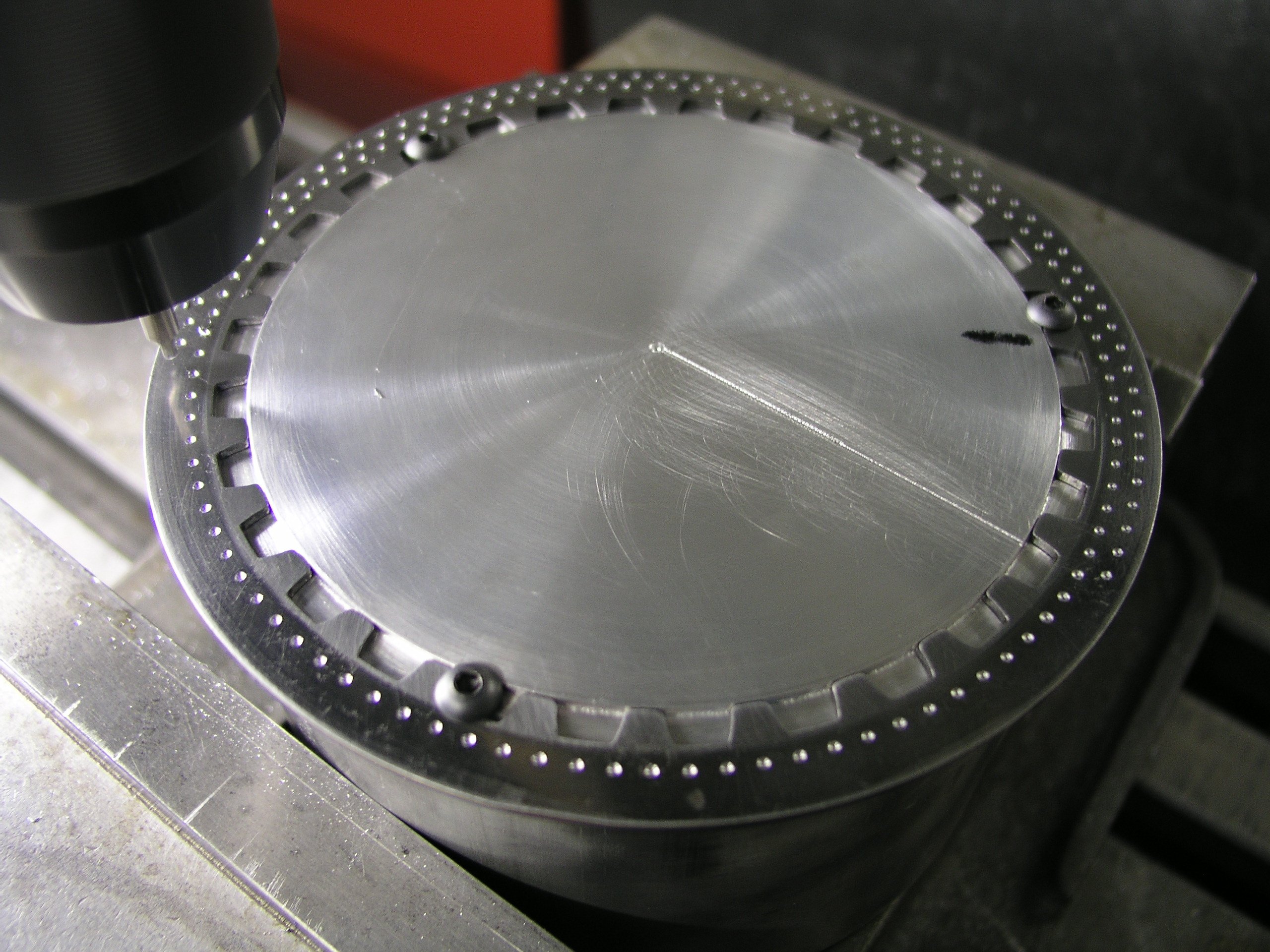
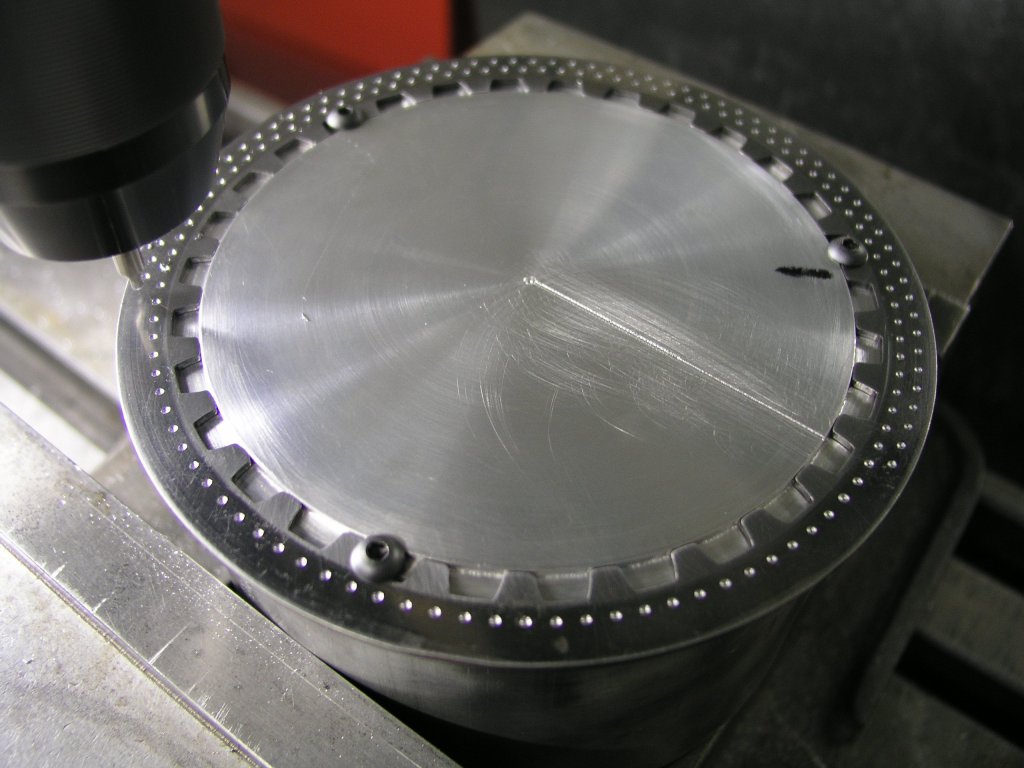
Definitely not super patient. It was done on a late 1980s CNC machine with a "conversational" programming aid. The bolt hole circle subroutine allowed a maximum of 99 holes -- so that's what I did. Still, that's nearly 2000 dimples for a set of 5 steels. I used a #3 center drill, but I don't think the dimensions of the dimples are at all critical (and I could not tell you what they are at this point). I was amazed how well it worked.
-
Another thought... I suspect new steel plates may work better. With my Shercos, the sticking behavior did not start until the clutches had a lot of hours on them. Since you're already using ATF, it might be worth trying a different type. Valvoline Dexron-VI is an inexpensive full synthetic that has been suggested as a substitute for the very expensive Elf HTX 740 gearbox lube used in the Montesa 4RT.
-
As for getting it unstuck, driving with the clutch lever pulled in may work, but when the clutch releases abruptly it will almost send you over the bars (don't ask me how I know). Disassembly will unstick it. Dimpling the steel plates completely fixed that problem on my Shercos.
-
My 250 is starting on 1 kick now! Even started on 1 kick after sitting all winter. Over the winter, I removed the cylinder head to "cc" it. Obliviously, cleaned off all the carbon first. Cleaned the carbon off the piston crown as well. Some of the carbon was soft and came off with acetone, some of it required gentle scraping. There was also a bit of hard carbon in the exhaust flange that I removed. Because there was a crack in the muffler structure that needed repair, I also burned all the carbon out of it (weldor is unhappy otherwise). Bike has about 245 hours on it -- unlikely any of this had been done previously. It's also a bit cool here, about 60* F (15* C) which does help starting. Hope this starting behavior continues into the summer. There's an "Evo 2" map in the bike currently. Was wondering if any of you 1-kick starters are using an "Evo 6" map?
-
That's not much to go on. K-Scan should be able to give you some clues. Are you sure it's not just out of gas?
-
I've been asked to look at this, but bear in mind I don't have access to an Explorer. Apparently, there's not any wiring diagram for the Explorer model. So, much of what I'm writing here is educated guesswork. White/Black goes to the kill button. Black is chassis ground. Yellow/Green is a "pass-through kill" from the Easy Start system. That is, the kill button goes into the Easy Start, and its functionality gets passed through to the ECU. On a bike without the Easy Start, the engine stops when the White/Black wire is grounded. The engine runs when the White/Black is unconnected. On a bike with the Easy Start, the Yellow/Green wire is what stops (when grounded) or allows the engine to run (not grounded). You'll need to test the key-switch with an ohmmeter to determine what terminals are connected internally when the key is in each of its positions. Let's call the positions RUN & STOP. Ultimately, I think you want the wires connected so that Yellow/Green wire is grounded (to Black wire) through the key-switch in the STOP position. In the RUN position, you want the Yellow/Green wire connected to the kill button (White/Black wire).
-
Space for attachments is limited here, so I sent some pics and the parts book directly to you. Did you enjoy building models as a kid?
-
I'm fairly new to trials myself (6 years), but why not just use standard tubes on both wheels? I think there are rear trials tires specifically made for use with a tube.
-
True, if you use the belt method. I would suggest poking a wire into the keyway slot, as it might be difficult to see if the key is there or not.
-
Front wheel should have a tube. Rear wheel is likely tubeless. Because trials tires use very low pressures (maybe 4 - 6 psi), checking tire pressure before each ride is necessary. Many inexpensive pressure gauges won't read accurately at low pressures. Experienced riders check pressure by feeling the deformation of the tires with their hands. P.S. Check the wheel bearings.
-
Dirt bike rims get dirty inside. Glass bead blasting is fairly extreme, but would likely solve the problem. I've used a bench-mounted wire wheel on corroded rims.
-
Ohh, I like this! We call it a strap wrench in the States. But actually using a belt and clamping to the footpeg make a lot of sense!
-
There is another way to hold the flywheel, and that's by jamming soft aluminum between the primary gears (in fact there is even a tool made for this purpose): https://www.motionpro.com/product/08-0427 Of course, you would also need to remove the clutch housing.